
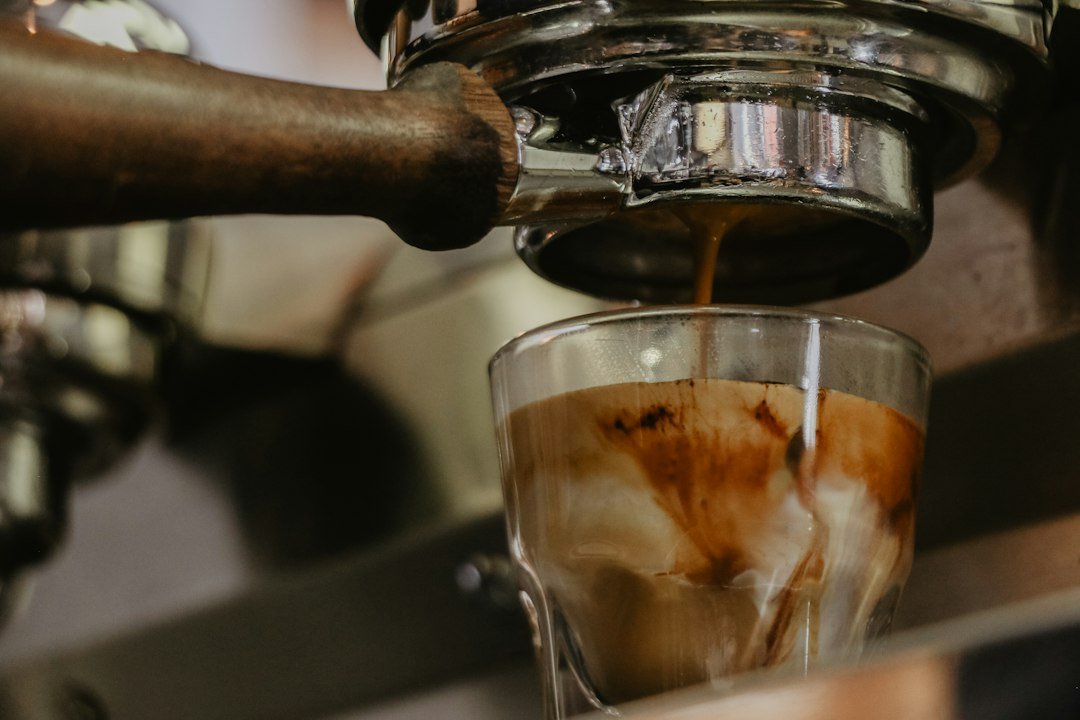
Order an Americano first at a new café. The caffe americano gives the whole place away.
In a coffee world crowded with cold espresso, shaken brown sugar espresso, and drinks that feel one syrup pump away from dessert, the caffe americano keeps its spot for one reason: it tells the truth. You taste the espresso. You notice the water. You find out very quickly whether the barista has the shot dialed in or whether the menu is mostly stage lighting and oat milk.
The timing checks out. The National Coffee Association’s Fall 2026 data, covered by Daily Coffee News and Comunicaffè, puts Americanos at 10% of past-week espresso-based drink consumption. Specialty coffee hit a record 48% past-day consumption among U.S. adults, while out-of-home coffee among past-day drinkers rose to 38%, the highest since January 2020. Quiet drink. Loud signal.
What is a caffe americano, really?
A caffe americano is espresso with hot water added. Usually one or two shots are stretched into a longer cup that keeps espresso’s aroma and edge while drinking lighter than a straight shot and more focused than standard drip coffee.
Simple recipe. Ruthless cup.
Milk can soften a rough espresso. Syrup can cover a weak one. An Americano leaves the shot fully exposed, which is exactly why people who care about coffee keep ordering it.
The numbers help. Daily Coffee News reports that Americanos make up 10% of past-week espresso-based drink consumption in the latest NCA data. Comunicaffè adds that U.S. coffee drinkers average 2.6 cups per day. A longer espresso drink fits that rhythm. You get the smell and structure of espresso without committing to a tiny demitasse at 8:12 a.m., when your inbox is already misbehaving.
It also fits how coffee gets bought now. The Fall 2026 NCDT survey was fielded June 8–24 among 1,882 U.S. adults, and the pattern feels familiar: more app orders, more drive-through, more coffee grabbed between places. “Americano, iced” is beautiful app language. Clean. Fast. No paragraph of modifiers. No accidental milkshake in business-casual clothing.
Why caffe americano makes sense in a novelty-drink era
Novelty drinks still own the group chat. Obviously.
A shaken brown sugar espresso has sweetness, a little theater, and that frothy look that knows it will be photographed. The Americano shows up like someone who already read the brief and brought a decent pen.
That mood is landing with younger drinkers. Perfect Daily Grind, citing British Coffee Association research, says 18–34-year-olds in the UK now drink 1.9 cups a day, ahead of over-55s at 1.7. The same younger group pays about £4 per cup, versus £3.20 for older drinkers. Younger customers spend on coffee. They just want the spend to feel earned, especially on a random Tuesday when the fun little trend drink has lost some sparkle.
The Americano also fits the way people actually move through the day. Out-of-home coffee among U.S. past-day drinkers reached 38%, according to the NCA data covered by Daily Coffee News and Comunicaffè. Specialty coffee reached 59% past-week consumption, tying traditional coffee at 59%. People still want quality. They’re just buying it in transit, through apps, at drive-through windows, and between meetings that should have been emails.
That’s where simpler drinks win. Less decision fatigue. Less regret.
Then there’s the cold espresso piece. The iced Americano sits right beside the cold espresso boom, but it doesn’t come with an automatic sugar expectation. If you like espresso over ice and want to taste the coffee instead of a flavor concept, that’s your move. It has enough dilution to stay refreshing and enough structure to expose sloppy ice handling in about two sips. Harsh by sip two? You learned something. For a broader look at how iced espresso styles compare, see cold brew vs Americano differences in taste, caffeine, and origin.

Why Americano prices make people spiral
People love blaming bean prices for menu increases because it sounds tidy. Café math is rarely tidy.
The Ag Digest mapped this out well through South Korea’s Americano market. Starbucks Korea raised a tall Americano from 4,500 to 4,700 won on January 24, 2025, citing exchange rates and costs. Mega MGC Coffee raised its hot Americano from 1,500 to 1,700 won on April 21, 2025, while its iced Americano stayed at 2,000 won. Same drink family, completely different pricing logic.
A menu board gets shaped by rent, labor, cup costs, ice, utility bills, and speed of service. Beans matter, of course. They just aren’t carrying the whole bill around on their back like some tragic little mule.
This is where searches like “coffee production process” and “coffee production and processing” can send people wandering into the weeds. Origin and processing affect cost and flavor. Washed coffees often taste cleaner. Honey coffee processing can bring more fruit or body. Freight, currency swings, roasting loss, and green buying all change input costs. The path from farm to final cup is messy. If you want a clearer primer on how bean treatment changes flavor, read washed vs natural coffee explained simply. The Ag Digest notes imported green coffee in Korea cost about 50% more per kilogram in 2025 than in 2024, yet the bean still remained a small share of the final menu price.
Wholesale markets can move one way while your neighborhood café moves the other. Perfect Daily Grind reports Brazil’s 2026/27 harvest is projected at 71.9 million 60kg bags, with arabica output up 25% to 47.5 million bags. StoneX expects a global coffee surplus of 10 million bags in 2026, up from 1.8 million in 2025. More coffee in the world does not guarantee a cheaper Americano near your office. Modern retail has its own ideas. Some of them are rude.
What a bad Americano tells you about a café
A bad Americano usually means the espresso was off or the dilution was clumsy. Too bitter often points to over-extraction. Too flat usually means a weak shot or too much water. An iced one that turns sharp and thin almost immediately was probably built badly from the start.
That’s why the drink works as such a clean test. Good cafés get judged on what lands in the cup when there’s very little to distract you. Perfect Daily Grind’s September 11 recap noted that Sweet Bloom Coffee Roasters in Colorado took top honors at the 2026 Global Coffee Awards, with Cafe Kreyol in Virginia and Luckys Coffee Roasters in California also recognized. Those names matter because strong roasters obsess over balance you can taste plainly.
Origin talk matters too, once it shows up in flavor instead of just sounding impressive on a bag. Brazil’s harvest size affects supply. Uganda matters for trade flows; Perfect Daily Grind reports a new Uganda–South Korea deal targeting one 20-tonne container daily, roughly 3,500 tonnes annually. Indonesia keeps showing up in 2026 supply news because logistics and climate disruptions affect what reaches roasters.
In the cup, that can mean a washed Brazilian espresso with crisp chocolate notes and nuttiness that still holds up in a longer drink. A honey-processed coffee can bring more sweetness when the extraction is right. If the shot is off, the processing note is just decoration on bad news.
So yes, order the Americano first at a new café. Hot or iced. It’s still the fastest way to find out whether the place has its coffee sorted or whether the menu is doing a lot of charming little distractions.
Frequently Asked Questions
What is a caffe americano?
A caffe americano is espresso diluted with hot water. It keeps espresso aroma and structure, but drinks longer and lighter than a straight shot.
Is cold espresso the same as an iced Americano?
No. Cold espresso is a broader idea that can include chilled or iced espresso drinks, while an iced Americano specifically combines espresso, water, and ice. The added water changes both strength and texture.
What is shaken brown sugar espresso compared with an Americano?
A shaken brown sugar espresso is a sweeter, more stylized drink built around espresso, ice, and flavor additions. An Americano is much simpler and exposes the espresso itself more clearly.
How do coffee production process and coffee production and processing affect an Americano?
They shape both flavor and cost. Processing methods like washed or honey coffee processing can change sweetness, clarity, and body, but café pricing also depends heavily on labor, rent, packaging, and service speed.
Sources
- NCA: More Americans Are Drinking Specialty Coffee and Ordering by App — https://dailycoffeenews.com/2026/09/15/nca-more-americans-are-drinking-specialty-coffee-and-ordering-by-app/
- National Coffee Data Trends: Specialty coffee hits new high, as out‑of‑home consumption nears pre‑pandemic levels — https://www.comunicaffe.com/national-coffee-data-trends-specialty-coffee-consumption-at-a-new-record-high-as-out-of-home-nears-pre-pandemic-levels/
- Coffee News Recap, 11 Sep: Global Coffee Awards announce best roasters in US & Canada, Uganda and South Korea sign l — https://perfectdailygrind.com/2026/09/coffee-news-recap-11-september-2026/
- Coffee News Recap, 25 Sep: Arabica prices drop sharply to three-month low, Greggs continues to overtake Costa as UK's bi — https://perfectdailygrind.com/2026/09/coffee-news-recap-25-september-2026/
- From Green Bean to Iced Americano: How Korea’s Coffee Price Is Built — https://www.theagdigest.com/en/magazine/from-green-bean-to-iced-americano
