

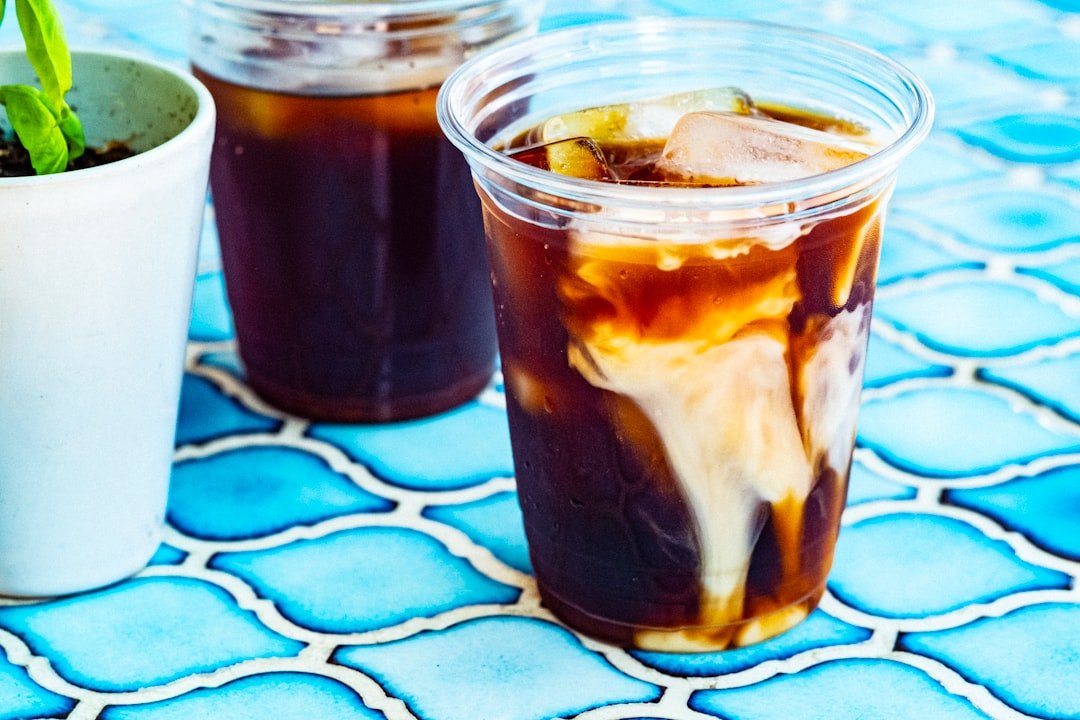
Let’s retire this one right now: cold brew vs iced coffee and why they are fundamentally different drinks is not a debate about branding. Saying they’re “basically the same, but cold” is like saying a spritz and a Negroni are the same because both arrive in a nice glass with ice. Similar setting. Entirely different personality.
That’s really the whole point here. The difference starts long before the cup hits the ice. It starts with extraction: temperature, time, and the way water pulls acids, oils, aromatics, and flavor from coffee. So yes, both drinks are cold. From a coffee perspective, that’s almost the least interesting thing about them.
Cold Brew vs Iced Coffee and Why They Are Fundamentally Different Drinks
The easiest way to separate these drinks is also the most important:
- Cold brew is coffee extracted with cool or room-temperature water over many hours.
- Iced coffee is coffee brewed hot, then chilled or poured over ice.
That is not some precious café technicality. That is the category.
Daily Coffee News lays this out clearly in its explainer on cold coffee definitions: cold brew is steeped without hot water, while iced coffee is brewed hot and then served cold, often over ice. It also calls out Japanese iced coffee as its own hot-brewed-onto-ice method, which tells you something useful immediately: the coffee world does not treat all cold coffee as one big happy family. These are separate methods with separate outcomes, not menu-board synonyms dressed up for summer.
The confusion is understandable. You see two dark drinks, both cold, both caffeinated, both capable of rescuing a Tuesday afternoon. Naturally, your brain goes: same neighborhood. But in flavor and chemistry terms, they start from completely different places.
Iced coffee starts with hot extraction. The water is energetic and efficient. It grabs soluble compounds quickly, including acids and aromatic compounds that give coffee sparkle, fruit, florals, and those tiny top-note details that make one bean taste like berries and another like toasted hazelnut.
Cold brew starts with cold extraction. The water is slower and gentler. It takes hours to pull flavor from the grounds. That long steep changes what gets emphasized in the cup and what stays more muted.
So no, the distinction is not “one has more ice” or “one sounds more expensive.” The distinction is that the coffee itself is made differently from the very first move.
The Real Difference Happens Before the Ice Ever Shows Up
If you want the real reason these drinks taste so different, it comes down to one simple truth: hot water and cold water do not extract coffee the same way.
Hot water is fast. It dissolves compounds more readily. It pulls out acids, sugars, oils, and aromatics at a very different pace and balance than cold water does. That is why a well-made iced coffee often keeps more brightness, more fragrance, and more of the bean’s origin character. Even after chilling, it can still taste lively.
Cold water is slower. It still extracts plenty, obviously, but the profile shifts. With a long room-temperature or cool-water steep, cold brew often comes across as rounder, heavier, lower-acid in perception, and more chocolatey or nutty. Notice the phrase “in perception.” That matters. People love to say cold brew is less acidic, and sensory-wise it usually reads that way. But what you are experiencing in the cup is a different extraction balance, not magic.
This is where the lazy take that “cold brew is just smoother iced coffee” starts to wobble.
“Smoother” is not exactly wrong. It is just doing very little work. Cold brew is not iced coffee with better PR. It runs on a different extraction logic. Same beans, different water temperature, different contact time, different solubles emphasized, different aromatics preserved or lost. You can brew the same coffee as iced coffee and as cold brew and end up with drinks that feel like they came from different bags entirely.
And then there is Japanese iced coffee, which deserves more respect than it usually gets in mainstream cold coffee conversations. Daily Coffee News notes that this method is hot brewed directly onto ice. It uses hot water to extract aromatic compounds and bright notes, then cools the coffee rapidly to preserve them. It is one of those techniques that makes you realize iced coffee can be much more intentional than people assume.
That rapid chill matters because coffee aromas are volatile, meaning they disappear fast. Brew hot and let the coffee sit around until it goes lukewarm and flat, and you lose some of the good stuff. Brew hot directly onto a measured amount of ice, and you keep a lot more character while ending up with a cold drink that still tastes like actual coffee.
This is also why brew technique matters so much across coffee more broadly. If you want to understand how small process changes shape flavor, pour-over technique barista champions actually use is a useful parallel. Method changes the cup.
There is another quietly important point here. Specialty coffee media keeps circling back to extraction variables such as burr geometry, grind distribution, and brew workflow because those details genuinely shape what ends up in the cup. Recent pieces from Sprudge and Daily Coffee News about grinder design are a reminder that the coffee world takes extraction differences seriously, even when most people never see them directly. If burr design can change flavor clarity, body, and balance, then switching from hot extraction to cold extraction absolutely changes the drink in a fundamental way.
Flavor, Body, and Vibe: Why People Choose One Over the Other
People do not order cold brew or iced coffee just because one sounds trendier. Usually, they are chasing a specific experience, even if they would never phrase it that way.
Cold brew tends to win over drinkers who want:
- softer edges
- lower bitterness perception
- heavier body
- a mellow, easy-drinking cup
- something that plays nicely with milk, cream, syrups, or sweeteners
It is the all-day sipper. The “I want coffee, but I do not want it yelling at me” choice. It often tastes fuller and rounder, with cocoa, caramel, and roasted nut notes doing most of the talking. If your ideal cold coffee is plush, smooth, and forgiving, cold brew makes perfect sense.
Iced coffee, by contrast, is for people who want coffee to feel more alive. More sparkle. More nuance. More actual bean personality. Hot extraction can pull forward delicate flavors that cold brew often smooths into a more uniform sweetness.
That is a big deal if the beans are good.
A beautifully sourced coffee with floral aromatics, citrus acidity, stone fruit notes, or tea-like structure can get a little flattened in cold brew. Not ruined. Just simplified. Cold brew is great at making coffee taste approachable. It is not always great at making coffee taste specific. Iced coffee, especially pour-over iced or Japanese-style iced, can preserve more of those distinctions.
That is the part a lot of people miss: iced coffee can actually be the more expressive drink.
Which is funny, because culturally, cold brew has spent the last several years being treated like the cooler order. It sounds intentional and crafted. Iced coffee, meanwhile, often gets cast as the basic cousin, the thing you order if you did not read the menu very closely.
That reputation is a little unfair.
In plenty of cases, iced coffee is the more transparent beverage. It can tell you more about the bean, the roast, and the brewer’s skill. There is less hiding behind concentration and softness. If it is good, it is really good. If it is sloppy, you will know immediately. Cold brew has a wider margin for tasting pleasant even when it is not especially complex.
Here is a sneaky detail people do not always realize: the roast profile that works beautifully for cold brew is not always the same one that shines as iced coffee. A chocolate-forward medium or medium-dark roast can feel gorgeous in cold brew. A brighter, lighter roast may sing as iced coffee, where hot extraction can show off fruit and florals before the chill keeps everything refreshing.
If you are already thinking about strength and balance in other brew methods, the ratio debate in coffee offers another useful lens. Ratios, dilution, and extraction all shape whether a drink tastes vivid, heavy, or washed out.
Why Cafés Put Both on the Menu and Why You Should Care
If cold brew and iced coffee were interchangeable, cafés would have settled this years ago and picked one. They have not. Because they cannot. Because people want different things, and because these drinks solve different problems behind the bar too.
Daily Coffee News reported in 2026 that specialty coffee continues to hold a lead over traditional coffee in the U.S., and that cold specialty coffee keeps expanding, with cold brew still tracked as its own category within specialty coffee consumption. That matters more than it might seem. If the market itself, and the research around it, keeps cold brew as a distinct category, that is a strong sign this is not just café poetry. The industry recognizes a real difference in both product type and consumer behavior.
Why keep both drinks on a menu?
Because they answer different taste expectations.
Cold brew says: rich, mellow, low-friction, dependable.
Iced coffee says: crisp, aromatic, refreshing, more expressive.
They also fit different workflows.
Cold brew is operationally attractive because it can be made in batches. Brew it ahead, hold it chilled, serve it quickly. That is gold during a morning rush. Batch production also gives cafés a way to offer a consistent cold drink with relatively stable flavor.
Iced coffee, especially if brewed fresh or made Japanese-style, can offer more immediacy and freshness. But it requires tighter execution. Brew strength has to account for dilution. Ice has to be measured, not guessed. Temperature drop matters. If the balance is off, the drink can go watery or flat fast. There is less room for coasting.
That operational difference often shows up in pricing too. Cold brew may cost more because it takes time, coffee mass, fridge space, and planning. Iced coffee can be simpler in some setups, but if a café is doing a carefully dialed Japanese iced pour-over, that is not exactly the lazy option either. Different labor. Different value.
And then there is menu culture. Food media and chains still present iced coffee and cold brew as different order types, which reinforces what people already kind of know instinctively: they are not the same ask. A mainstream menu review like Tasting Table’s coverage of Panera’s summer menu may not be a brewing textbook, but it reflects how the broader market talks. Iced coffee is still named and treated differently from other cold coffee formats.
So yes, you should care, mostly because understanding the difference makes you better at ordering what you actually want. Which is a small life upgrade, but still a real one.

The Most Useful Ordering Rule: Choose the Experience, Not the Label
The best way to order cold coffee is not to memorize which drink sounds cooler. It is to decide what kind of experience you want.
If you want crisp, aromatic, refreshing coffee flavor, order iced coffee. Better yet, if the café offers pour-over iced or Japanese-style iced coffee, go for that. You will probably get more aroma, more definition, and more of the bean’s actual personality. This is the move for people who want their coffee to taste awake.
If you want dense, mellow, less sharp coffee that works beautifully with milk or sweetener, order cold brew. It tends to be rounder and more forgiving, especially if you like a softer profile or plan to add oat milk, dairy, vanilla, or something similar.
One myth that really needs a reality check: cold brew is not automatically stronger.
People say this constantly, and sometimes it is true in practice, but not as a universal rule. Some cold brews are made as concentrates and diluted later. Some are served ready to drink. Some iced coffees are brewed intentionally strong to account for melting ice. Caffeine depends on coffee-to-water ratio, brew time, dilution, bean type, and serving size. So “cold brew equals more caffeine” is more café folklore than scientific law.
A 12-ounce cold brew from one shop might hit harder than a 12-ounce iced coffee from another. Or not. The menu name alone will not tell you. If caffeine is your main concern, ask.
Actually, that is the most practical takeaway in this whole conversation:
Ask how it was brewed, not just what it is called.
That one question tells you more about the cup than the menu board ever will.
- Was it brewed hot and chilled?
- Was it brewed directly over ice?
- Was it steeped cold for 16 hours?
- Is it a concentrate?
- Is it diluted?
Suddenly, you know what world you are in.
And once you know that, ordering gets much easier. You stop choosing based on habit or branding and start choosing based on flavor, texture, and mood. Some days call for the bright snap of iced coffee. Some days want the calm, velvety ease of cold brew. Neither is more correct. Neither is inherently more sophisticated. They are just different drinks with different strengths.
That is the fun of it.
Coffee has always been a little alchemy, a little ritual, a little style. Tiny changes in preparation can completely change the experience. Same ingredient, different method, different feeling in the cup. Cold brew and iced coffee fit neatly into that logic. The temperature is not the whole story. The method is.
So the next time someone shrugs and says they are basically the same, you can smile, take a sip, and know better.
Sources
- Daily Coffee News, https://dailycoffeenews.com/2017/01/03/cold-new-world-a-guide-to-cold-coffee-differences-and-definitions/
- Daily Coffee News, https://dailycoffeenews.com/2026/06/02/specialty-coffee-holds-lead-over-traditional-coffee-in-the-u-s/
- Tasting Table, https://www.tastingtable.com/2196887/panera-summer-2026-menu-review/
- Sprudge, https://sprudge.com/conical-vs-flat-burrs-you-can-have-both-with-the-new-lagom-gds-grinder-1088440.html
- Daily Coffee News, https://dailycoffeenews.com/2026/06/18/option-o-launches-the-two-headed-lagom-gds-grinder/
Frequently Asked Questions
What is the main difference between cold brew and iced coffee?
The main difference is how they are brewed. Cold brew is extracted with cool or room-temperature water over many hours, while iced coffee is brewed hot and then chilled or poured over ice.
Does cold brew have more caffeine than iced coffee?
Not always. Caffeine depends on brew ratio, dilution, serving size, and whether the cold brew is a concentrate, so the menu name alone does not guarantee a stronger drink.
Why does cold brew taste smoother than iced coffee?
Cold brew often tastes smoother because cold extraction emphasizes different compounds and tends to mute some of the brighter, sharper notes. That creates a rounder, heavier, lower-acid perception in the cup.
Is iced coffee better for tasting the coffee bean itself?
Often, yes. Because it is brewed hot, iced coffee can preserve more aromatics, acidity, and origin character, especially when made as Japanese iced coffee or fresh pour-over over ice.
