

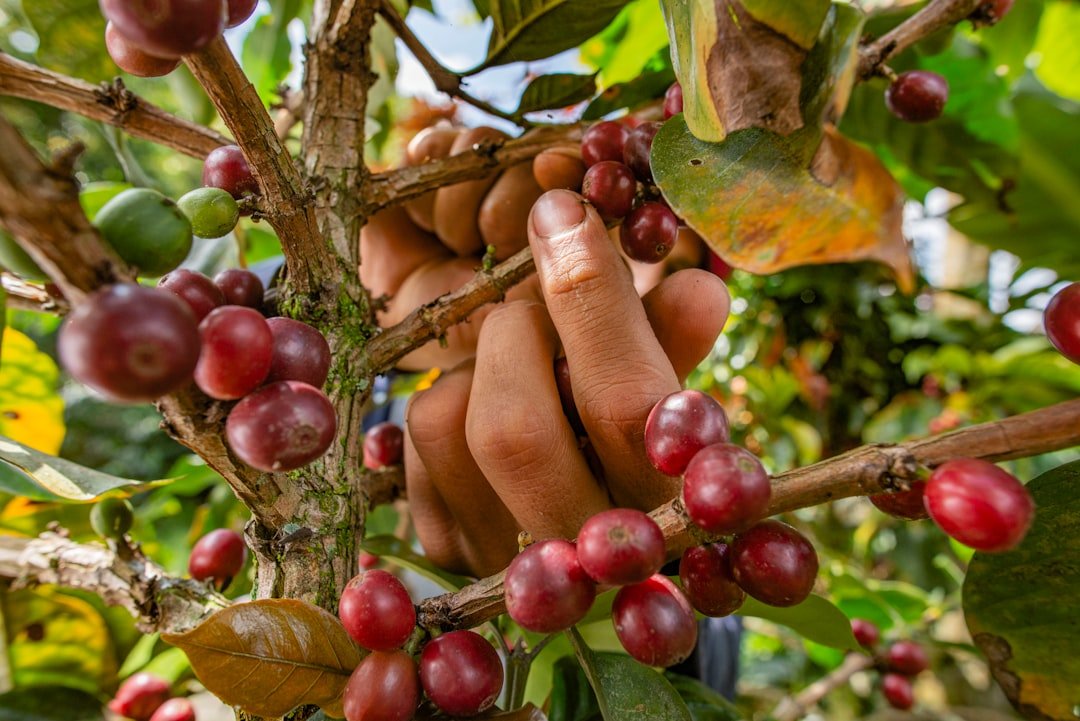
The coffee world has a weird thing for speed. More sun. More yield. More neat little rows lined up like the farm got redesigned by a spreadsheet. For a while, that passed as progress. But here’s the real hot take: how shade-grown coffee protects biodiversity and tastes better too comes down to a simple truth. Coffee grown for maximum short-term output in full-sun monocultures can wipe out habitat, weaken resilience, and often strip away the ecological complexity that helps coffee stay balanced and delicious.
And that matters more than it might sound. Biodiversity loss isn’t just a sad side plot for birds and butterflies. On farms, it shows up as higher pest pressure, weaker soils, less water retention, and systems that get stressed fast when the weather gets chaotic. Shade-grown coffee, by contrast, isn’t some precious eco add-on. It’s smarter farm design. Trees, coffee plants, insects, birds, fungi, and other crops all doing their jobs in the same space.
And yes, there’s a flavor angle too. A real one. Healthier ecosystems can support slower-ripening coffee cherries, more stable growing conditions, and better soil performance. Translation: coffee gets more time and better conditions to develop sweetness, structure, and complexity. Farms that act more like ecosystems often produce coffee that’s a lot more pleasurable to drink.
How shade-grown coffee protects biodiversity and tastes better too
For decades, one of coffee farming’s favorite stories has been efficiency. Strip back the canopy. Plant more coffee shrubs. Blast the crop with direct sun. Push output. On paper, it makes sense in the cold, practical way spreadsheets usually do. But coffee is not a bolt or a widget. It’s an agricultural product with chemistry, seasonality, and the deeply inconvenient habit of depending on living systems.
Sun-grown monocropping can increase yields in some contexts, especially in the short term. But it often gets there by simplifying the farm into something much more fragile. Fewer trees. Fewer species. Fewer ecological checks and balances. That means less habitat for birds and beneficial insects, more exposed soil, greater moisture stress, and a farm that can end up leaning hard on outside inputs just to keep functioning.
A simplified farm doesn’t just lose “nature points.” It loses function. A diverse system helps regulate pests, build soil, manage water, and buffer climate swings. Remove that complexity and suddenly the farm needs more intervention to replace what nature was doing for free.
That’s why shade-grown coffee makes more sense as a practical farming strategy than a nostalgic return to some romanticized past. Instead of treating coffee like it should dominate every inch of land, shade-grown systems let it coexist with trees and often other plant species too. That coexistence creates a more stable environment for the crop and for the people trying to make a living from it.
And here’s the piece people don’t always connect: ecosystem health and cup quality are not separate conversations. They’re linked. If biodiversity supports healthier soils, better water retention, and more balanced plant stress, then it shapes the conditions where quality develops. The cup in your hand starts long before roast profiles and brew ratios. It starts with whether the farm was designed like an ecosystem or a production line. That same connection is part of the broader case for why sustainable coffee tastes better every time.
Shade-grown coffee is basically coffee with a functioning ecosystem attached
At its simplest, shade-grown coffee means coffee cultivated under a canopy of trees instead of out in fully exposed sun. Often, it also means the coffee is grown in an agroforestry system, where multiple plant species share the same land. Think fruit trees, timber species, native shade trees, maybe even secondary crops. Not chaos. Layered design.
Agroforestry sounds technical, but the basic idea is refreshingly human: don’t force one crop to do everything alone on a bare patch of land. Build a system. Give it shade. Give it biodiversity. Let different species handle different jobs. Coffee happens to be unusually well-suited to this approach because, biologically, it evolved as an understory plant. Its original vibe was never full blazing sun all day.
And no, this isn’t folklore dressed up as sustainability language. There’s serious research behind it. Sprudge reported on the launch of the Coffee Agroforestry E-Library, created by Coffee Watch and CATIE, describing it as the world’s first comprehensive online database dedicated to scientific literature on shade-grown coffee. The database gathers nearly 1,300 scientific articles on the topic. That number tells you something by itself: shade-grown coffee is not a fringe theory. It’s an established field of study with real institutional attention behind it.
That research focus exists for a reason. Shade trees create habitat. Literally. Birds can nest and forage there. Insects and pollinators can use the space. Soil organisms benefit from organic matter and more stable moisture. Different plant layers create a more complex food web than a full-sun monoculture ever could. A shaded coffee farm can function more like a living landscape than a single-purpose crop installation.
There’s also a practical business side that doesn’t get mentioned enough. Agroforestry can diversify farmer income. Trees may provide fruit, timber, fuelwood, or other marketable products alongside coffee. In a commodity market famous for mood swings, that matters. Coffee prices move, climate stress rises, and suddenly having multiple outputs from the same land looks less like a nice idea and more like smart risk management. That resilience also connects naturally with the rise of climate-resilient coffee varieties saving coffee, since farm design and plant genetics both shape long-term survival.
Biodiversity is not decorative, it’s labor
One of the strangest things about how people talk about biodiversity is that they make it sound like a charming accessory. Nice to have. Pretty. Great for a brochure shot with a toucan in the background. But on a coffee farm, biodiversity works. Real work. Daily work. Quiet work. The kind monocultures often have to replace with money, chemicals, or damage control.
Birds and bats can help with pest control by feeding on insects. Beneficial insects help keep populations in balance, which lowers the odds of one species turning into a farm-wide nightmare. Pollinators can support broader farm ecology, even if coffee’s pollination story gets a little more nuanced depending on species and production context. And below the surface, soil organisms break down organic matter, cycle nutrients, and help maintain soil structure. That’s not decoration. That’s infrastructure.
A biodiverse farm is also less exposed to shock. In a monocrop, if a pest loves that one crop, you’ve built an all-you-can-eat buffet. If weather turns extreme, there are fewer buffers. Less canopy means more heat stress, more evaporation, more direct impact on the soil. In mixed and shaded systems, the farm has more built-in resilience. Different species respond differently to stress. Trees moderate temperature. Leaf litter adds organic matter. Root systems interact in ways that can improve soil stability and water dynamics.
Research and institutional materials around coffee agroforestry keep pointing to the same benefits: better soil health, improved water conservation, and stronger climate resilience. Climate resilience can sound abstract until you translate it into farm reality. It’s the difference between plants coping and plants collapsing. It’s whether a farm can hold moisture longer during dry periods. It’s whether topsoil stays where it belongs after heavy rain instead of washing away.
Shade can reduce moisture stress, which is a big deal. Coffee plants under a canopy may experience less direct solar radiation and less evaporative demand than plants growing fully exposed. Soil in shaded systems can also retain more organic matter, which helps with structure and water-holding capacity. Again, biodiversity is doing labor here. It’s making the farm work better.
Why shade-grown coffee can taste better
Now for the part everyone actually wants to know: does shade-grown coffee taste better?
The honest answer is the best kind: sometimes, and often for very good reasons. Shade alone is not magic. A bad farm under trees does not become transcendent just because a branch is nearby. Processing, variety, altitude, harvest timing, soil management, and roasting all matter. But under the right conditions, shade can help create the kind of environment where better flavor development is more likely.
One of the big mechanisms is slower cherry maturation. Coffee cherries that ripen more gradually can have more time to develop sugars and complex organic compounds that influence flavor. That doesn’t guarantee greatness, but it absolutely can support it. Faster is not always better in agriculture, especially if better means nuanced sweetness, layered acidity, and aromatics more interesting than just “brown.”
This is where industrial logic and sensory logic split up. Industrial logic asks how to produce more coffee, faster, as efficiently as possible. Sensory logic asks what conditions help a coffee cherry develop depth and balance. Those are not always the same question.
Shaded systems can create more stable microclimates. Temperatures may be moderated. Plant stress may be less extreme. Soil conditions may be more supportive over time, especially where organic matter is maintained and erosion is reduced. All of that can contribute to more even plant development, and in quality coffee, evenness matters. Uneven ripening can show up as inconsistency in the cup. More stable conditions can help producers harvest coffee that’s better aligned in maturity and flavor potential.
There’s also the terroir conversation, which coffee deserves to have with a lot more confidence. If a canopy of shade trees shapes temperature, moisture, and fruit maturation, then yes, it can influence the final sensory experience in your cup. That’s not romanticism. That’s agriculture.

A small but fascinating point here: stress in plants is complicated. Some stress can concentrate desirable traits. Too much stress can wreck quality. Shade-grown systems can help keep coffee in a more balanced lane, where the plant isn’t constantly overexposed and scrambling to survive. Less panic mode, more composed performance.
And if you’ve ever tasted a coffee that feels sweet, structured, and somehow more complete, there’s a decent chance the farming system had something to do with it. Not because trees sprinkle flavor dust onto cherries. Because ecological stability often gives quality a better shot.
The catch nobody mentions about shade-grown coffee
Here’s the part that keeps this conversation honest: not every shade-grown coffee is automatically amazing. Not every coffee grown near a few trees is part of a rich agroforestry system. And not every sustainability claim deserves your trust just because it sounds wholesome and vaguely forest-adjacent.
Shade-grown exists on a spectrum. Some farms may have light canopy cover with limited species diversity. Others may be deeply integrated agroforestry systems with multiple tree strata, strong habitat value, and real ecological function. Those are not the same thing. A little shade is not the same as a functioning ecosystem. So the real question isn’t just whether a coffee is shade-grown. It’s how much ecological complexity is actually there.
That’s exactly why standards, frameworks, and research tools matter. The Coffee Agroforestry E-Library exists in part because the science here is broad, serious, and worth organizing. According to Sprudge, the resource was built to centralize research on biodiversity, soil health, water conservation, farmer livelihoods, and certification frameworks related to shade-grown coffee and agroforestry. In other words, this is not a vibe-based category. It’s measurable. It can be studied. It can be assessed with more rigor than a leaf icon on a package.
That should make you more optimistic, not less. If shade-grown were just a soft-focus marketing phrase, it wouldn’t be especially useful. The reason it matters is precisely because it can mean something concrete: habitat complexity, canopy cover, multiple plant species, ecological services, and potentially stronger farm resilience. But those outcomes depend on implementation, not just wording.
There’s a broader point here too. The coffee industry has often treated quality and sustainability like separate lanes. That split never made much sense. The old productivity-at-all-costs mindset assumes environmental complexity is a drag on output. But if that complexity supports long-term soil health, reduces system fragility, diversifies farmer income, and improves the conditions for flavor development, then maybe it’s not a drag at all. Maybe it’s just better design.
And yes, smart sustainability matters outside the farm too. It’s part of why compostable coffee formats are getting more attention, and why making better choices in coffee should feel intelligent, not guilt-soaked. If you want to explore that side of the conversation, see compostable coffee pods vs aluminum pods: real impact.
So if you’re rethinking what better coffee really means, start a little earlier than tasting notes. Start at the farm. Ask whether the system growing the coffee is alive in the full sense of the word: trees overhead, species interacting, soils functioning, water held, pests kept in check by more than chemistry, cherries maturing with enough time to become interesting.
Because the future of premium coffee may not look like a sun-blasted monocrop optimized by a spreadsheet. It may look more like a small forest that happens to grow exceptional cherries.
Sources
- Sprudge — https://sprudge.com/a-new-online-library-dedicated-to-coffee-and-agroforestry-662399.html
- Coffee Agroforestry — https://coffeeagroforestry.org/
- CATIE (Centro Agronómico Tropical de Investigación y Enseñanza) — https://www.catie.ac.cr/en/
- Coffee Watch — https://coffeewatch.org/
Frequently Asked Questions
What is shade-grown coffee?
Shade-grown coffee is coffee cultivated under a canopy of trees rather than in fully exposed sun. In many cases, it is part of an agroforestry system that supports biodiversity, soil health, and more stable growing conditions.
How does shade-grown coffee protect biodiversity?
Shade-grown coffee farms create habitat for birds, insects, pollinators, and soil organisms by maintaining tree cover and plant diversity. That ecological complexity helps support pest control, nutrient cycling, and healthier farm ecosystems.
Does shade-grown coffee taste better?
It can, especially when shade helps cherries ripen more slowly and evenly in a more stable microclimate. Better flavor still depends on variety, processing, harvest timing, and roasting, but shade can improve the conditions for quality.
Is all shade-grown coffee equally sustainable?
No. Shade-grown coffee exists on a spectrum, from minimal canopy cover to highly diverse agroforestry systems. The real difference comes from how much ecological function and biodiversity the farm actually supports.
