

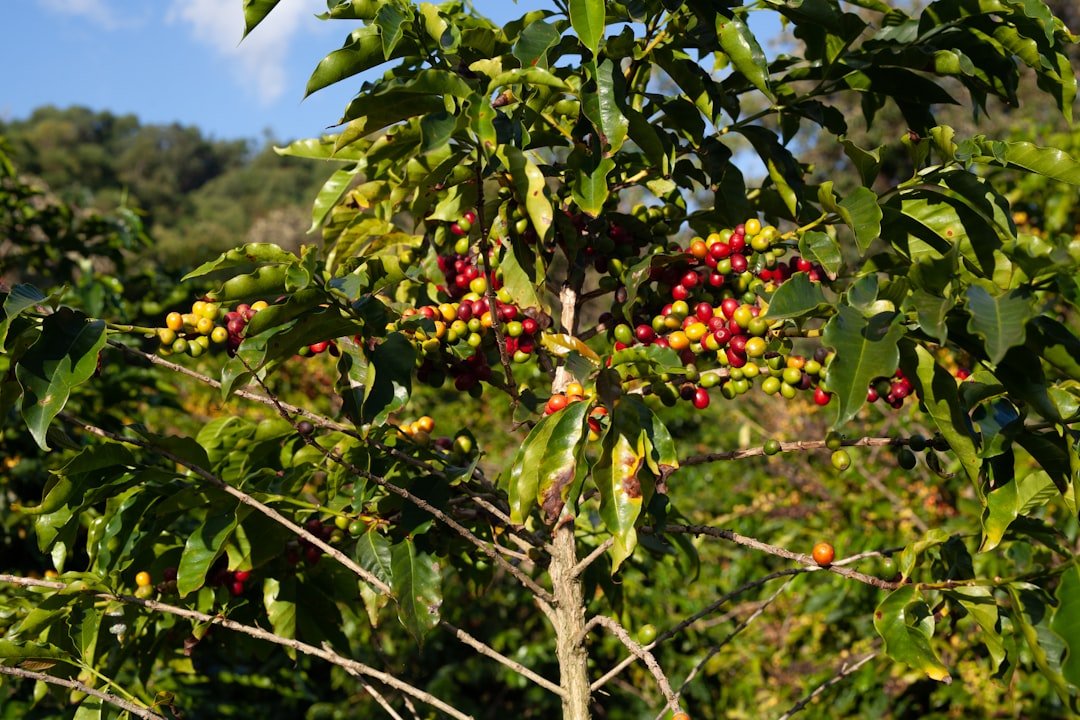
Here’s the thing: coffee is a forest plant. So taking it out of a forest-like system, blasting it with sun, then acting shocked when the whole setup gets hotter, poorer, and more dependent on chemicals is a choice. Yes, shade-grown coffee is nice for birds, and to be fair, birds are pulling their weight. But that’s not the whole point. For years, sun-grown coffee was sold as the modern upgrade: more plants, more output, more efficiency. The longer you look at it, though, the more it starts to feel like fast fashion for agriculture: cheap speed up front, expensive consequences later. If you want the real answer to how shade-grown coffee protects biodiversity and tastes better too, start with a simpler question: why did coffee move away from the kind of ecosystem it evolved in to begin with? Ask that, and the whole thing snaps into focus. Biodiversity, resilience, and cup quality aren’t three separate feel-good talking points. They’re the same system in different outfits.
The Coffee Industry’s Weird Plot Twist: We Took a Forest Plant and Put It in Full Sun
Coffee’s origin story isn’t exactly a mystery. Arabica evolved in the understory forests of Ethiopia, where it grew under canopy cover with filtered light, moderated temperatures, and plenty of ecological company. In plain English: coffee is not naturally a “leave it in full sun all day and see what happens” kind of plant.
That matters more than it gets credit for.
According to World Coffee Research, Arabica performs best within a pretty narrow temperature range, generally around 18–21°C as an annual average, and it can struggle when conditions get too hot or too erratic. Which helps explain why climate stress is such a big deal for coffee right now. A plant adapted to stable forest conditions is not exactly living its best life in exposed monoculture.
And yet, in the late 20th century, plenty of coffee systems moved toward full-sun production. Why? Because on paper, it looked efficient. Remove shade trees. Increase planting density. Add more fertilizer. Standardize the farm. Push for higher short-term yields. It was especially tempting in regions under pressure to produce more coffee, faster, for a global market that has never been particularly famous for rewarding patience.
To be fair, there was logic to it. Sun-grown systems can produce more coffee per hectare under certain conditions, especially with high-input management. But that kind of “efficiency” comes with terms and conditions nobody reads until things start breaking. Exposed farms can face more heat stress, more water loss, more erosion, more pest and disease pressure, and less habitat for the species quietly keeping the whole farm ecosystem functional.
So here’s the slightly spicy but accurate version: shade-grown coffee is not some romantic, back-to-the-land fantasy. In a lot of cases, it’s just the less artificial setup. Full-sun monoculture is the real experiment.
That’s the weird plot twist in coffee agriculture. We took a plant that evolved in a layered forest system and tried to run it like an industrial field crop. Then we built entire supply chains around pretending that was normal.
Huh, I didn’t know that: coffee isn’t just able to grow under shade; for Arabica, shade is much closer to its original design spec. The forest wasn’t an optional accessory. It was the blueprint.
Biodiversity Isn’t a Bonus Feature — It’s the Farm’s Operating System
If your mental picture of a shade-grown coffee farm is a few coffee bushes with one lonely decorative tree, let’s upgrade that image. The best shade-grown systems work more like agroforestry: multiple layers of vegetation, varied tree species, leaf litter on the ground, roots doing useful underground things, and actual habitat for creatures other than humans in search of caffeine.
That matters because biodiversity on a farm isn’t just a nice personality trait. It’s infrastructure.
Research from the Smithsonian Migratory Bird Center has long shown that shaded coffee farms can provide habitat for migratory birds and resident species, especially in places where intact forest has shrunk. In some parts of Latin America, traditional shade coffee has acted as a kind of working refuge, supporting substantially more bird diversity than unshaded coffee systems. That’s not the same as untouched forest, and no one serious should pretend it is. But compared with stripped-down monoculture, a diverse shaded farm can be a much better ecological deal. If you want a broader look at why this matters across farming systems, see how shade-grown coffee boosts biodiversity and flavor.
And birds are only part of the cast.
A shaded coffee farm can support pollinators, spiders, ants, butterflies, bats, amphibians, and soil organisms. Some help with pollination. Some improve nutrient cycling. Some keep pests in check. Some simply signal that the system still has enough complexity to function like an ecosystem instead of a caffeine factory with leaves.
One of the clearest examples is pest control. The coffee berry borer, Hypothenemus hampei, is one of coffee’s most destructive pests worldwide. Tiny, annoying, financially brutal. Studies published in journals including Ecological Applications and PLOS ONE have shown that birds and bats can help suppress insect pests in coffee farms. Translation: the cute wildlife isn’t just there for ambience. They’re on payroll.
One study in Costa Rican coffee farms found that excluding birds, bats, and lizards led to more herbivorous arthropods and greater leaf damage. Other research has shown that avian insectivores can reduce pest pressure and support yields. Nature, once again, doing free labor that gets expensive the second you remove it.
This is where nuance matters. Not all shade-grown coffee is equally good for biodiversity. A farm with a diverse canopy of native trees, multiple vegetation layers, and real structural complexity offers far more habitat than a farm with sparse, uniform shade cover. “Shade” can mean a lot of things, from genuinely rich agroforestry to the botanical version of bare minimum effort.
The Rainforest Alliance and Conservation International both make that distinction. The ecological value of coffee agroforestry depends heavily on canopy diversity, tree density, landscape context, and farm management. A monoculture plus three random trees is not exactly a rainforest comeback tour.
Still, the overall pattern is pretty clear: shaded coffee landscapes often support more species richness than unshaded ones. That matters a lot in tropical regions, where agriculture and biodiversity are constantly negotiating for space.
Huh, I didn’t know that: migratory songbirds from North America spend part of their year in Latin American coffee landscapes. Your morning cup can be connected, quite literally, to where a warbler sleeps in winter. That’s not poetic exaggeration. That’s ecology.
How Shade-Grown Coffee Protects Biodiversity and Tastes Better Too
Now for the part your palate cares about.
People sometimes talk about shade-grown coffee flavor like it’s mystical. It’s not mystical. It’s agricultural. Shade moderates temperature and light exposure, which can slow cherry maturation. Slower ripening often gives the coffee seed, the bean, more time to develop sugars, acids, and aromatic compounds in a more balanced way.
And that slower pace can matter a lot.
Coffee quality is shaped by a long list of variables: variety, altitude, soil, rainfall, farm management, processing, drying, storage, roasting, brewing, and whether someone absolutely torched it in the machine. Shade isn’t a solo act. But it can create conditions that support more nuanced flavor development, especially in places where excessive heat pushes cherries to mature too quickly.
A review of coffee science published in Food Chemistry and related research on pre-harvest factors has linked environmental conditions during cherry development to bean chemistry and cup quality. Slower maturation at higher elevations is often prized for similar reasons: the bean develops more gradually, and the resulting cup can show more complexity, sweetness, and acidity. Shade can mimic part of that moderating effect by buffering heat and reducing stress.
That’s why shade-grown coffees are often associated with balance and clarity rather than just intensity. Think less “all volume, no texture” and more layered notes that actually get room to show up. Fruit tastes more like fruit. Floral notes don’t disappear. Acidity feels lively instead of sharp. Sweetness has shape.
Not always, obviously. Shade does not automatically bless bad farming or sloppy processing. You can absolutely end up with mediocre shade-grown coffee if the cherries were harvested poorly or processed carelessly. Coffee is humbling like that. But when everything else is handled well, shade can help quality do its thing.
There’s also a practical reason for this beyond flavor poetry. Heat stress affects plant metabolism. As coffee-growing regions warm, the risk isn’t just lower productivity but altered bean development and declining cup quality. World Coffee Research has warned that rising temperatures can affect where coffee can be grown and how well it performs. So if a shaded system helps moderate a farm’s microclimate, it may be doing more for flavor than most people realize. That is also why sustainable production and cup quality often overlap, as explored in why sustainable coffee tastes better every time.
A smart way to think about it: if a coffee tastes flat, harsh, or rushed, the problem may have started long before roasting. Farm design shapes the cup from the beginning.

Huh, I didn’t know that: coffee “beans” are seeds inside a fruit called a cherry. The flavor potential in your cup starts with how that fruit matures on the tree, not just what happens at the roastery. Very dramatic for a seed, honestly.
Shade-Grown Coffee Is Also a Climate Strategy Disguised as Old-School Wisdom
Shade trees do not get nearly enough credit for being tiny climate managers.
They reduce temperature extremes. They lower evapotranspiration and help soils retain moisture. They add leaf litter, which breaks down into organic matter and improves soil structure. Their roots can help stabilize slopes and reduce erosion. And with the right tree species, they can also contribute nitrogen fixation, timber, fruit, or other farm benefits.
Sounds wholesome. It’s also deeply practical.
The FAO has repeatedly pointed to agroforestry as a useful strategy for climate adaptation, biodiversity support, and more resilient agricultural systems. For coffee farms dealing with irregular rainfall, hotter seasons, and more volatile weather, trees aren’t decorative. They’re equipment.
This is one of the strongest answers to how shade-grown coffee protects biodiversity and tastes better too: the same features that create habitat also create resilience. A layered farm handles shocks better than a stripped-down one.
On sloped land, which describes a lot of coffee terrain, tree cover and ground litter can reduce runoff and erosion. That matters because losing topsoil isn’t just an environmental issue; it’s a quality and productivity issue too. Soil holds water, nutrients, and microbial life that plants depend on. Once it washes away, replacing that function with inputs gets expensive fast.
There’s also the carbon piece. Agroforestry systems can store more carbon than low-tree or no-tree agricultural systems, which matters, sure. But the more interesting point isn’t carbon accounting. It’s resilience. A biodiverse shaded farm is often better prepared for imperfect conditions, and imperfect conditions are very much the vibe of modern climate reality.
Research published in Agriculture, Ecosystems & Environment has shown that coffee agroforestry systems can support ecosystem services while also helping producers adapt to environmental stress. Conservation groups and coffee researchers increasingly frame shade not as nostalgia, but as strategy.
Which makes sense. The future of coffee may depend less on some futuristic silver bullet and more on rebuilding farms that behave like ecosystems again. Wild thought: maybe the old-school wisdom wasn’t old-fashioned. Maybe it was just right.
Huh, I didn’t know that: shade trees can cool the microclimate of a coffee farm by several degrees compared with exposed areas. For a crop as temperature-sensitive as Arabica, that difference isn’t minor. It can be the line between “thriving” and “why does this taste stressed?”
The Catch No One Should Ignore: Shade-Grown Is Better — But It’s Not Automatically Simple
Now for the part where we resist turning shade-grown coffee into a flawless hero with perfect hair. It comes with trade-offs.
In some contexts, shaded systems can produce lower yields per hectare than intensive sun-grown systems, especially in the short term or where management is weak. Trees can compete with coffee for light, water, and nutrients if they aren’t managed well. Pruning matters. Species selection matters. Elevation matters. Local climate matters. Labor matters. Economics really matter.
So no, every farm can’t just “switch to shade” overnight and become a biodiverse flavor paradise by next Tuesday.
That’s why market incentives matter so much. If farmers are expected to prioritize long-term resilience, canopy diversity, and ecological value, but the market still rewards maximum cheap volume, the math gets ugly fast. Consumers often love the idea of biodiversity right up until it costs more than the most aggressively commodified coffee on the shelf.
That tension is real. Sustainable farming doesn’t run on good intentions alone. It needs pricing, purchasing, and supply chains that don’t punish producers for choosing complexity over extraction.
There’s another catch too: “shade-grown” is useful, but it’s not magic language. It works better as a signal to ask smarter questions. How much canopy cover is there? What tree species are being used? Is the farm part of a broader agroforestry system? Is there transparency about origin and producer practices? Are there certifications with meaningful standards, such as Bird Friendly, Rainforest Alliance, or organic in some cases? What does the farm story actually say beyond a nice label font?
The Smithsonian Bird Friendly certification, for example, has particularly rigorous shade criteria tied to habitat quality. That matters because it pushes past vague green vibes and into measurable farm structure.
So yes: shade-grown is often better. But “better” still lives on a spectrum.
The most useful lens here is simple: treat shade-grown as an invitation to investigate, not a final answer. You do not need to become an exhausting coffee detective every time you buy beans. It’s just worth recognizing that farming systems are more complex than a single sticker can capture.
And if you care about quality, that complexity isn’t some side issue. It’s the whole thing. The cup in front of you is the end result of ecological decisions made years before the brew.
We think sustainability works best when it feels smart, not scolding. That’s partly why details matter. The same mindset that values a better farm system usually values better materials, less waste, and fewer fake trade-offs too. It’s why compostable pods made from vegetable fiber instead of plastic or aluminum make so much sense to us, and why planting trees through Tree-Nation feels less like eco theater and more like basic common sense. Not guilt. Just better design. Same energy as shade-grown coffee, really: work with the system, not against it.
Huh, I didn’t know that: one of the strictest coffee habitat certifications in the world was created by bird scientists, not marketers. Honestly, reassuring.
The Smarter Question to Ask About Coffee
The next time someone treats shade-grown coffee like a boutique extra, ask the better question: if coffee evolved in a forest, why are we still surprised that it performs better when the farm acts a little more like one?
That question cuts through a lot of noise.
It reminds you that biodiversity isn’t a side quest. It helps regulate pests, support pollinators, and keep agricultural landscapes alive. It reminds you that flavor isn’t only a roasting note or brew recipe issue; it starts with how the coffee cherry grows and ripens. And it reminds you that resilience in a hotter, less predictable climate may come less from brute-force inputs and more from rebuilding complexity where we stripped it away.
Shade-grown coffee protects biodiversity and tastes better too because those outcomes are connected at the root. Literally. Trees create habitat. Habitat supports ecological balance. Ecological balance reduces stress. Lower stress and slower ripening can improve quality. Better farms make better coffee.
Not every shaded farm is perfect. Not every sun-grown coffee is bad. Reality is messier than slogans, sempre. But if the goal is coffee that still tastes distinctive, grows more resiliently, and doesn’t bulldoze every living system around it in the process, shade-grown stops looking like a niche preference and starts looking like the obvious move.
Which, to be fair, it kind of was all along.
Sources
- Smithsonian Migratory Bird Center, https://nationalzoo.si.edu/migratory-birds/bird-friendly-coffee
- Food and Agriculture Organization of the United Nations, https://www.fao.org/forestry/agroforestry/en/
- World Coffee Research, https://worldcoffeeresearch.org/work/sensory-and-crop-performance/arabica-coffee
- World Coffee Research, https://worldcoffeeresearch.org/work/climate-change-and-coffee
- Rainforest Alliance, https://www.rainforest-alliance.org/insights/shade-grown-coffee/
- Conservation International, https://www.conservation.org/projects/coffee-and-climate
- Ecological Applications, https://esajournals.onlinelibrary.wiley.com/doi/10.1890/12-0184.1
- PLOS ONE, https://journals.plos.org/plosone/article?id=10.1371/journal.pone.0086199
- Agriculture, Ecosystems & Environment, https://www.sciencedirect.com/journal/agriculture-ecosystems-and-environment
- Food Chemistry, https://www.sciencedirect.com/journal/food-chemistry
Frequently Asked Questions
What is shade-grown coffee?
Shade-grown coffee is coffee cultivated under a canopy of trees rather than in fully exposed sun. The best systems function as agroforestry, supporting habitat, soil health, and a more stable farm microclimate.
Does shade-grown coffee really help biodiversity?
Yes, especially when farms have diverse tree cover and layered vegetation. These systems can support birds, pollinators, bats, insects, and soil life far better than simplified sun-grown monocultures.
Why can shade-grown coffee taste better?
Shade can slow cherry ripening by moderating heat and light exposure. That slower development may help beans build more balanced sugars, acids, and aromatic compounds, leading to a more complex cup.
Is all shade-grown coffee equally sustainable?
No. “Shade-grown” can describe anything from rich agroforestry to minimal tree cover. It’s best to look for transparent sourcing and stronger standards such as Bird Friendly or other credible certifications.
