
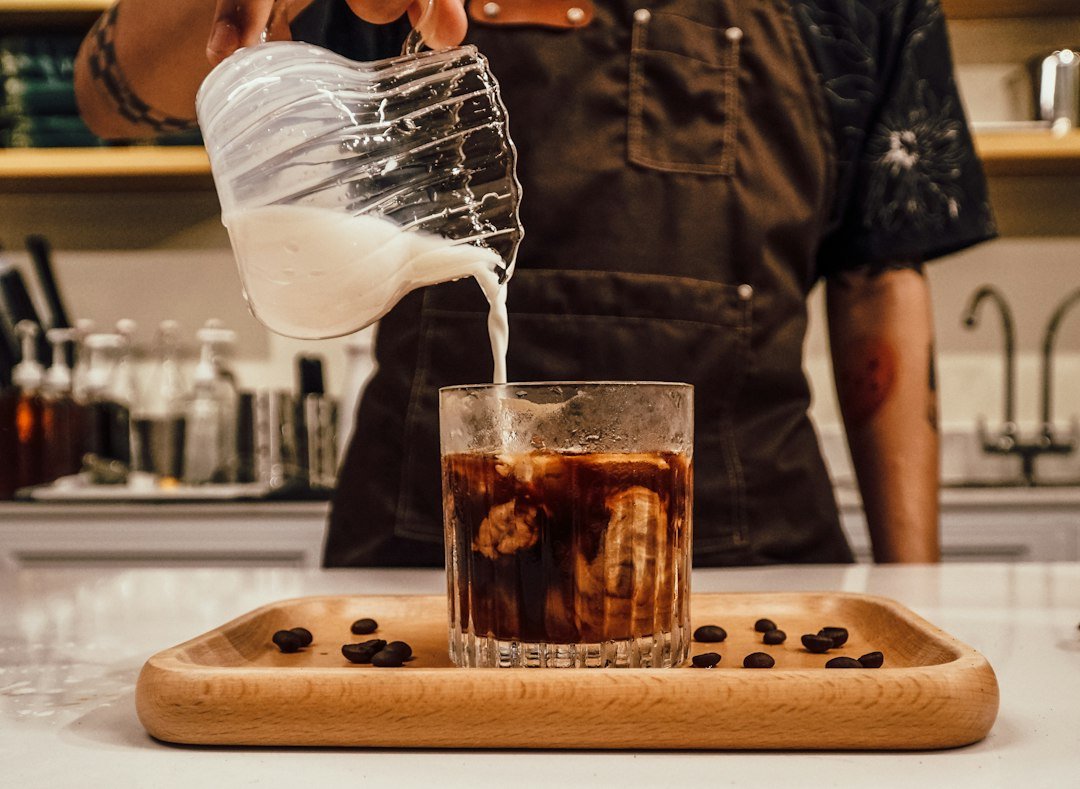
Fresh iced cold coffee wins. Bottled had a great run, but you can taste the compromise by the second sip.
The category is enormous either way. Iced cold coffee made up 21% of past-day coffee consumption in the National Coffee Association’s Fall 2026 data, and 48% of U.S. adults drank specialty coffee in that same period. That is a lot of cups full of ice, and a lot of drinks built to survive a truck ride before they ever have to taste good.
Cold coffee already owns the market. In 2026, the better question is what deserves the space in your hand: a drink made fresh, with actual aroma and texture, or one tuned to stay politely drinkable for weeks in a fridge case.
What is the best way to make iced cold coffee right now?
Fresh espresso still has the edge. A concentrated brew chilled quickly and poured over ice keeps more aroma and lift than most bottled coffee, and usually more definition than a long-steep cold brew. It also takes less than 10 minutes, which helps when your morning feels like a missed train and a low phone battery.
Cold brew had a glorious era. It also convinced a lot of people that “smooth” and “interesting” were the same thing. Spencer Mahoney of Atomic Coffee Roasters said it plainly in Daily Coffee News in September 2026: for some coffees, “there’s a ceiling” with cold brew. Fair. Atomic then partnered with Overpotential, a Cambridge startup founded in 2025 by Christopher Hendon and Doran Pennington, to run standard cold brew through low-voltage electrochemical treatment. The goal was to alter flavor compounds without adding ingredients and pull more expression back into the cup. Clever bit of coffee tech. Also a quiet admission that the brew method leaves some things behind.
Cafés have noticed where taste is heading. Perfect Daily Grind wrote in June 2026 that younger drinkers want drinks that feel personal, with visible texture and some structure, instead of a vague “premium” sticker. The NCA data backs that up. In Fall 2026, 38% of past-day coffee drinkers had coffee outside the home, the highest share since January 2020. Cafés build drinks in real time. You can feel that in the glass. A fresh iced latte or americano still has a pulse. If you want a deeper comparison of chilled styles, see why cold brew and iced coffee are different.
At home, coffees with fruit and citrus notes usually hold up better over ice than darker profiles leaning on wood and caramel. Altura - 70g is especially good for this: sweet, fruity, citrusy, medium 5/10 intensity. It keeps its shape in a flash-chilled brew instead of turning muddy. You do not need six beakers and a tiny scale that judges your life choices. Brew it a little stronger, chill it fast, pour over fresh ice. Finito.
And yes, instant espresso belongs in the weekday rotation. App ordering already trained people to value convenience when the result still tastes decent, and Daily Coffee News noted that app ordering rose in the NCA coverage from September 2026. Same logic here. If the shortcut keeps enough concentration and aroma to survive the ice, it earns a spot on the counter.
Bottled coffee owns the shelf and misses a lot of the fun
Ready-to-drink coffee is huge because it is portable, familiar, and easy to grab. Great retail qualities. Flavor is a separate conversation.
The Washington Post tested 10 top-selling bottled iced coffees on July 31, 2026, using sales data and blind judging. Useful exercise. It shows what dominates the fridge door and how those bottles perform on flavor, strength, and value. Add the NCA’s 21% past-day cold or iced consumption figure and the category’s scale is obvious. “Top-selling” mostly tells you what ships well and lands safely in the middle of the sweetness curve.

Texture matters here more than people admit. Watch what people order and the pattern shows up fast: when someone says they want “strong coffee,” they often mean they want it to feel substantial. That helps explain why cold foam took off. Perfect Daily Grind reported in August 2026 that cold foam helps café margins because it works as an upsell without adding a new SKU, and baristas can pre-batch it for hours. More important for the person drinking it, the sip changes. You get contrast, a softer first hit, and a drink that looks like somebody cared.
The same goes for oat milk barista blends. In iced drinks, they matter more than most people think. Standard cold foam often uses heavy whipping cream and flavored syrup, according to PDG. Oat milk has to do more work. Over ice, weak plant milk gets thin, separates fast, and leaves espresso drinks tasting half-finished. A barista-style oat milk has more body and holds together better under dilution. Hot coffee can hide a lot with steam. Ice tells the truth. If milk texture is your main variable, why baristas prefer oat milk in espresso drinks is worth a read.
Signature drinks are doing better than generic sweetness, too. PDG pointed to builds like the “Mont Blanc” outperforming random foam add-ons, and tied that shift to younger consumers following East and Southeast Asia beverage trends through social media. People want espresso drinks with a point of view. A sharp iced espresso. An oat-milk latte with a clean layer line. A foam-topped drink where the topping belongs. Vanilla sludge had a long, messy era. We move.
This is also where coffee tech gets interesting in a useful way. Forget the countertop robot with an app and seventeen LEDs. Process technology has more to say. Overpotential’s system uses low-voltage electrical currents to alter flavor compounds in brewed liquid without adding ingredients, and Atomic became its first commercial coffee collaboration in 2026, according to Daily Coffee News. That is a very specific fix for a very specific problem: cold coffee loses aromatic complexity fast.
At home, chasing bottled coffee is usually a dead end. Shelf-stable drinks are built for consistency over time, then pushed along with sweetness and heavier flavor notes so they still make sense weeks later. Fresh iced coffee gets to be brighter and more alive. ALTURA suits that style because its sweet citrus and fruit notes stay vivid over ice, while the flatter caramel profile common in RTD coffee can feel a little beige. You want some spark left in the glass.
Frequently Asked Questions
Is oat milk barista better for iced coffee?
Yes, usually. Barista-style oat milk is formulated to hold texture and mix more cleanly, which matters in iced drinks because separation and thin body show up fast.
Is instant espresso good for iced coffee?
It can be. Instant espresso gives you a more concentrated base than regular instant, and that concentration helps the coffee keep flavor after the ice starts melting.
What coffee tech is actually changing cold coffee?
The most interesting shift is process technology that changes flavor without adding ingredients. Overpotential’s low-voltage treatment is one example aimed at bringing more complexity back to cold brew.
Which espresso drinks work best iced?
Iced espresso, iced latte, and iced americano tend to work best because they start with a concentrated coffee base and keep a clear structure even as the drink chills and dilutes.
Sources
- NCA: More Americans Are Drinking Specialty Coffee and Ordering by App — https://dailycoffeenews.com/2026/09/15/nca-more-americans-are-drinking-specialty-coffee-and-ordering-by-app/
- Atomic Coffee and Overpotential Combine for Electrified Cold Brew — https://dailycoffeenews.com/2026/09/23/atomic-coffee-and-overpotential-combine-for-electrified-cold-brew/
- Can cold foam help raise café margins? — https://perfectdailygrind.com/2026/08/cold-foam-coffee-raise-margins/
- What’s the best iced coffee? We tried 10 top-selling bottles to find a winner. — https://www.washingtonpost.com/food/2026/07/31/whats-best-iced-coffee-we-tried-10-top-selling-bottles-find-winner/
- Cold coffee is driving sales, but cafés need to create unique, signature drinks — https://perfectdailygrind.com/2026/06/cold-coffee-matcha-unique-signature-drinks/
