

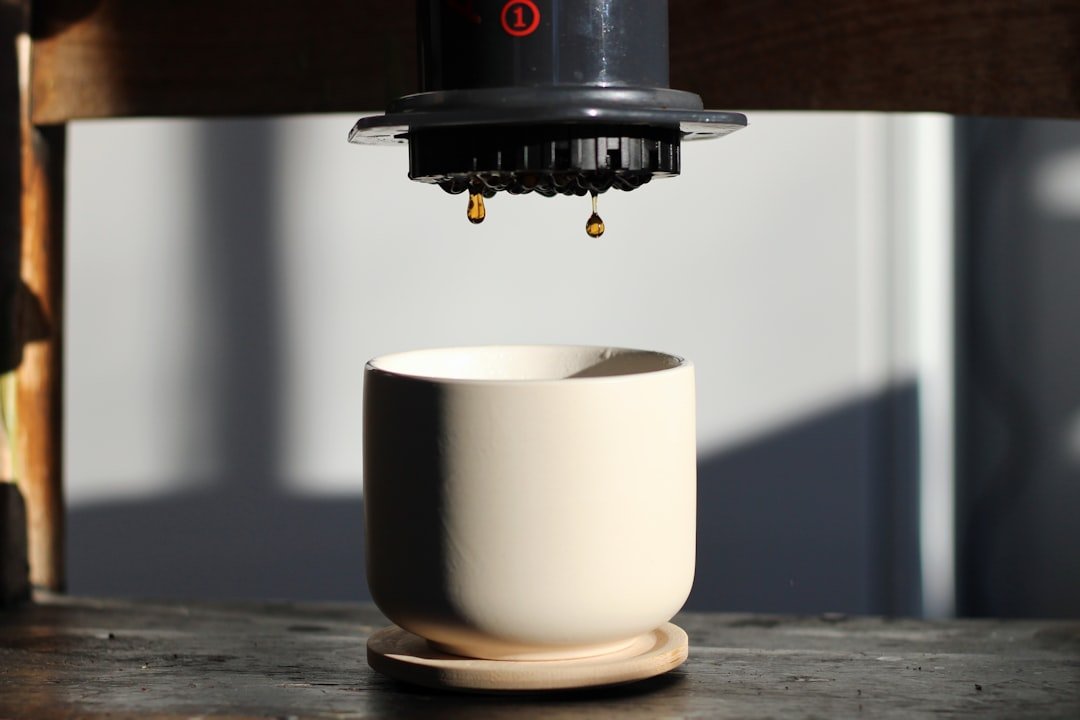
AeroPress vs French press and which one wins for everyday coffee is not really a debate about romance or brewing mythology. At 8:07 a.m., it is about which brewer is least likely to turn your kitchen into a tiny caffeinated crime scene while still making a genuinely good cup. That is the real matchup. Not who makes the most poetic coffee under perfect conditions with a hand grinder and flattering morning light, but which one fits real weekday life.
That is why this comparison gets more useful the moment you stop treating it like a café tasting flight and start treating it like infrastructure. French press has charm, body, and a certain bookish aura. AeroPress has gadget energy, cult status, and a fanbase that can become delightfully technical in under a minute. Both can make excellent coffee. But daily use exposes weaknesses quickly. Cleanup matters. Counter space matters. Repeatability matters. And how forgiving a brewer is when you eyeball the water before your brain has fully logged in matters a lot.
Here is the short version: if everyday means quick, consistent, apartment-friendly, low-mess, and built for one very solid mug, AeroPress has the edge. If your routine is more about brewing for two, loving a heavier texture, and not minding sediment at the bottom of the cup, French press still has a strong case. It is romance versus reliability, texture versus precision, and vibes versus logistics. Both deserve respect. One is just better at surviving modern life.
The hot take: AeroPress vs French press and which one wins for everyday coffee
There is a persistent myth in coffee culture that the best brewing method is the one with the most ceremony. The one that feels artisanal. The one that looks especially good on a countertop next to a ceramic mug and a healthy plant. But everyday coffee is not a film set. It is a routine, and routines live or die by friction.
That is the real heart of this comparison. Not which brewer can produce a great cup in ideal conditions, because both can. Not which one has more personality, because both definitely do. The question is which one still works when you are distracted, under-caffeinated, and mildly offended by how early it is.
French press is simple on paper: add coarse coffee, add hot water, wait, plunge. AeroPress is simple on paper too: add coffee, add water, stir, plunge. But simple and easy every single day are not the same thing. One can be straightforward in theory and still become annoying in ways that matter by Thursday.
That is where the split begins. French press has undeniable café-table charm. It makes a full-bodied cup with more oils and texture, and it feels satisfyingly analog. AeroPress is less cinematic and much more adaptable. It looks almost too practical, which is often how genuinely useful things show up. Its cult status is not just because coffee people enjoy odd plastic tubes. It is because the thing works.
For everyday use, the winner usually comes down to how many chances each brewer gives you to ruin your own morning. On that front, AeroPress sets fewer traps. Less sludge. Faster cleanup. Smaller footprint. Better portability. More control over bitterness. French press still deserves respect, especially if you are brewing multiple cups and want that richer texture. But if the standard is weekday survivability instead of coffee fantasy camp, AeroPress starts pulling ahead.
Habit research consistently shows that friction matters more than intention in daily routines. Even small annoyances can make a habit less likely to stick, which makes coffee cleanup more important than enthusiasts sometimes admit.
Flavor is not the whole story, but it is where most people get distracted
Most people begin this debate with flavor because it feels like the sophisticated angle. Fair enough. Coffee should taste good. But flavor can also distract from the more practical question: will you still enjoy making that cup every day once the novelty wears off?
French press coffee is usually fuller-bodied because it uses a metal mesh filter rather than paper. That means more coffee oils and fine particles make it into the cup. The result is a heavier mouthfeel, more texture, and a rounder, denser profile. People often describe it as rich, deep, or strong. Often they mean all three.
AeroPress, especially with paper filters, generally gives you a cleaner cup. Less sediment. Less oil. More clarity. That tends to make individual tasting notes easier to notice, especially in lighter roasts or coffees with brighter acidity. If a coffee has citrus, floral, berry, or caramel notes, AeroPress usually separates them more clearly. French press can soften those edges.
Here is the part many people miss: when someone says French press tastes stronger, they often mean it feels stronger, not that it is objectively more extracted or more caffeinated. Body and intensity are not the same thing. A heavier texture can read as stronger even if brew strength or caffeine content is not dramatically different. Brew ratio matters more for caffeine than the brewer itself, and both methods can be adjusted to produce stronger or weaker cups.
That distinction matters because it keeps expectations realistic. French press is not espresso-adjacent magic. It is a rich immersion brew. According to USDA FoodData Central, an average 8-ounce cup of brewed coffee contains around 95 mg of caffeine, but actual caffeine varies widely based on dose, grind, roast, and ratio. The method alone does not decide everything.
AeroPress also has more range, which helps explain its devoted following. Change the grind size, water temperature, brew time, agitation, or whether you brew a shorter concentrate or a longer cup, and you can get very different results. Bright and tea-like. Punchier and more concentrated. Something close to an Americano-style cup. If you want to go deeper on extracting a balanced concentrated brew, our guide to espresso extraction time offers useful context on how time changes flavor.
French press is more committed to one lane. It does that lane well. Rich, broad, comforting, a little cloudy, and a little rustic. Slightly muddy on a good day, aggressively muddy on a bad one. To be fair, some people genuinely love that. Not tolerate it. Love it. The sediment, the weight, the sense that the coffee has actual presence.
Paper filtration does more than improve clarity. It also traps a meaningful amount of diterpenes like cafestol and kahweol, compounds naturally present in coffee oils. Unfiltered coffee methods, including French press, tend to retain more of them. Research has linked high intake of unfiltered coffee to increases in LDL cholesterol for some people, which is one reason filtered coffee is often recommended more often in dietary guidance.
The everyday test: time, cleanup, counter space, and tolerated chaos
This is where theory meets the sink.
French press is easy to romanticize because the brewing itself is low effort. Add grounds. Add water. Wait four minutes or so. Plunge. That part is pleasant enough. The cleanup is where the relationship gets tested.
Used French press grounds are wet, clingy, and weirdly committed to staying in your life. You cannot casually dump them down most sinks without risking drain issues over time. So now you are scooping sludge into the trash or compost, tapping the carafe upside down, and then still rinsing out grit that refuses to leave gracefully. The mesh filter assembly also collects fines and oils, which means a quick rinse is often a temporary lie before a more proper wash later.
AeroPress cleanup is almost suspiciously easy. Brew. Plunge. Unscrew the cap. Pop out the compact puck of grounds and filter. Rinse. Done. If your morning routine involves any kind of time pressure, that difference becomes wildly important. A cleanup under a minute is not glamorous, but it is powerful.
Counter space tells the same story. French presses are usually bulkier, often made of glass, and not especially happy being shoved around in a cramped cabinet. AeroPress is compact, lightweight, and durable enough to toss in a bag, desk drawer, or carry-on. For apartment kitchens, office setups, and travel, portability is a real advantage. If portability matters to you, you may also like our breakdown of AeroPress vs French Press: Best Brewer for Daily Use for another quick comparison angle.
Durability deserves its own mention too. Glass French presses break. Not constantly, but often enough that many coffee drinkers know the specific annoyance of replacing one after a half-awake counter collision. AeroPress is built for less delicate realities. It is hard to break, easy to pack, and generally ready for whatever your morning looks like.
That matters because everyday coffee in modern life often means one mug between meetings, not a slow ritual with a soundtrack. Most people are not trying to produce a meditative brewing ceremony every weekday. They are trying to make good coffee efficiently, without creating a cleanup task that haunts future them.
At home, user friction often matters more than tiny quality gains. A brewer that is slightly better in theory but much more annoying in practice usually loses the week.
Consistency is the real flex
If there is one thing that separates a brewer you admire from a brewer you actually keep using, it is consistency.
French press has a reputation for simplicity, and that is deserved up to a point. But it is also surprisingly easy to get wrong in small ways that show up clearly in the cup. Grind too fine and you get sludge and over-extraction. Steep too long and bitterness creeps in. Agitate too aggressively and more fines stay in suspension. Water too cool and flavor goes flat. Water too hot with a dark roast and the cup can taste rougher than it needs to.
Because French press is full immersion with a metal filter, those mistakes do not hide well. The cup tells on you.
AeroPress has more variables, which sounds like a downside on paper. Spend enough time around AeroPress fans and you may run into recipe discussions intense enough to make you wonder whether everyone is sleeping enough. But here is the funny part: even though AeroPress invites more tinkering, it often rewards good-enough technique better than French press does.
Short brew times help. Paper filtration helps. The plunge adds a little pressure, not espresso pressure, but enough to move the brew through the coffee bed efficiently. That combination tends to make the final cup more forgiving. If your grind is slightly off, the result is often still solid. If your water temperature is not exact, the paper filter and shorter contact time can soften the consequences. If your timing is casual, you are usually still in a safe zone.
That is a big deal for everyday brewing. You do not need a brewer that demands your best self before you have had caffeine. You need one that can cooperate with your medium self.
Coffee education groups including the Specialty Coffee Association emphasize that extraction is a balancing act among grind, time, temperature, turbulence, and ratio. Change one thing and the whole brew shifts. AeroPress simply gives you more room to recover from those shifts. French press, despite its old-school simplicity, can be less forgiving because the core variables are doing more visible work in the cup.
There is also the issue of bitterness control. AeroPress makes it easier to shorten contact time and filter out fines, both of which can reduce harshness. French press can absolutely make a smooth cup, but it asks for tighter control over grind and timing to get there consistently. Fine on a calm Saturday. Less charming on a Wednesday when your calendar looks hostile.
If you want a brewer that rewards competence without requiring devotion, AeroPress quietly wins. It is not louder about it. It does not have the same tabletop aura. But it is more likely to hand you a reliably good cup even when you are phoning it in a little.
Who should actually choose which one?
This is where many comparisons get vague. They say both are good, both have pros and cons, and then leave you with a shrug. That is not especially useful.
Choose French press if you regularly brew for two people, like a heavier and more textured cup, and do not mind a little sediment because to you it reads as comfort rather than flaw. If your morning coffee is a shared moment, something poured into two mugs while breakfast happens, French press makes sense. It is better at volume, and that matters more than many reviews admit.
Batch size is the quiet deciding factor in this debate. AeroPress is fundamentally a single-serve brewer unless you start making concentrate or using recipes designed to stretch into multiple cups. Those workarounds are real, but they are still workarounds. French press is naturally better at making more coffee at once.
Choose AeroPress if you are mostly making one excellent cup at a time and want the process to be fast, repeatable, and low-mess. It is ideal for solo drinkers, commuters, desk brewers, travelers, and anyone whose kitchen setup is better described as creative than spacious. It also suits people who like having some control without needing a full coffee lab. You can keep it simple or get nerdy. It meets you where you are.

A quick side-by-side makes the split obvious:
- Flavor: French press gives you fuller body, more oils, and more sediment. AeroPress gives you a cleaner cup with more clarity.
- Cleanup: French press is annoying enough to matter. AeroPress is weirdly painless.
- Speed: French press is not slow, but not especially nimble. AeroPress is very weekday-friendly.
- Portability: French press is possible to travel with, but impractical. AeroPress is built to leave the house.
- Batch size: French press is better for multiple cups. AeroPress is a single-serve star.
- Consistency: French press is simple but less forgiving. AeroPress is more flexible and easier to repeat well.
There is also an identity layer here, because coffee gear always ends up there eventually. French press people tend to like a little ritual, a little texture, and a little imperfection. AeroPress people tend to like efficiency, flexibility, and the quiet satisfaction of owning a tool that looks humble but performs absurdly well.
But if the assignment is exactly what the title promises, AeroPress vs French press and which one wins for everyday coffee, the answer for most modern and slightly overbooked lives is AeroPress. Not because it is more romantic. Because it asks less of you and gives a lot back. It fits one mug, one person, one rushed morning, one tiny sink, and one overstuffed bag.
French press still wins if your coffee is a shared event rather than a tactical operation. If your ideal morning includes a larger pot, a richer mouthfeel, and enough time to deal with cleanup without resenting it, it remains a beautiful choice. It is just not the easiest one to live with every single day.
That is the whole point. The best brewer is not the one that wins the most arguments online. It is the one you will keep using happily after the honeymoon phase. The one that still feels like a good idea on a random Tuesday. The one that makes your life easier, not more performative.
Everyday coffee deserves that kind of honesty.
Sources
- Specialty Coffee Association, https://sca.coffee/research/protocols-best-practices
- National Coffee Association, https://www.ncausa.org/About-Coffee/How-to-Brew-Coffee
- USDA FoodData Central, https://fdc.nal.usda.gov/
- Harvard T.H. Chan School of Public Health, https://nutritionsource.hsph.harvard.edu/food-features/coffee/
- AeroPress, https://aeropress.com/
- European Journal of Preventive Cardiology, https://academic.oup.com/eurjpc
Frequently Asked Questions
Is AeroPress better than French press for everyday coffee?
For most solo coffee drinkers, yes. AeroPress is faster to clean, easier to repeat consistently, and better suited to small kitchens, travel, and rushed mornings.
Does French press make stronger coffee than AeroPress?
French press often tastes stronger because it has more body and oils, but that does not automatically mean more caffeine. Brew ratio, coffee dose, and recipe matter more than the brewer alone.
Which is easier to clean, AeroPress or French press?
AeroPress is much easier to clean for daily use. It ejects a compact puck of grounds and usually needs only a quick rinse, while French press cleanup involves wet grounds and a messier filter assembly.
Who should choose French press instead of AeroPress?
French press is the better choice if you regularly brew for two or more people and prefer a fuller-bodied cup with more texture. It is less ideal if you want low mess and maximum convenience.
