
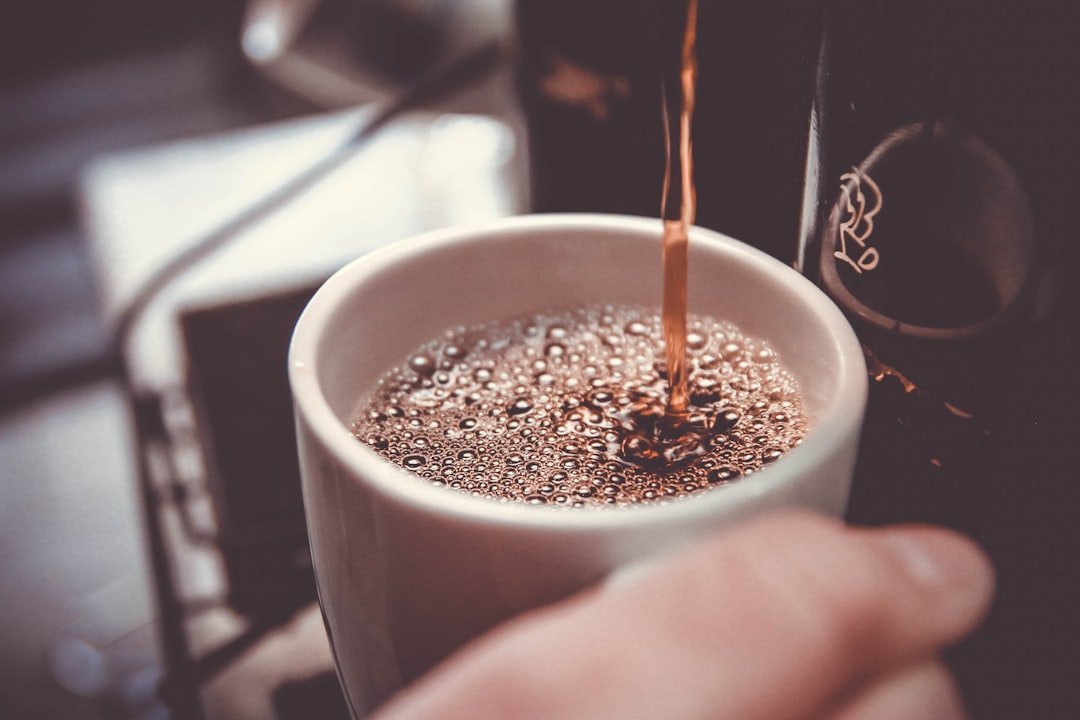
Caffe americano is the drink that exposes a café in about two sips.
People file it under “safe order,” somewhere between “I need caffeine” and “please don’t make me make choices before 9 a.m.” Fair enough. But a good caffe americano tells you more about an espresso bar than any caramel situation ever will.
Water is ruthless. Milk can soften a harsh roast, blur a sloppy shot, or help a blend coast on branding for another month. An Americano puts the espresso out in daylight. Fresh Cup reports that three out of four drinks sold at U.S. Starbucks stores are cold, so the longer hot espresso drink feels almost suspiciously direct. Very Italian. Very little hiding.
What is a caffè americano, really?
A caffè americano is espresso with hot water added, usually one or two shots stretched into a longer cup. You still get the espresso aromatics and some crema-like texture, but the added water makes the roast, the extraction, and the coffee itself much easier to taste.
Yes, there’s the World War II backstory: American soldiers in Italy wanted something closer to the coffee they drank at home, so espresso got lengthened with hot water. Fine. Good trivia for a slow morning. In the cup, what matters is simpler. A single espresso is about 1 ounce. A double is around 2. Most Americanos land in the 6 to 8 ounce range. You can actually sit with it for a minute instead of tossing it back like a tiny exam.
That longer format is exactly why the drink is harder to fake than people think. If a shot runs too long, the Americano spreads that woody bitterness across the whole cup. If the espresso is dialed in, you get sweetness and structure, plus a cleaner finish. Fresh Cup’s August 12, 2026 reporting on cupping scores helps here: specialty coffees score from 80 to 100, with most landing in the 80–90 range. Those scores track aroma, acidity, body, defects, aftertaste, and balance. An Americano gives those same qualities more room to show up in normal life, far away from a cupping spoon and tasting notes printed in tiny serif fonts.
María Esther Thome-López of Coffee Flock said roasters are reformulating blends, exploring new origins, and changing how they buy to preserve the flavor profiles customers expect. You might miss some of that in a latte. In an Americano, you meet it straight on.
Young professionals keep ordering them for a reason. The drink fits a very specific mood: you wanted coffee, you wanted it pulled properly, and you definitely did not need a whole dairy subplot. Fresh Cup points to shops like Little Joy in Northfield, Minnesota, where café-specific drinks help customers feel folded into the experience. The Americano belongs in that same café world, just with less choreography. It also usually costs less than a milk-heavy specialty drink. Helpful, since rent is still doing performance art.
The flavor starts on the farm long before the kettle
If you care about arabica coffee beans, coffee farming, single origin coffee, or the whole farm to cup coffee idea, the Americano is where those phrases stop sounding polished and start earning their keep.
Arabica matters here. Once espresso gets diluted, the bean has to hold onto sweetness and stay vivid in a longer cup. That is where arabica coffee usually does well. Compared with robusta-heavy profiles, arabica tends to carry nuance and aroma better once water enters the chat. Florals, citrus, cocoa, toasted nuts: whatever is genuinely in the coffee has a better chance of surviving if the espresso was built well. For a deeper look at species differences, see Arabica vs Robusta: The Real Difference Explained.
That matters even more now because supply is tight. Perfect Daily Grind reported on August 28, 2026 that ICE-certified arabica stocks fell to 226,242 bags, barely above the 224,000 low seen in November 2023. The same roundup cited a Reuters poll forecasting arabica at about US$3 per pound by year-end. Cafés feel that fast.
Coffee farming volatility shows up quickly in an Americano. If a roaster changes an origin, tweaks a blend, or buys differently because prices moved again, the cup tells you. Fresh Cup’s August 12 piece tied those shifts to climate swings, geopolitical pressure, market volatility, and price moves. Coffee Flock’s response was practical: reformulate blends, explore new origins, adjust purchasing. Sensible. Also very audible once hot water hits the espresso.
Then there’s weather, which never learned humility. Sprudge reported that Hurricane Lala hit Hawaii’s Big Island on August 15, 2026. Ka’u has about 500 acres of coffee land, mostly worked by smallholders. Some farms lost around half their younger trees, and rainfall peaked at 43 inches. If “origin issues” sounds like niche trivia for people with three grinders and a spreadsheet, try saying that to a café trying to keep an espresso profile steady after a storm tears through supply. Related pressures are also shaping entire producing regions, as explored in How Climate Change Is Reshaping Coffee Regions.

FAQ: arabica coffee beans, coffee farming, and single origin coffee
Are arabica coffee beans better for an Americano?
Often, yes. Arabica coffee beans usually bring sweetness, acidity, floral notes, and aroma, which stay interesting after water is added. Species alone does not save a bad shot, though. Roast and extraction still decide whether the cup tastes clear or tired. That matters even more with arabica under pressure: Perfect Daily Grind reported a forecast near US$3 per pound and ICE stocks at 226,242 bags.
How does coffee farming affect the taste of an Americano?
A lot. Farming conditions shape density, ripeness, sweetness, and flavor before roasting starts. Climate shocks can change availability and cup profile quickly. Sprudge reported that Hurricane Lala hit Ka’u on Hawaii’s Big Island on August 15, 2026, where about 500 acres of coffee land were affected and rainfall hit 43 inches. Coffee Flock also told Fresh Cup that sourcing pressures have forced blend reformulations and origin changes. You taste that in an Americano faster than in a latte.
Is single origin coffee good for a caffè americano?
Yes, if the espresso is balanced. Single origin coffee can make a caffè americano vivid and expressive because the added water opens up flavor detail. The tradeoff is consistency. Fresh Cup notes that most specialty coffees score in the 80–90 range, but roasters are also reformulating blends as costs and availability shift. Blends often give cafés a steadier espresso profile from week to week.
Next time you order one, ask what’s in the espresso that day and whether it changed recently. If the answer gets specific, you’re probably in good hands. If the answer drifts into “smooth, balanced, rich,” proceed accordingly.
Frequently Asked Questions
Are arabica coffee beans better for caffe americano?
Often, yes. Arabica coffee beans usually keep more sweetness, aroma, and acidity in a longer cup, which helps a caffe americano stay expressive after water is added.
How does coffee farming affect caffe americano flavor?
Coffee farming shapes ripeness, density, and sweetness before roasting even begins. When weather, pricing, or sourcing changes hit farms, those shifts can show up quickly in an Americano.
Is arabica coffee always best for a caffe americano?
Not always. Arabica often performs well because it carries nuance, but roast quality and extraction still matter more than species alone.
Is single origin coffee good for caffe americano?
Yes, if the espresso is balanced. A single origin can make a caffe americano more vivid and detailed, though blends often deliver more consistency from cup to cup.
Sources
- Peter Giuliano: “Specialty Cold Coffee is the Future” — https://freshcup.com/peter-giuliano-specialty-cold-coffee-is-the-future/
- Amidst Economic Turmoil and Climate Crisis, Are Coffee Scores Still Relevant? — https://freshcup.com/amidst-economic-turmoil-and-climate-crisis-are-coffee-scores-still-relevant/
- What do the pioneers think of specialty coffee’s future? — https://perfectdailygrind.com/2026/08/pioneers-specialty-coffee-future/
- Coffee News Recap, 28 Aug: ICE-certified arabica stocks fall close to lowest levels since 1999, C price forecast at US$3 — https://perfectdailygrind.com/2026/08/coffee-news-recap-28-august-2026/
- Hurricane Lala Devastates Coffee Farms On Ka’u — https://sprudge.com/hurricane-lala-devastates-coffee-farms-on-kau-1277238.html
