

Your $6 latte is catching heat lately, as if that extra dollar or two must mean coffee farmers are finally doing great. Nice thought. Not really how this works.
The hard truth behind the economics of coffee farming and what farmers actually earn is that higher café prices and pricier grocery shelves usually reflect fuel, freight, tariffs, drought, compliance costs, and retailers protecting their margins — not life suddenly getting easier at origin. Coffee can get more expensive for you while staying financially shaky for the person who actually grew it. That’s the plot twist.
And that’s the real scandal. Not that coffee costs money. Not even that specialty coffee can be expensive. It’s that a product with this much global demand, branding, ritual, and markup still leaves a lot of farming households with thin margins, rising costs, and a frankly rude amount of risk. The 2026 Coffee Barometer puts it plainly: even during historically high coffee prices, producers remain structurally vulnerable because most of the value is still captured far from the farm. “High prices” can look great on paper and still do very little for real security.
So no, this is not a guilt trip about your morning espresso. Espresso remains sacred. This is a reality check about who gets paid, who absorbs the shocks, and why “expensive coffee” and “prosperous farmers” are not the same sentence.
Your $6 latte is not the scandal — the real scandal is how little of coffee’s value reaches the farm
A lot of people see higher coffee prices and assume money must finally be flowing back to farmers. Logical guess. Wrong chain.
Retail coffee prices have been pushed up by a long list of things that happen after the farmgate: shipping, fuel, tariffs, packaging, labor, drought-related supply pressure, and all the little costs that pile up between a coffee tree on a hillside and a cappuccino in a city café. Reporting from The Washington Post tied recent consumer price increases to exactly that kind of broader inflation pressure, not some sudden golden age of farm prosperity.
That distinction matters. A lot.
Because if you’re trying to understand the economics of coffee farming and what farmers actually earn, the key question isn’t “why is my coffee more expensive?” It’s “who in the chain is actually keeping more of that money?” Very different question. Usually a less flattering answer.
The 2026 Coffee Barometer, published through Solidaridad Network and partners, makes the point sharply: the industry has spent years treating symptoms instead of causes. Low-price crises get attention. Climate shocks get attention. Certification schemes get attention. But the deeper issue is that coffee’s value is still distributed in a way that leaves producers exposed. Even when global prices run high, producer households can still get squeezed by rising input costs, debt, labor shortages, and climate volatility. In other words, a price spike does not magically fix a structurally uneven market.
That’s a little counterintuitive, which is exactly why it matters. We tend to imagine commodity pain in low-price years and relief in high-price years. Coffee does not behave that neatly. A “good market” can still be a pretty mediocre year on the farm if costs rise too, yields disappoint, or the farmer sold early before prices moved. It’s one of those businesses where the headline and the lived reality are barely in the same group chat.
And yes, the optics are strange. The industry can wax poetic about provenance, terroir, tasting notes, processing methods, and café experience while the people at origin are still carrying the most unpredictable part of the business. That mismatch isn’t just unfair. It’s economically unstable.
To understand one major source of farm-level pressure, it helps to look at how climate change is reshaping coffee regions, because weather volatility increasingly affects both yields and costs long before coffee reaches a roaster.
Coffee farmers don’t sell vibes — they sell into a chain where everyone else gets more pricing power
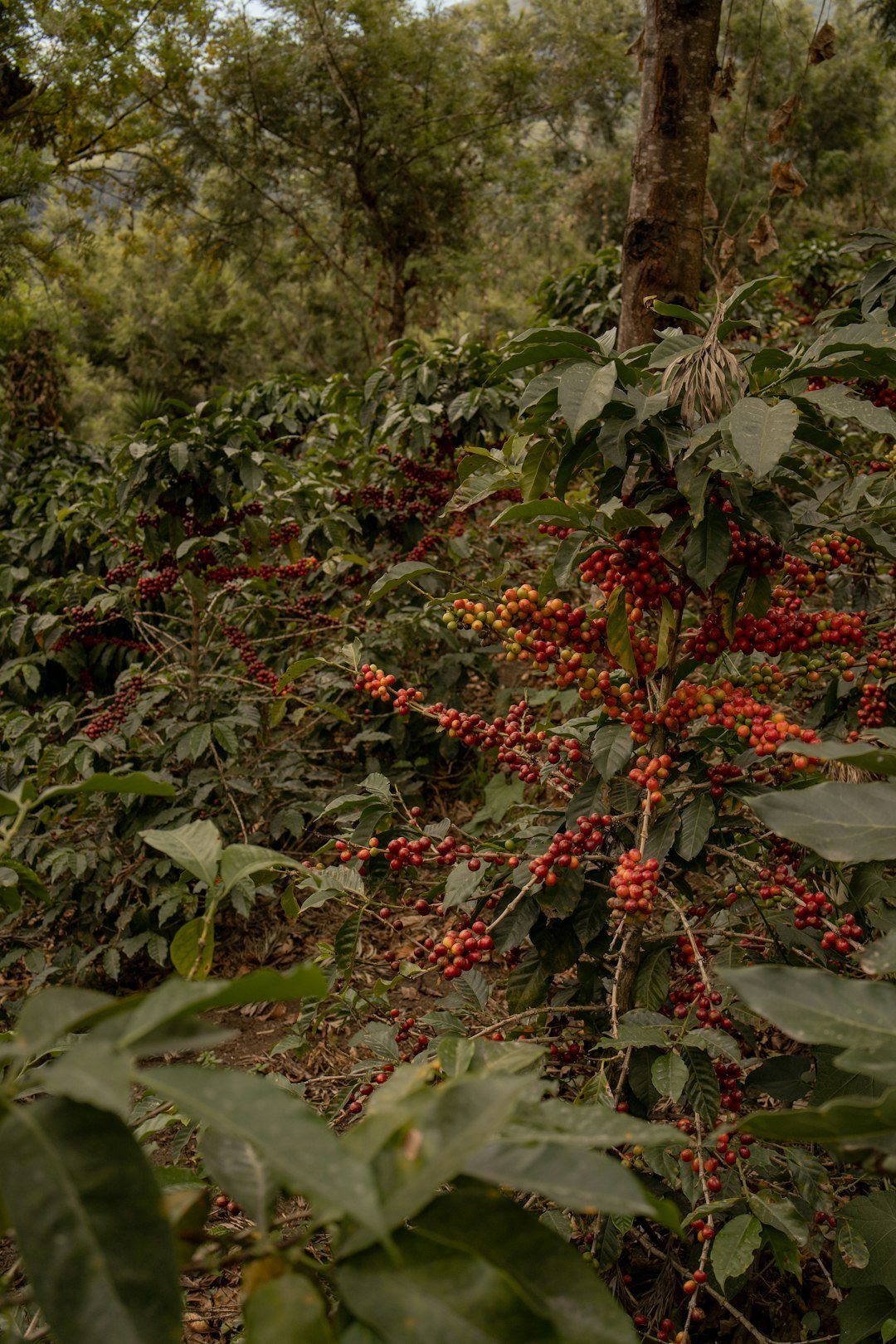
Coffee farmers are not, generally speaking, selling the final thing you buy. They’re selling cherries, parchment, or green coffee long before roasting, branding, café design, playlist curation, or the little heart in your flat white shows up.
That matters because the biggest margins in coffee usually appear later in the chain, after the raw product leaves the farm.
Farmers often sell into systems where they have less market information, less storage capacity, less ability to wait out a bad price, and less power to negotiate terms. They’re usually price-takers in a global market that is famously volatile. Traders, exporters, importers, roasters, and retailers tend to have more leverage and more ways to protect their margins. Not perfectly, of course. Roasting and retail are not risk-free fairylands. But compared with smallholders at origin, downstream actors usually have more flexibility.
That’s one of the quietly brutal things about coffee economics: the person growing the crop often has the least room to maneuver.
The Coffee Barometer argues that over the past 20 years, the industry has leaned hard on short-term transactions and voluntary sustainability programs. Some of those efforts have improved conditions in meaningful ways, and that deserves credit. But the report’s bigger point is harder to dodge: those interventions did not fundamentally rebalance who captures value. The market structure still tends to reward actors farther from the farm.
Kind of wild, right? Coffee’s most romantic storytelling is all about origin, but coffee’s strongest pricing power often lives somewhere else.
To be fair, not every supply chain works the same way. Some specialty coffee models, direct-trade relationships, quality premiums, and producer-led brands can improve returns. Cooperatives can create bargaining power. Long-term sourcing relationships can reduce uncertainty. Better processing and better quality can open doors to better prices. All true.
But that is still not the default reality for much of the world’s coffee. The default looks more like this: origin takes on weather risk, pest risk, yield risk, labor risk, and financing risk, while value piles up as coffee moves toward roasting, branding, and retail. Farmers grow the crop. Everyone else gets to add layers of monetizable context.
And yes, “farmers don’t sell vibes” is a joke. It’s also the business problem. Coffee becomes a premium lifestyle product after it leaves the farm, and that transformation creates a lot of value. The people doing the earliest and riskiest part of the work often receive the smallest share of the upside.
Quality can improve returns, but it also depends on factors like elevation and growing conditions. For a useful companion read, see how altitude shapes the coffee in your cup, which helps explain why some origins can command stronger premiums than others.
Even when coffee prices go up, farmers’ costs go up too — sometimes faster
A higher coffee price sounds great until you remember that farmers also have bills. Plenty of them. And those bills do not freeze just because the market is having a moment.
Fertilizer, labor, transport, farm maintenance, equipment, credit, processing, and climate adaptation all eat into revenue. So a stronger sale price does not automatically mean stronger household income. This is the part that disappears when people talk about coffee like it’s just one number on a commodities screen.
Brazil is a useful case study because it’s huge, influential, and currently a nice reminder that bigger output does not equal easy money.
According to Daily Coffee News, citing a USDA Foreign Agricultural Service report, Brazil’s 2026/27 coffee production is forecast to rise 14.1% to 71.9 million 60-kilogram bags. Exports are forecast to rise 29.6% to 49.07 million bags. On paper, that sounds like pure abundance. More coffee, more shipments, more movement. Bellissimo.
Except the same reporting notes that falling arabica and robusta prices are colliding with still-high farm costs, especially fertilizer. So even with a larger crop, profitability can stay under pressure. That’s the sort of detail that rarely makes it into consumer chatter. People hear “record crop” and think relief. Farmers hear “record crop” and may also hear “downward price pressure while my costs are still obnoxious.”
Very different vibe.
Then there’s labor. Coffee harvesting is labor-intensive, especially in places where terrain limits mechanization or where selective picking matters for quality. And labor is getting harder to find in many regions. Reporting from The Guardian points to rural out-migration and worker shortages as major pressures. Younger workers leave the countryside for cities because city jobs often pay more — or at least feel less physically punishing. Hard to blame them. Romanticizing rural labor is easy from a distance and a lot less convincing under actual sun.
That labor shift changes farm economics fast. If workers are scarce, wages rise or harvests suffer. Sometimes both. Coffee cherries, inconveniently, do not wait around forever while a farm sorts out staffing.
Here’s the part worth remembering: coffee farming is one of those businesses where a “good year” can still feel financially average once you subtract inputs, labor, transport, debt service, and the random chaos of weather. A nice market price can get eaten alive by reality. That’s why headlines about coffee prices are so often incomplete. The gross number is not the same thing as the net result.
And net is what pays school fees, repairs equipment, covers emergencies, and determines whether farming still looks viable to the next generation.
The new coffee bill nobody talks about: compliance, mapping, and admin work farmers didn’t ask for
Now for the least glamorous sentence in coffee: compliance is part of the crop now.
Not because farmers wanted a side career in data management, but because market access increasingly depends on traceability, verification, and digital documentation. Some of this is necessary. If major markets want to reduce deforestation risk, that matters. Coffee should not get a free pass on environmental accountability. But let’s be honest about who ends up doing a lot of the extra work.
Smallholders and cooperatives, mostly.
A clear example is the EU Deforestation Regulation, or EUDR. According to Daily Coffee News, enforcement for large and medium operators is currently slated for Dec. 30, 2026. To remain viable suppliers to Europe, cooperatives are being asked to map plots, manage geolocation data, verify records, and work through digital systems that can be technically and financially demanding.
That may sound like boring admin. It isn’t. It’s economics.
Because compliance has costs: training, devices, connectivity, staff time, data management, verification systems, and all the inevitable troubleshooting that happens when policy meets rural infrastructure. Fairtrade’s launch of a free geolocation tool is helpful, and it says a lot that such a tool is needed in the first place. Brenda, a senior advisor quoted in the reporting, noted that farmers are having to adopt new digital tools and map farm plots in order to remain viable suppliers to the European market. Translation: there’s a whole new to-do list attached to selling coffee, and origin is expected to absorb a lot of it.
That’s the imbalance.
Downstream markets want compliance. Downstream companies need due diligence. But the technical burden often lands first with producers and cooperatives that have the least spare capacity. So the coffee industry increasingly expects farmers to be growers, climate managers, record keepers, data uploaders, and compliance officers — while still paying them like commodity suppliers.
That sentence should sting a little, because it sounds absurd when you say it out loud.

And this is one of those “wait, really?” realities that changes how you look at a bag of coffee. Sustainability and traceability are not just values statements. They’re operating systems. If the industry wants them — and there are good reasons to — then it also has to deal with who pays for them. Otherwise “responsible sourcing” becomes one more unpaid assignment for origin.
So what do farmers actually earn? Usually less than the story on the bag suggests
This is the part where everyone wants one clean number. There isn’t one.
Farmer earnings vary wildly by country, region, altitude, farm size, productivity, quality, debt, labor access, certification status, cooperative membership, processing capability, and whether coffee is sold conventionally or into specialty channels. A farmer with high yields and strong market access can have a very different outcome from a farmer with a smaller plot, lower productivity, and no cushion against price swings.
So no, there is no universal paycheck figure for coffee farmers.
But the broad pattern across the reporting is painfully clear: very little of coffee’s final value reliably makes its way back to the farm, and many producer households effectively subsidize the industry through unpaid family labor. The 2026 Coffee Barometer says this directly. That phrase — subsidize the industry — should make you pause for a second. Because it flips the usual narrative. Coffee is often framed as a sector supporting rural livelihoods. In practice, many rural households are supporting the coffee sector by absorbing costs and labor the market does not properly reward.
That’s not just unfair. It distorts the whole picture of profitability.
A bag of coffee can show up dressed in beautiful design, origin romance, tasting notes like bergamot and panela, and enough premium aesthetics to make your kitchen counter feel emotionally superior. Meanwhile, the farm behind it may still be operating on razor-thin margins. That disconnect is not rare. It’s normal enough that the industry can keep functioning while most consumers barely notice.
And to be clear, this is not a blanket accusation against every roaster or every brand. Some businesses do put real work into transparent sourcing relationships, better pricing, and long-term partnerships. But if you’re looking at the economics of coffee farming and what farmers actually earn, the smarter consumer question is not “Why is coffee so expensive now?” It’s “Who in the chain is actually earning more?”
Spoiler: often not the grower.
That’s the uncomfortable truth behind premium coffee culture. Higher retail prices can coexist with fragile earnings at origin because value gets layered on after export, while risk is concentrated before it. The farmer handles biology, weather, and labor. The market rewards branding, convenience, and proximity to the consumer. Guess which side usually gets the better deal.
If that feels backward, your instincts are working.
What changes the math — and what coffee drinkers should pay attention to next
The good news is that the math is not fixed forever. Coffee economics are man-made, which means they can be changed by actual choices rather than vague good intentions.
Profitability tends to improve when farmers have stronger market access, better pricing mechanisms, more resilient yields, and supply relationships that share risk instead of dumping it all at origin. That can mean long-term contracts, quality premiums that are meaningful rather than symbolic, support for climate adaptation, financing structures that don’t punish farmers for being small, and transparent sourcing relationships that go beyond a nice farm photo and a paragraph about “community.”
In other words: less poetry, more terms.
Brazil offers a few practical examples. According to Daily Coffee News, producers are adapting through pruning strategies, diversification, and in some cases direct-to-consumer specialty sales. Those moves matter because they reduce pure dependence on raw commodity exposure. A farmer with more flexibility in how coffee is marketed — or with stronger yield resilience — has more room to survive price swings.
That’s the bigger lesson. Farm viability improves when producers can do more than sell undifferentiated raw material into volatile markets.
For coffee drinkers, the takeaway is not that you need to become a supply-chain detective before your first sip. Nobody is asking you to run forensic accounting on your cortado. But it is worth getting sharper about what fairness sounds like. If a brand talks about ethics, can it explain its sourcing relationships in concrete terms? Does it talk about pricing, partnerships, resilience, or producer support with any specificity? Or is it mostly leaning on cinematic mountain photos and phrases that just happen to look great in café-menu typography?
Because “ethical” can mean almost anything. Specificity means more.
And there’s a very practical reason to care. If coffee keeps getting pricier for consumers while remaining only marginally viable for growers, the industry does not just have a messaging problem. It has a supply problem. People do not stay in difficult, volatile agricultural work forever out of pure sentiment. If younger generations keep leaving coffee regions because the economics are weak, if climate risk keeps rising, and if compliance costs keep piling up without better returns, future supply gets shakier. Not theoretically. Materially.
That’s the thing tucked inside this whole conversation: the economics of coffee farming and what farmers actually earn is not just a fairness issue. It’s a continuity issue. If origin can’t make the business work, the rest of the chain eventually runs out of product to style, roast, market, and pour.
And yes, that should make the industry a little nervous.
Coffee has always been more than a beverage. It’s agriculture, trade, labor, climate exposure, and a lot of human improvisation packed into one tiny bean. The least glamorous truth in all that beauty is that the people doing the foundational work still too often earn the least secure living from it. Once you see that clearly, the question changes. Not “why is coffee expensive?” but “why is growing coffee still so precarious in a business this valuable?”
That question deserves better answers than the industry has given so far.
Frequently Asked Questions
Do higher coffee prices mean farmers earn more?
Not necessarily. Higher retail prices often reflect shipping, labor, packaging, tariffs, and retailer margins, while farmers still face rising input costs and weak pricing power.
Why are coffee farmers still financially vulnerable during high-price years?
Because farm income depends on net returns, not headline prices. Fertilizer, labor, transport, debt, lower yields, and early sales can erase the benefit of a stronger market.
What share of a coffee purchase usually reaches the farmer?
There is no single global percentage that fits every supply chain. But the consistent pattern is that farmers receive only a small share of coffee’s final retail value compared with downstream actors.
How does compliance like EUDR affect coffee farmers?
It adds real costs through mapping, geolocation, recordkeeping, training, and digital tools. Those requirements may improve traceability, but smallholders often carry much of the burden first.
Sources
- Solidaridad Network — https://www.solidaridadnetwork.org/news/sustainability-cannot-be-built-on-permanently-cheap-coffee-reveals-2026-coffee-barometer/
- Daily Coffee News — https://dailycoffeenews.com/2026/06/16/fairtrade-launches-free-eudr-geolocation-tool-for-coffee-cooperatives/
- The Washington Post — https://www.washingtonpost.com/business/2026/06/10/prices-are-soaring-these-products-driving-up-inflation/
- Daily Coffee News — https://dailycoffeenews.com/2026/06/04/brazil-coffee-report-record-crop-and-exports-expected-for-2026-27/
- The Guardian — https://www.theguardian.com/world/depopulation
