

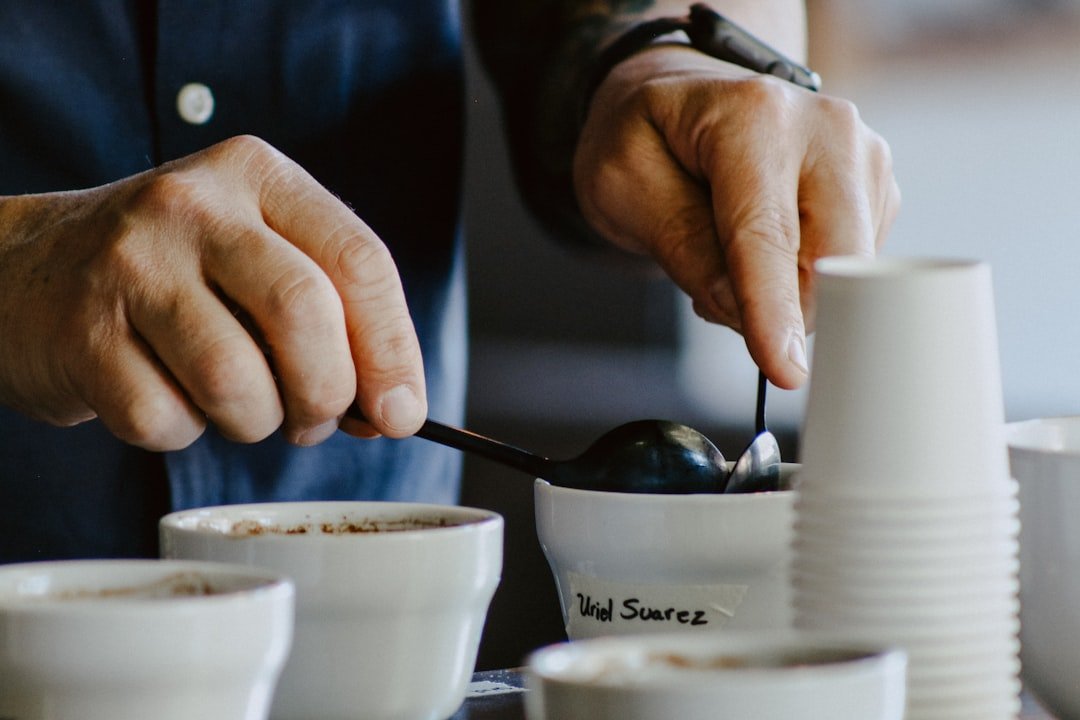
Here’s the funny thing about specialty coffee market growth in 2026 and what is driving it: it’s still called “specialty” even though, for a lot of people, it’s just coffee now. Not for everyone, sure. Your uncle with the industrial-sized tub of pre-ground dark roast is still out there, loyal as ever. But zoom out, and the bigger story is obvious. Specialty coffee isn’t some precious little corner of the market anymore, reserved for people with three kettles and opinions about bloom time. It’s in everyday life now. Commutes. Office runs. Iced 3 p.m. revivals. Home setups that are less “barista cosplay” and more “I know what bad coffee tastes like, and I’m not doing that to myself again.”
That’s the real answer to specialty coffee market growth in 2026 and what is driving it. The category is growing not because it’s the latest thing, but because it’s become the normal upgrade. And once something becomes normal, the story changes. You’re not convincing people to care anymore. You’re just meeting expectations they already have.
Specialty coffee market growth in 2026 and what is driving it: the default upgrade
For years, specialty coffee was framed like an exclusive club. A little insider-y. A little gatekept. Great coffee, yes, but also a weird amount of social pressure to casually know the difference between honey process and natural process before your first sip of the day. That version still exists in pockets, but it’s not the main character anymore.
The stronger 2026 narrative is much simpler: normalization.
According to the Specialty Coffee Association’s 2026 National Coffee Data Trends Report, 47% of U.S. adults drank specialty coffee in the past day, a record high. And “past day” is the stat that really matters, because it tells you this isn’t occasional behavior. It’s routine. It’s “grabbed one before work,” “picked one up with lunch,” “made one before the Zoom call I absolutely should have declined” behavior. Nearly half of American adults consumed specialty coffee in a single day. That’s not niche enthusiasm. That’s a category-level habit.
Daily Coffee News gets at the same idea from another angle: 58% of Americans drink specialty coffee weekly. Weekly consumption is useful because it cuts through the fantasy and shows what people actually build into real life. If more than half the country is drinking specialty coffee in a typical week, then “premium” has officially wandered into everyday territory and made itself at home.
That’s a bigger shift than it sounds.
For a long time, specialty coffee was treated like a splurge. The Saturday latte. The one café you visited when you had extra time, extra money, or both. But the market is growing in 2026 because more consumers don’t see specialty as a once-in-a-while indulgence anymore. They see it as the better default. Not always cheap, not always equally accessible, but increasingly woven into the ordinary rhythm of life.
And that matters, because ordinary rhythm is where markets get real.
A category doesn’t become durable because people admire it from a distance. It becomes durable because it fits into Tuesday. Specialty coffee now fits the Tuesday version of you: commuting, working hybrid, grabbing a cold drink in the afternoon, meeting someone at a café instead of a conference room, or making something better at home because bad coffee before emails feels strangely offensive.
One underrated reason this is happening: people are simply more fluent in coffee than they used to be. Not expert-level fluent. No one’s asking the average customer to write tasting notes like a Q grader. But people generally know what espresso is. They know the difference between a cappuccino and a cold brew. They know oat milk changes texture. They know flavor exists beyond “strong” and “not strong.” That kind of cultural fluency lowers the barrier to entry.
So yes, specialty coffee demand is rising. But more specifically, it comes down to less friction. Less intimidation. More access. Better formats. More places to buy it. More familiarity. Specialty didn’t water itself down into growth. It learned how to speak like a normal person.
That’s the part people miss. It also connects naturally with how product innovation is changing coffee more broadly, especially in areas like future coffee capsule technology, where convenience and quality are increasingly expected together.
The real engine is younger professionals
If you want to know who’s pushing the category forward, the SCA data is pretty clear: adults aged 25–39 lead specialty coffee adoption. Millennials and older Gen Z are the growth cohort that matters most in 2026.
And no, it’s not just because they like nice things and posting iced drinks online. That cliché should have been retired a while ago.
The better explanation is that this group is extremely good at evaluating value. Sometimes almost annoyingly good. They’re not blindly willing to pay more. They are willing to pay for an upgrade that feels real.
That means better taste, obviously. But it also means experience, convenience, format, customization, and consistency. A specialty drink wins when it feels worth it on multiple levels at once. It has to taste better than basic coffee, feel more personal than commodity coffee, and deliver enough emotional upside that the price doesn’t feel absurd. High bar. But specialty has gotten a lot better at clearing it.
Daily Coffee News reports that growth is especially strong in espresso-based beverages and cold coffee, which makes perfect sense if you look at how younger consumers actually live. They want coffee that moves with them. Coffee that works in-office, on the go, during a client call, after the gym, in the middle of a heat wave, or at 2:30 p.m. when motivation has quietly left the chat.
Espresso drinks are naturally modular. Hot or iced. Dairy or non-dairy. Simple or flavored. Strong but smooth. Cold coffee, meanwhile, is no longer a seasonal side character. It’s a year-round format category now. That’s not a small shift. It means specialty growth is being driven not just by what coffee is, but by how flexibly it can show up in people’s lives.
Here’s the sharper point: specialty wins with younger professionals because it works as a small luxury with a practical payoff.
That combination is powerful.
A six-dollar drink is easier to justify if it delivers caffeine, ritual, sensory pleasure, and a mild but meaningful sense that your day hasn’t completely hijacked you. Main-character energy before a 9:00 a.m. meeting? Slightly ridiculous, yes. Also very real. We can laugh at that dynamic and still admit it has economic weight.
The old assumption was that premium coffee demand would weaken under financial pressure because consumers would trade down. Sometimes they do. But coffee has a weird resilience because it lives in that sweet spot between necessity and treat. For a lot of younger consumers, specialty coffee is one of the few premium purchases that still feels reachable. Not cheap, but reachable. That makes it sticky.
The SCA also notes that this demand is tied to out-of-home consumption, which is a quiet but important signal. Cafés are still social infrastructure. They’re not just places that sell drinks. They’re workspaces, meeting points, decompression zones, first-date arenas, solo reset spots, and low-stakes third places in a culture that really doesn’t have enough third places.
That helps explain why specialty coffee growth isn’t only happening in grocery aisles or at-home gear categories. It’s happening through culture. Through presence. Through physical spaces people actually want to be in.
A lot of categories would kill for that. And as consumer tastes become more confident, adjacent shifts like the rise of decaf specialty coffee show how broad the premium coffee audience is becoming.
Flavor has become a growth strategy, not just a tasting note
One of the smartest things specialty coffee has done—maybe without fully realizing it—is make flavor easier to understand.
The SCA identifies flavor interest as a major demand driver in 2026, and that deserves more attention than it usually gets. Because flavor used to be one of specialty coffee’s biggest communication problems. The industry cared deeply about taste, but often described it in ways that felt custom-built to scare normal people off. Notes of red currant, bergamot, tamarind, and apparently a graduate seminar in acidity.
You really do not need all that.
Consumers don’t need to identify seventeen tasting notes to know they like a coffee. They just need to understand that specialty offers more possibility. More sweetness. More balance. More texture. More personality from one drink to the next. More than the old binary of “strong” or “burnt but emotionally familiar.”
That’s a huge reason the category is growing.
Flavor has become legible.
People now understand, often instinctively, that a specialty cappuccino can taste meaningfully different from café to café. That a cold brew can be chocolatey, fruity, crisp, creamy, bright, or mellow. That origin, roast style, milk choice, and preparation all change the cup. This wasn’t mass consumer coffee knowledge 15 years ago. That broader literacy is one of the market’s quieter accelerants.
Cold formats and espresso drinks help a lot here because they translate specialty flavor into approachable products. An iced latte is a much easier entry point than a stern lecture about extraction. A seasonal espresso menu communicates flavor through experience, not jargon. Milk-based drinks soften edges and widen the audience. Cold coffee highlights sweetness and refreshment in ways people instantly get.
That doesn’t mean black coffee is out. Far from it. It just means the pathway into specialty is no longer so narrow.
Fresh Cup has framed specialty’s expansion as a broader shift from niche to mainstream, and flavor is one of the clearest bridges. Craft values can stay intact while customer communication gets more human. You don’t have to flatten quality to make it accessible. You just have to stop talking like everyone walked in ready for an exam.
That’s a subtle but important market shift.
Specialty coffee in 2026 is growing because it has become less intimidating without becoming generic. Or at least the best operators have figured out how to do that. They present flavor as discovery, not homework. They make the cup feel inviting, not corrective.
And here’s the part that really matters: flavor isn’t just a product attribute anymore. It’s a customer acquisition tool. If people can understand and enjoy the difference, they come back for it. Not because they’ve turned into coffee purists overnight, but because once your palate notices range, going back to flat, stale sameness feels a little bleak.

Growth is also happening behind the scenes
Consumer demand gets all the attention because it’s visible. Sales. Drink trends. Café lines. Social media. Everybody loves the shiny stuff. But specialty coffee market growth in 2026 and what is driving it depends just as much on what’s happening behind the scenes.
Because more people wanting great coffee is only half the equation.
The other half is whether more high-quality coffee can reliably make it to market.
Daily Coffee News highlighted this well in its coverage of the Women-Powered Coffee Coalition in Chiapas, Mexico. The initiative focuses on post-harvest training, access to capital, and direct market access for women smallholder producers. That may sound like one of those producer-development stories that gets tucked away from the glamour of consumer trends, but it’s actually market infrastructure. Very real. Very practical. Very connected to growth.
Specialty coffee does not scale just because more people order flat whites.
It scales when producers have the tools, knowledge, and financial access to improve and maintain quality consistently. Post-harvest handling alone can dramatically shape cup quality. Fermentation control, drying practices, sorting, storage—all of that affects whether a coffee lands in specialty territory or misses the mark. Which is why quality can’t be reduced to origin mythology. Amazing coffee is agricultural work, logistical work, and technical work. The romantic label copy comes later.
Access to capital matters too, for a pretty simple reason: quality improvements usually require investment before they produce returns. Better infrastructure, better processing systems, better storage, more resilient operations—none of that appears by magic.
And direct market access matters because producers who are better connected to buyers can often capture more value and get clearer quality signals. That’s not only meaningful from an inclusion standpoint, though of course it is. It also helps build a stronger pipeline of specialty-grade coffee that can meet rising demand.
This is where the 2026 conversation gets a little more grown-up. The old version of specialty often talked about sourcing as story. The newer, more useful version talks about sourcing as system.
That distinction matters.
A compelling producer story is nice. A resilient sourcing relationship is better. One gives you marketing texture. The other gives you consistency, transparency, and a fighting chance at quality stability in a market that increasingly expects all three.
So no, producer inclusion is not some soft-focus side note. It’s not the “good vibes” appendix to the real business story. It is the business story. The brands, importers, and roasters best positioned to grow are probably the ones investing in stronger, longer-term supply relationships, because consistency is now commercially critical. Consumers may forgive the occasional menu change. They’re less forgiving when quality gets erratic.
That’s one of the less glamorous truths of specialty market growth: scaling quality is hard. Which is exactly why supply-side intelligence matters so much. It also overlaps with wider conversations about technology and traceability, including how AI is transforming coffee farming quality control across the supply chain.
Trade shows, global investment, and distribution prove this is a serious business category
One reliable sign that a category has grown up is this: the infrastructure around it gets bigger, denser, and more international.
That’s exactly what specialty coffee looks like in 2026.
The Specialty Coffee Association’s coverage of World of Coffee—positioned as Europe’s largest specialty coffee trade show—signals more than excitement. Trade shows at that scale bring together buyers, roasters, equipment makers, green coffee suppliers, service providers, sponsors, competitors, and future partners across the value chain. You do not get that kind of concentrated participation unless there’s real commercial confidence behind the category.
That’s the part a lot of casual observers miss. Specialty coffee still gets discussed in consumer terms—taste, trends, café culture, aesthetics—but its growth is increasingly being underwritten by business infrastructure. Equipment innovation. International sourcing relationships. Distribution strategy. Training ecosystems. Capital deployment. Event-scale networking that turns ideas into contracts.
Hype can fill a panel discussion. It cannot fill a trade floor year after year.
When an industry attracts global attention at that level, it usually means companies are planning expansion, defending market share, and betting on future demand. It means specialty coffee is no longer operating like a charming subculture trying to prove it belongs. It belongs. The argument now is about who executes best.
Fresh Cup’s framing is useful here too: as specialty moves from niche to mainstream, the challenge is not whether it can grow. The challenge is whether it can grow without becoming blandly premium.
That’s where things get interesting.
Because scale has a way of sanding down edges. Suddenly every menu starts sounding the same. Every roast profile drifts toward the safest possible middle. Every brand says “craft” while serving coffee that could’ve come from a focus group terrified of acidity. Chocolate. Caramel. Comfort. Fine. But if everything tastes politely similar, specialty loses part of what made people care in the first place.
The winners in 2026 probably won’t be the loudest brands talking about authenticity. Usually, the louder someone says “authentic,” the more suspicious everyone gets. The winners will be the operators who make specialty easier to access without flattening it into sameness. Better retail presence without deadening the flavor. Broader distribution without lowering standards. Convenience without cynicism.
That’s harder than it sounds.
It takes confidence. It takes operational discipline. It takes understanding that consumers are smarter than many brands assume. People may not all speak fluent coffee nerd, but they absolutely know when something feels thoughtful versus generic. They know when a café has an identity. They know when a drink tastes intentional. They know when “premium” is just expensive styling over average substance.
And that gets us to the more useful question for the rest of 2026.
The market has already answered whether specialty coffee deserves to grow. It does. The daily and weekly consumption figures make that hard to argue with. Younger professionals are driving demand. Flavor is pulling more consumers in. Supply-side investments are strengthening the pipeline. Global business infrastructure is reinforcing the category’s seriousness.
So maybe stop asking whether specialty is still premium.
That’s yesterday’s framing.
A better question is this: if specialty is now the expectation, which brands and cafés will actually deserve the loyalty boom that comes with it?
Sources
- Specialty Coffee Association, https://sca.coffee/sca-news/2026-national-coffee-data-trends-report
- Daily Coffee News, https://dailycoffeenews.com/2026/06/02/specialty-coffee-holds-lead-over-traditional-coffee-in-the-u-s/
- Fresh Cup, https://freshcup.com/
- Specialty Coffee Association, https://sca.coffee/sca-news/2026/1/14/registration-now-open-for-world-of-coffee-san-diego-2026-74krd
- Daily Coffee News, https://dailycoffeenews.com/2026/06/25/women-powered-coffee-coalition-launches-with-focus-on-chiapas-mexico/
Frequently Asked Questions
What is driving specialty coffee market growth in 2026?
Specialty coffee market growth in 2026 is being driven by daily consumer habits, stronger demand from adults aged 25 to 39, wider interest in flavor, and better supply-side investment. The category is growing because it now fits everyday routines instead of feeling like an occasional luxury.
Is specialty coffee still considered premium in 2026?
Yes, but the meaning of premium has changed. Specialty coffee is still seen as higher quality, yet for many consumers it has become the normal upgrade rather than a niche splurge.
Why are younger consumers buying more specialty coffee?
Younger professionals tend to be highly value-aware and will pay more when the upgrade feels real. Specialty coffee delivers taste, convenience, customization, and a small daily ritual that still feels financially reachable.
How does the supply chain affect specialty coffee growth?
Growth depends on more than café demand because high-quality coffee must be produced consistently. Training, post-harvest investment, access to capital, and stronger producer-buyer relationships all help expand the supply of specialty-grade coffee.
