
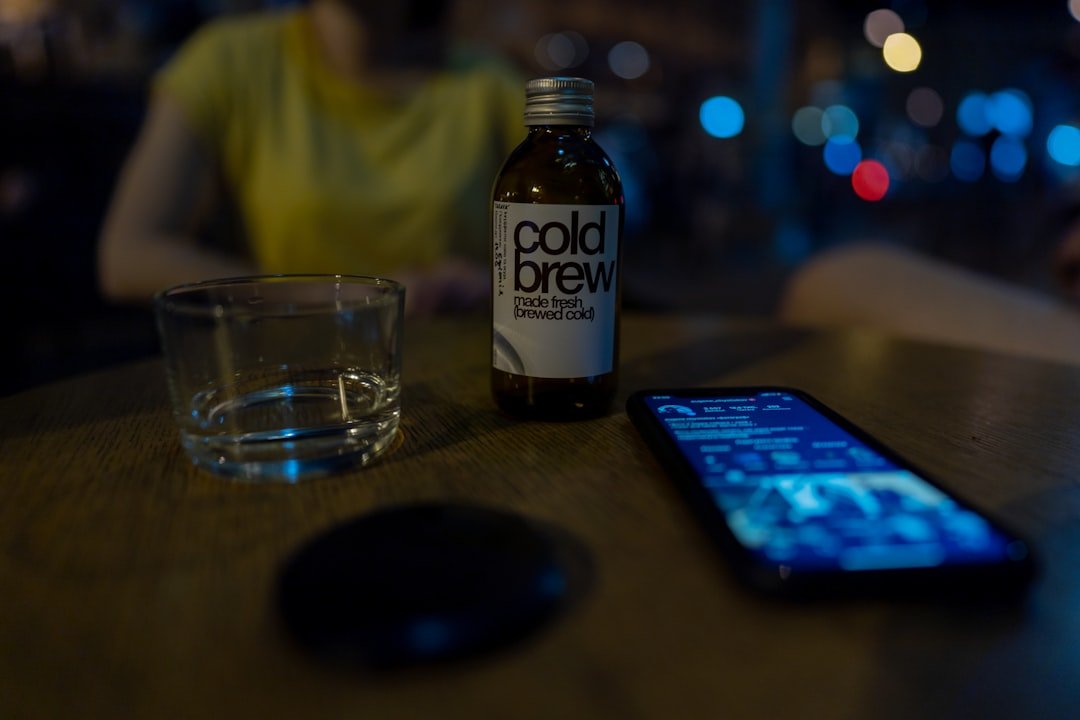
Cold brew vs americano looks like a simple café order, but it is really a choice between two different coffee worldviews. One leans on slow-steeped convenience and shelf-friendly flexibility; the other depends on espresso, water, and a fresher, clearer expression of what is in the cup.
Most people treat this as a flavor debate alone. It is not. These two drinks now sit at the intersection of consumer habit, retail strategy, and the very real pressures of sourcing, labor, and price volatility. Cold brew won the branding war years ago with bottles, subscriptions, and fridge-door dominance. The Americano, meanwhile, remains quieter and less photogenic, yet may be the more future-proof drink in a market that increasingly values flexibility, cost control, and transparency.
That split says a lot about where us coffee culture is right now. One format dominates RTD shelves and lifestyle collaborations. The other is still one of the clearest ways to taste what a coffee actually is when the bean matters more than the packaging around it.
Which is better: cold brew or Americano?
Cold brew and Americano are better for different reasons: cold brew is smoother, easier to batch, and often feels gentler, while an Americano is brighter, more aromatic, and closer to espresso’s original character. If you want mellow convenience, choose cold brew. If you want freshness, nuance, and more control, choose an Americano.
That plain answer matters because the route to the cup changes almost everything. Cold brew is extracted with time and cold water. An Americano is espresso diluted with water, hot or cold. One depends on long contact time. The other begins with pressure, intensity, and a fast extraction that is then opened up.
Cold brew usually reads as rounder, heavier, and softer around the edges. People often call it low acid, which is not always precise scientifically, but it makes sense in tasting terms. What they really mean is that it feels less sharp and less bright. Americano keeps more of espresso’s top-note aromatics. You are more likely to notice citrus, florals, berry notes, or crisp roast structure, especially with lighter or fruit-forward coffees.
There is also a hidden truth in this comparison: when people say cold brew tastes better, they often mean it tastes more forgiving. It is less likely to expose mediocre beans, uneven grind quality, or a roast that is not doing much. Americano is less forgiving because it asks more of the coffee and more of the barista. But that is also why it can be more rewarding.
When the espresso is good, the Americano feels honest in a way cold brew sometimes does not. If you want a deeper look at how chilled drinks split by extraction style, cold brew vs iced coffee is another useful comparison, because it shows how often people confuse temperature with brewing method.
Caffeine myths also distort this conversation. Cold brew is not automatically stronger in every serving. Some cold brew is sold as concentrate and diluted later. Some is ready to drink. Some cafés serve large pours over ice. An Americano might be one shot, two shots, or three. Cup size, dilution ratio, and shot count matter more than the label. Cold brew is an extraction method, not a caffeine unit.
A drink can taste smoother and still carry a lot of caffeine. That is one reason people underestimate cold brew. The palate reads easygoing while the body may read very different signals an hour later.
Cold brew did not win on taste alone—it won on format
If you want to understand why cold brew became such a force, stop looking only at the cup and start looking at the cart. According to InkRoast’s analysis of purchase data across more than 30 independent roaster Shopify stores, cold brew concentrate averaged 34% higher cart value than comparable iced coffee products, and cold brew subscribers reordered at 2.4 times the rate of one-time iced coffee buyers. Roasters offering cold brew subscriptions also retained customers 60% longer than those offering only whole bean or ground subscriptions.
That is not just beverage preference. It is behavior design with caffeine.
Cold brew fits how many young professionals actually live. You make it once or buy it once, then coast. It sits in the fridge and waits. It does not ask for fresh dialing-in, a grinder, or five quiet minutes before a meeting. You can drink it black, add milk, shake it with oat, pour it over ice, top it with tonic, or turn it into a protein-heavy wellness experiment. Cold brew rarely breaks under customization.
Americano does not scale into daily life the same way. It is more immediate and more perishable in a sensory sense. It wants to be made and drunk, not stored for later. That makes it a more fragile commercial format, even if it can be the better coffee experience.
That is why cold brew became a lifestyle product first and a coffee product second. It moved beyond cafés into grocery, convenience, office fridges, and subscription boxes because the format is cooperative. It travels well, stores well, and merchandises beautifully. It turns coffee into convenience without fully losing the glow of specialty credibility.
A lot of products fail because they ask too much from the consumer. Cold brew asks almost nothing. That is not a criticism. It is excellent commercial logic, and it explains why the winner in coffee is not always the drink with the most sensory complexity. Sometimes it is the drink that best fits Tuesday.
Why does an Americano still taste more like real coffee?
An Americano often tastes more like real coffee because it starts with espresso extraction, which preserves volatile aromatics, acids, and structure more vividly than long cold steeping. Adding water expands espresso’s character rather than replacing it, so the drink usually shows more aroma, contrast, and origin detail than cold brew.
That practical answer lines up with how major chains are now explaining the category. Starbucks recently published a consumer-facing explainer on the differences between iced Americanos, iced coffee, and cold brew. That matters because large chains do not spend time clarifying categories unless the confusion is widespread and commercially important.
For years, many customers treated cold coffee as one giant iced category. The industry knows better. These are different beverages with different use cases, margins, and flavor expectations. What makes the Americano feel more like real coffee is not nostalgia. It is transparency.
Espresso extraction tends to preserve aromatic compounds that can mute during extended cold steeping. The result is a cup with more lift, more edge, and more structure. You may taste sweetness and bitterness in sharper contrast. You may notice fruit, florals, or spice more clearly. You may also notice flaws more clearly, which is part of the point.
Smooth is lovely, but smooth is not the same thing as expressive. That distinction matters even more when you start paying attention to origin and processing. A coffee with a distinctive post-harvest style, such as honey coffee processing, can show up very differently depending on the brew method.
Honey coffee processing does not mean honey is added to the beans. It refers to a method where some of the sticky fruit mucilage is left on the bean during drying, often leading to coffees with syrupy body and layered sweetness. In espresso, that character can come through with striking clarity. In cold brew, some of those lively details may flatten into a more generalized cocoa-caramel profile. If you want a broader primer on how processing changes flavor, washed vs natural coffee helps frame why these distinctions matter in the cup.

- Cold brew: low-temperature, long-time extraction; mellow texture; lower-acid perception; easy batching; highly customizable
- Americano: espresso plus water; brighter aroma; clearer structure; fresher expression; more dependent on shot quality
Dilution in an Americano does not weaken coffee in the simplistic way many people assume. It changes concentration, yes, but it can also reveal flavors that feel compressed in straight espresso. Add water well, and you are not ruining the shot. You are opening it up.
What the cold brew boom says about us coffee right now
Cold brew still has momentum not because everyone became a tasting-note obsessive, but because it fits the way American retail works. Sprudge’s coverage of a branded nitro cold brew can launch from GWAR shows how cold brew keeps crossing into lifestyle, music, convenience, and impulse-purchase territory. That is not random. That is format power.
It is also a revealing snapshot of us coffee right now. The market keeps rewarding drinks that are portable, chilled, customizable, and easy to sell outside traditional café settings. Hybrid work helped. Warmer-climate consumption habits helped. The spread of RTD fridges in grocery and convenience retail definitely helped. Cold brew can live in all those places with far less friction than an Americano ever could.
The shelf is a brutal editor. It rewards products that survive storage, look good in packaging, and make instant sense to distracted shoppers. Cold brew checks those boxes. Americano does not belong there in the same way. It is a made-to-order drink trying not to become a bottled compromise.
That does not mean every cold brew launch is automatically good. Bon Appétit’s summer roundup included a notably harsh take on Trader Joe’s Coconut Cold Brew Coffee Concentrate, which is useful context. The category is maturing. Consumers are less impressed by the mere existence of cold brew on a shelf. Now it has to actually taste good.
That is healthy. It means cold brew is graduating from trend object to judged product. Still, its biggest advantage may not be sensory superiority at all. It may be distribution logic. It scales better, ships better, batches better, and waits more patiently than espresso-based drinks do. If you are a retailer, a CPG brand, or a roaster building recurring revenue, that matters more than whether a cup has a prettier citrus top note.
The cold brew boom suggests American coffee culture often values frictionless usefulness over peak expression. Not always, and not everywhere, but often enough to shape entire categories. People are busy. Coffee that cooperates has a clear advantage.
From coffee futures to the coffee production process, this choice is not trivial
Searches for coffee futures sound financial and distant, but most people asking about them are really trying to understand why coffee prices, quality, and availability keep shifting. Cold brew and Americano do not just reflect taste preferences. They create different operational pressures for cafés and brands.
Cold brew can be efficient. You batch it, standardize it, and serve it consistently across many orders. That helps with labor, speed, and waste control. Americano depends more on real-time espresso performance. Each shot has to be extracted well. Grind size, dose, water, temperature, machine condition, and barista execution all matter immediately.
That makes the Americano more revealing, but also less operationally forgiving.
On the supply side, the coffee world is moving quickly. A recent Daily Coffee News roundup highlighted Khipu Coffee’s Peruvian harvest guide, which explores shifts in producer networks, domestic coffee culture, regional maturity, varieties, and sensory analysis in Peru. The same roundup also noted the distribution of 700,000 Liberica seedlings in Liberia as part of a revival effort, plus a US$2.6 million Australian coffee research program focused on productivity, variety trials, biosecurity, and expanded production opportunities.
Why does that matter in a cold brew vs americano discussion? Because the coffee production process shapes what each drink can do. Origin affects density and flavor potential. Variety affects acidity, sweetness, body, and aroma. Roast changes solubility and flavor balance. Processing, whether washed, natural, or honey, changes texture and fruit expression. Those variables do not disappear when brewing starts. They meet the brew method and either shine, soften, or flatten.
That is the real relationship between coffee production and processing and your order. A delicate washed coffee from a high-elevation lot may sing in an Americano, where floral or citrus structure survives dilution beautifully. A denser, chocolate-heavy profile with deeper body may thrive in cold brew concentrate, where roundness and sweetness become the whole point. A honey-processed coffee might work in both, but the espresso-based route may preserve more of its dynamic edges.
Here is the useful insight: brew method acts like a filter not just for flavor, but for information. An Americano often tells you more about the coffee. Cold brew often tells you more about the format.
From a business angle, that matters during periods of volatility. If green coffee prices shift, if specific origins become harder to source, or if cafés need consistency with changing lots, some formats absorb turbulence better than others. Cold brew’s batching can smooth variability. Americano puts variability on stage.
The next phase of this debate will not be settled by dramatic taste-test clips. It will be shaped by price volatility, processing innovation, retail strategy, and a practical question every café has to answer: what can we serve consistently, at quality, without losing the soul of the coffee?
So, which one feels more 2026?
Probably the Americano, strangely enough.
Not because cold brew is over. It absolutely is not. Cold brew still owns shelves, subscriptions, and the whole grab-and-go but make it aesthetic lane. But the Americano feels more aligned with where quality conversations are heading: transparency, flexibility, lower format baggage, and a clearer link between the bean and the cup.
Cold brew remains the king of convenience. It understands the modern calendar better than most apps. But Americano has something cold brew cannot fake: immediacy. It tastes like a decision made in real time. It lets the coffee speak in full sentences, not just smooth vibes.
So the better question is not which one wins universally. It is whether you want clarity or convenience, aroma or all-day ease. Do you want the coffee to tell you what it is, or do you want it to slip neatly into whatever your day is doing? That is what makes this choice interesting now.
Frequently Asked Questions
What are coffee futures?
Coffee futures are exchange-traded contracts tied to the future price of coffee and are widely used as a benchmark for green coffee pricing. For everyday drinkers, they matter because swings in futures can affect sourcing costs, menu prices, and roaster buying decisions.
What is happening in us coffee right now?
US coffee is leaning toward chilled, portable, and customizable formats while still keeping strong interest in specialty quality and espresso craft. Cold brew remains commercially loud, but consumers are becoming more selective, so convenience alone is no longer enough.
What is honey coffee processing?
Honey coffee processing is a post-harvest method where some fruit mucilage is left on the bean during drying. No actual honey is added, and the method often creates coffees with syrupy body, rounded sweetness, and layered fruit notes.
What is the coffee production process?
The coffee production process includes growing, harvesting, processing, drying, milling, exporting, roasting, grinding, and brewing coffee. Each stage can influence flavor, consistency, and cost in the final cup.
Sources
- Coffee Science: Iced Americano, cold brew or iced coffee — what’s the difference? — https://about.starbucks.com/stories/2026/coffee-science-iced-americano-cold-brew-or-iced-coffee-whats-the-difference/
- Cold Brew vs Iced Coffee: What Actually Sells Online — https://www.inkroast.com/learn/cold-brew-sells-online
- The Best New Products at Trader Joe’s This Summer — https://www.bonappetit.com/story/trader-joes-best-new-products-summer
- Weekly Coffee News: Peruvian Harvest Guide + Florida Roaster Expands — https://dailycoffeenews.com/2026/08/07/weekly-coffee-news-peruvian-harvest-guide-florida-roaster-expands/
- Ready To Drink: ‘Berserker Mode’ Nitro Cold Brew Cans From Horror Rock Heroes GWAR — https://sprudge.com/ready-to-drink-berserker-mode-nitro-cold-brew-cans-from-horror-rock-heroes-gwar-1098882.html
