
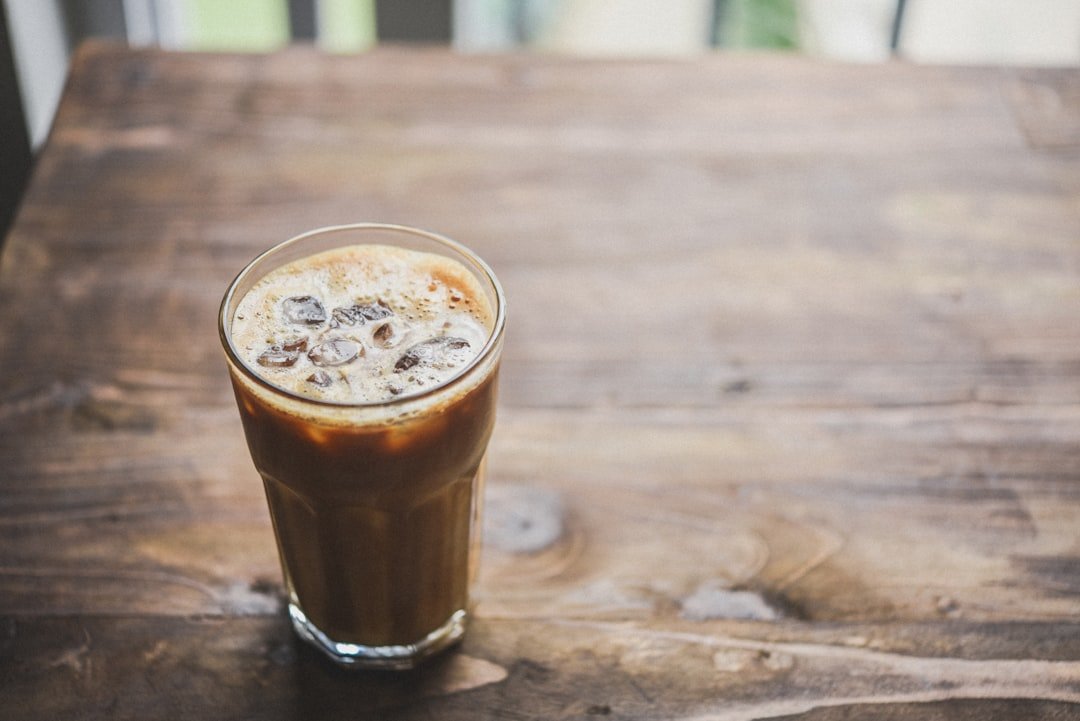
Cold brew vs americano is not some tiny menu debate. It is a comparison between two completely different extraction methods, and that difference shapes flavor, texture, aroma, and even how cafés position each drink. Cold brew had a long run as the default premium iced order, but the Americano is making a serious case for itself if you want a drink that tastes more vivid, more structured, and more like the coffee it came from.
A little dramatic? Maybe. But the broader shift in coffee culture suggests people are moving beyond the old assumption that smoother automatically means better. If your ideal iced coffee has clarity, speed, aroma, and a cleaner finish, the Americano deserves more attention than it usually gets.
What’s the real difference between cold brew and Americano?
Cold brew is made by steeping coffee grounds in cold or room-temperature water for many hours, while an Americano starts as espresso and is diluted with water, then often poured over ice. That means cold brew usually tastes smoother and heavier, while an iced Americano tastes brighter, lighter, and more aromatic.
That is the plain-English version, but extraction is really the whole story. Cold brew is usually an immersion method. Coffee and water sit together for a long stretch, often 18 to 24 hours, and time does the work. The result tends to be rounder, softer, and lower in perceived acidity.
An Americano works in the opposite way. Espresso extraction is fast and forceful. Hot water is pushed through finely ground coffee under pressure in seconds, creating a concentrated shot with a lot of aromatic intensity. Add water and you have an Americano. Add cold water and ice and you get what many people search for as a cold americano or americano ice.
Same bean? Possibly. Same drink? Not remotely.
That is why the flavor difference can be so obvious even when both drinks are served cold and black. Cold brew often reads as mellow, chocolatey, nutty, and easygoing, especially with darker roasts. An iced Americano tends to taste brighter, more defined, and more transparent to the coffee’s origin. You notice the edges more. You notice the aroma more. You also notice whether the espresso was pulled well.
Texture matters too. Cold brew often feels denser and slightly syrupy, even when diluted. An iced Americano is lighter, cleaner, and crisper. If you already enjoy drinks with more definition, you may also like reading about how cold brew and iced coffee differ, because that comparison reveals the same extraction logic from another angle.
One more thing gets confused all the time: strength. People often assume cold brew is stronger because it tastes darker or heavier. But strength can mean concentration, caffeine, roast intensity, or flavor impact. Those are not the same thing, and cold brew often gets credit for all of them simply because it has a darker reputation.
Cold brew got cool. Americano got better.
Cold brew absolutely had its era. For years, ordering it felt like a signal that you knew what was up. Smooth, premium, modern, maybe a little self-aware. But trend data suggests that its automatic cool factor is no longer enough on its own.
According to transaction data from Toast summarized by Sprudge, cold brew fell 2.2% from 2024 to 2025, while Americanos rose 1.4%, lattes rose 4%, and espresso rose 3.3%. That does not mean cold brew vanished. It means espresso-led drinks are gaining ground while people become more deliberate about what they actually want to drink.
That trend fits the broader specialty market too. Daily Coffee News, summarizing 2026 National Coffee Association and Specialty Coffee Association findings, reported that 47% of Americans drank specialty coffee on the past day, compared with 42% for traditional coffee. Specialty coffee is no longer niche, which means drinkers are becoming more selective rather than just choosing whatever sounds premium.
That is probably healthy for coffee culture. Once specialty becomes normal, people stop asking what sounds elevated and start asking what they genuinely enjoy. Cold brew still has obvious strengths: it is smooth, approachable, convenient, and often less bitter in perception. But those strengths are specific, not universal.
Americanos, especially iced ones, fit modern café habits extremely well. They are quick to make, easy to customize, lighter than milk-heavy drinks, and more expressive than cold brew when the espresso is good. If you are interested in how espresso-based drinks are evolving more broadly, the Americano’s origin story adds useful context to why the drink still feels so current.
There is also a bigger taste shift happening. As more people care about origin, roast style, and extraction, they often want drinks that reveal more rather than less. Cold brew smooths over sharp lines. Americano leaves them visible. For many drinkers, that is not a flaw. It is the appeal.
Why does an iced Americano taste sharper than cold brew?
Espresso extracts flavor quickly under pressure, pulling more aromatic intensity and more perceived acidity into the cup. When that espresso is diluted with water and ice, the structure remains. Cold brew extracts more slowly at lower temperatures, which usually creates a softer, rounder, less bright flavor profile.
That sharper quality in an iced Americano is not because the drink is trying to be aggressive. It is chemistry. Espresso is all speed, heat, and pressure. In a well-pulled shot, acids, sugars, oils, aromatics, and bitter compounds arrive in a concentrated burst. Even after dilution, that structure still gives the drink lift and clarity.
Cold brew behaves differently because lower temperatures extract a different balance of compounds. Fewer of the bright acids come through, which is why the drink often tastes smoother and less bitter. That same trait can also make it feel flatter, depending on what you want from the cup.
Bon Appétit describes the goal of cold brew in consumer-friendly terms: a rich, smooth coffee with minimal bitterness. That is exactly why cold brew has loyal fans. It is easy to like. It is forgiving. It is comfortable.
It is also why some drinkers find it a little one-note. In the cold brew vs americano debate, people often talk past each other because they are using different definitions of “better.” If someone says cold brew is better, they often mean smoother, easier, and less sharp. If someone says Americano is better, they often mean more aromatic, more vivid, and more recognizably coffee in the classic sense.
Temperature adds another layer. Cold drinks naturally mute aroma compared with hot ones. That means the brew method that starts with a more aromatic base has an advantage if complexity matters to you. Espresso starts louder, so even chilled it still carries more character. Cold brew starts softer, so chilled it can become very smooth but less expressive.

That is the subtle but important point: ice does not just make coffee cold. It changes what you can perceive. A drink with more aromatic structure at the start often keeps more personality after chilling.
The espresso world is quietly invading cold brew territory
One of the more interesting developments in coffee right now is that cold brew innovation is starting to borrow from espresso thinking. Daily Coffee News recently reported on BrootLegg Extracts, a company building cold-brew production systems inspired in part by commercial espresso equipment.
The numbers are wild enough to make the point memorable. Their system pushes water at up to 1,200 psi, or 82.7 bar. Standard espresso is around 9 bar. So while the drinks are still different, the logic behind advanced cold-brew production is starting to look a lot more like precision espresso than old-school steep-it-and-wait cold brew.
The system includes variables espresso people immediately recognize: bloom phases, pressure control, temperature adjustment, and brew ratio tuning. In other words, some of the most advanced cold-brew systems are moving away from passive extraction and toward engineered extraction.
According to Daily Coffee News, BrootLegg’s equipment can produce five gallons in 45 minutes using 2 to 3.5 pounds of coffee. Traditional cold brew usually takes far longer and more space. The point is not just speed. It is that coffee culture increasingly values control, repeatability, and intentional flavor design.
That says a lot about where the category is heading. Espresso has become the benchmark for precision, even in drink categories that once defined themselves against espresso’s intensity. The specialty competition world reflects that shift too. Sprudge’s coverage of the 2026 US Barista Championship showed cold formats being used not as automatic premium upgrades, but as deliberate tools for achieving specific sensory effects.
That is a healthier framework. The older café shorthand often looked something like this:
- hot brewed coffee equals basic
- cold brew equals premium
- espresso drinks equal complicated
The newer and smarter version looks more like this:
- what extraction best expresses this coffee
- what texture suits this moment
- what drink gives the experience you actually want
That is exactly where the Americano becomes more compelling. It is simple, but not simplistic. It gives you a lot of coffee character without requiring milk, syrup, or a long brew schedule to justify itself.
Should you order a cold americano, freddo coffee, or iced latte?
If you want something crisp, coffee-forward, and low-fuss, order a cold americano. If you want a more styled iced espresso with extra texture, try freddo coffee. If you want softness, sweetness, and milk balance, choose an iced latte.
That is the quick answer. The more useful one depends on what kind of drinking experience you want.
Cold Americano or americano ice: the clean, sharp default
If you have searched americano ice, you are generally looking for an iced Americano: espresso diluted with cold water and served over ice. Cafés may label it differently, but the basic drink is the same.
This is the best choice if you want a drink that clearly tastes like coffee, feels refreshing without milk heaviness, and stays lighter in texture than cold brew. It is also one of the easiest drinks to customize without losing its identity. You can adjust the water ratio, add an extra shot, or change the ice level and still keep the drink coherent.
An iced Americano is especially strong as an everyday order. It works in the morning when you want focus, during a workday when you want something clean and unfussy, and in the afternoon when a milk-heavy drink sounds like too much. It is also one of the clearest tests of whether a café’s espresso program is actually good, because there is nowhere for weak extraction to hide.
What is freddo coffee?
Freddo coffee is an iced espresso-style drink popular in parts of the Mediterranean, especially Greece. It is usually made by shaking or blending espresso with ice, which creates a colder and slightly frothier texture than a standard iced Americano.
That textural difference matters. Freddo espresso is still coffee-forward, but it feels more designed than a simple water-plus-ice drink. It often has a little foam, a colder feel, and a more polished café presentation. If an iced Americano is the minimalist option, freddo coffee is the more styled version that still keeps espresso at the center.
For people who like cold espresso but want more texture and a bit more visual flair, freddo coffee is an excellent middle ground. It gives you more personality than a standard iced Americano without moving all the way into milk-heavy territory.
Iced latte: soft edges, easy appeal
An iced latte is espresso plus milk over ice, and milk changes the entire experience. It softens acidity, adds natural sweetness, increases body, and makes the drink more forgiving. Average espresso can taste smoother in milk, while great espresso can become almost dessert-like in the best way.
Choose an iced latte if you want a gentler coffee experience, a creamy texture, or a midday treat rather than maximum clarity. It is also the most approachable option for people who find black coffee too direct. Compared with a cold Americano, an iced latte usually tastes softer and less intense. Compared with cold brew, it often tastes more layered but less purely coffee-black.
Is a cold Americano stronger than an iced latte?
Usually, a cold Americano tastes stronger than an iced latte because there is no milk softening the espresso. But actual caffeine depends on how many espresso shots each drink contains, which varies by café.
This is one of the most common coffee misunderstandings. Stronger taste does not automatically mean more caffeine. A two-shot iced latte and a two-shot iced Americano may contain very similar caffeine if they use the same espresso dose. The Americano simply tastes bolder because milk is not rounding out the edges.
If your goal is more direct coffee flavor, Americano wins. If your goal is a softer and creamier drink, latte wins. If your goal is understanding brew strength more precisely, it also helps to know how brew ratio shapes coffee strength.
Is hojicha latte coffee?
No. A hojicha latte is usually made with roasted Japanese green tea, either brewed or powdered, plus milk. It is toasty, nutty, and generally lower in caffeine than coffee, but it is not a coffee drink.
This matters because people often compare iced café drinks that are not actually in the same category. A hojicha latte belongs more to the tea world than the espresso world. If you want roasted, cozy, and calm, it is a great option. If you want coffee aroma, espresso structure, or the black-coffee contrast of cold brew and Americano, it is a different lane entirely.
The best order depends on your mood, not the trend
Here is the honest conclusion. There is no universal winner in the cold brew versus Americano debate because the drinks are trying to do different jobs. But for many people who want an everyday iced order that feels polished, coffee-forward, and low-maintenance, the iced Americano is the stronger default.
It is quick, clean, versatile, and expressive. It does not need milk to feel complete, and it does not need a 24-hour brew time to feel premium. If you care about clarity, aroma, speed, and a lighter texture, it has a very persuasive case.
That said, different moments call for different drinks:
- Morning focus: Americano
- Slow weekend sipper: cold brew
- Midday treat: iced latte
- Stylish café order with Mediterranean energy: freddo coffee
Cold brew still has a real place. On the right day, its smoothness is exactly what you want. But it probably should not get automatic premium status just because it takes longer and sounds relaxed. Time alone does not make coffee better.
In the end, the best iced order is the one that matches how much brightness, texture, and caffeine drama you want in the cup. Some days you want velvet. Some days you want snap. Some days you want milk. And some days you want your coffee to arrive with maximum clarity and minimal fuss.
Frequently Asked Questions
Is americano ice the same as a cold americano?
Usually yes. “Americano ice,” “iced Americano,” and “cold Americano” generally mean espresso diluted with cold water and served over ice, even if menus label it differently.
What is freddo coffee?
Freddo coffee is an iced espresso-style drink, often shaken or blended with ice for a colder, slightly frothier texture. It is more textured and styled than a standard iced Americano.
Is a cold americano stronger than an iced latte?
It usually tastes stronger because there is no milk softening the espresso. But caffeine depends on the number of shots used, so the two drinks can have similar caffeine if they use the same espresso dose.
Is hojicha latte coffee?
No. A hojicha latte is made with roasted Japanese green tea and milk, so it is a tea drink rather than a coffee drink.
Sources
- Bootstrapping BrootLegg Extracts Launches High-Pressure Cold Brew Production — https://dailycoffeenews.com/2026/07/23/bootstrapping-brootlegg-extracts-launches-high-pressure-cold-brew-production/
- The 2026 US Barista Championship: Round One, Day One — https://sprudge.com/the-2026-us-barista-championship-round-one-day-one-1090611.html
- Specialty Coffee Holds Lead Over Traditional Coffee in the U.S. — https://dailycoffeenews.com/2026/06/02/specialty-coffee-holds-lead-over-traditional-coffee-in-the-u-s/
- Best Cold Brew Coffee Maker for a Smooth Morning Cup (2026) — https://www.bonappetit.com/story/best-cold-brew-coffee-maker
- The Most Popular Consumer Drink Trends Are Changing Fast — https://sprudge.com/the-most-popular-consumer-drink-trends-are-changing-fast-809544.html
