
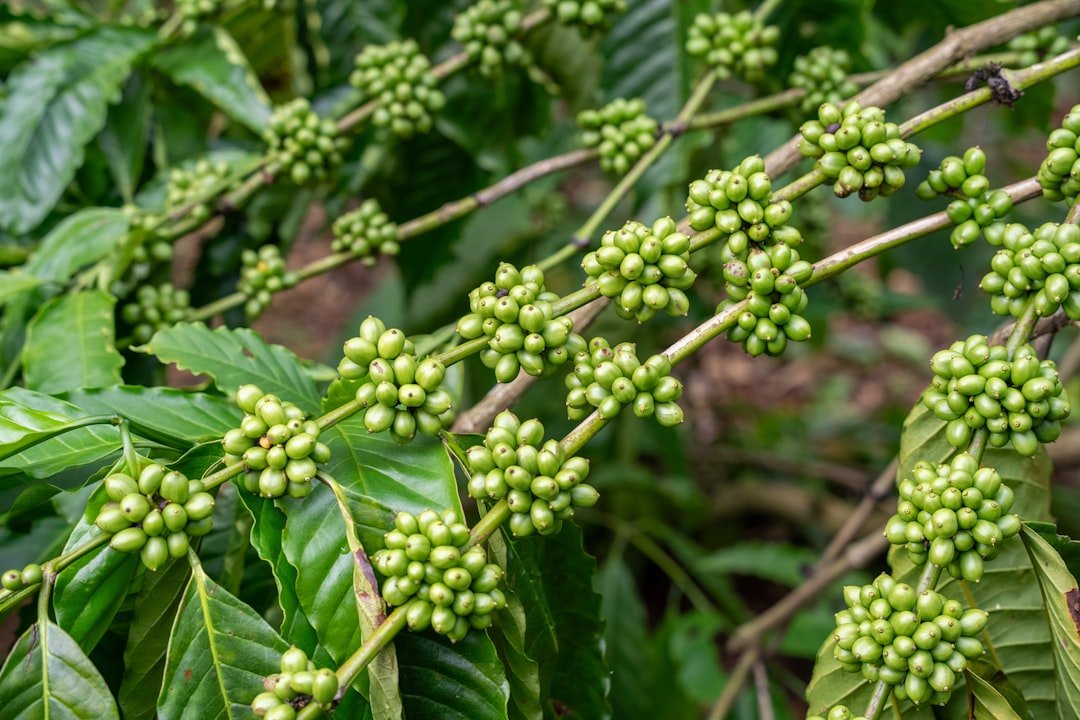
Organic coffee has incredible PR. Put a green seal on the bag, add a tasteful leaf, suddenly your grocery cart feels like it made a responsible life choice.
Meanwhile, coffee itself is having a rough decade. Climate pressure is hitting yields, worn-out soil is making farms less resilient, and farmer economics are getting shakier right when everyone still expects a perfect cup before work. FoodNavigator reported that Arabica hit US$4.40 per pound in February 2025, the highest level ever recorded, and fresh peaks showed up again in mid-2026. Irritating when you are buying beans. Far more serious when your income depends on growing them.
That price spike raises a pretty practical question: can a farm still produce excellent coffee ten years from now, or are we all getting hypnotized by a sticker?
Is organic coffee actually more sustainable?
Usually, yes. USDA organic coffee limits prohibited synthetic pesticides and fertilizers, which helps reduce pressure on soil and water. But the label does not tell you how farmers are paid, whether yields can survive climate stress, or how much waste the full coffee system creates.
That still leaves plenty unsaid.
USDA organic certification means a farm followed rules on synthetic inputs and kept up with certification and inspection requirements. In coffee-growing regions where land and waterways are already under strain, that matters. Cleaner farming practices are good news. Nobody needs a dramatic speech about that.
But FoodNavigator’s August 2026 reporting pushed the conversation somewhere more useful: the condition of the soil itself. Organic matter in the ground. Microbial life. Water retention. Deeply unsexy topics, which is usually how you know they matter. Pascal Chapot, Nestlé’s head of agriculture, called soil “a complex, living system,” and he is right to dwell on it. When soil is depleted, yields get jumpy, quality slips, then farmers feel the squeeze first.
The organic label leaves blanks here. It does not tell you what farmers were paid. It does not tell you whether yields can hold up under climate stress. It does not tell you much about packaging waste or shipping impact. FoodNavigator also covered the Coffee Barometer 2026, which argued that many coffee sustainability strategies are currently “missing the mark.” A bag can look calm, earthy, even extremely pleased with itself while the supply chain behind it is doing cartwheels.
So yes, organic coffee is a good sign. It is just one sign.
And if you want an organic option that feels a little more thought-through, RISERVA PREMIUM is an easy recommendation. It is USDA organic coffee, it tastes like somebody actually cared about the cup, and the pod format skips the usual plastic-or-aluminum situation. Helpful when convenience is non-negotiable before 8 a.m. and your brain is still offline.
The coffee world is moving past certification-only thinking
Big coffee companies and trade groups are spending a lot more time talking about regeneration at farm level. Once serious budgets show up, the conversation has moved beyond pretty packaging and hopeful adjectives.
Nestlé says it has trained more than 100,000 farmers across 15 coffee-producing countries and cut green coffee emissions by 18.3% since 2018, according to FoodNavigator. The more interesting detail is where the company says those gains start: in soil that has lost organic matter and stopped holding water properly. Chapot put it plainly. Coffee trees need healthy microbial activity and steadier nutrient uptake. Sexy? Absolutely not. Important? Very.
The finance side is moving too. Daily Coffee News reported that IDH launched the Resilient Coffee Program in Hanoi, Vietnam, on Aug. 11, 2026. The target is 300,000 farmers by 2030 across Vietnam, India, Colombia and Uganda, with a goal of producing about 500,000 metric tons of regenerative coffee each year. That is not some tiny pilot hidden on page 47 of a sustainability PDF. That is scale, and scale is where coffee either gets more resilient or gets more expensive. Probably both.
For you, this changes the shopping homework a bit. A coffee can carry an organic certification and still come from a supply chain under pressure. Better signals are named farm programs, investment dates, plus traceability you can actually follow. Much better than vague copy about “caring for the planet,” which usually means someone would love for you to stop asking questions right there. If you want a broader look at what labels can and cannot prove, see what the specialty coffee label really proves.

What should smart buyers look for beyond the organic label?
Start with origin, then ask for proof.
Organic Peruvian coffee gets plenty of attention because Peru has strong visibility in specialty coffee and organic production. Fair enough. But origin by itself is still just origin. Better signs are named projects and measurable outcomes. Daily Coffee News reported that UCC’s regenerative pilot in Vietnam had already distributed 1,757 shade-tree seedlings to 38 farmers. Small in global terms, yes. Still real, with a date, and checkable. We love a receipt.
Then look at the whole setup in your kitchen. Search trends around environmentally friendly coffee machines and environmentally friendly coffee makers suggest people are finally connecting the bean to the brewer. About time. A beautifully sourced coffee brewed through a waste-heavy system still creates a waste-heavy habit, just with nicer branding. For a deeper look at what actually matters in home equipment, read what makes coffee machines more eco friendly.
Pod systems are wildly different here. Some use plastic. Some use aluminum. Pascucci’s pods use vegetable fiber and are fully compostable, which makes a real difference if you want convenience without building a tiny monument to packaging waste next to the sink. We also plant one tree per product through our Tree-Nation partnership. Clean, useful, no standing ovation required.
One more thing: how you drink coffee changes the footprint more than most people think. Organic black coffee keeps things simpler because it skips dairy add-ons, syrup bottles, plus extra packaging. Nobody is asking you to become a monk with a mug. But if you are paying extra for carefully grown beans and then piling on disposable cups, lids, sleeves, plus heavily processed extras, the sustainability math gets messy fast. The cup counts too. So does the stuff orbiting the cup.
Frequently Asked Questions
What is USDA organic coffee?
USDA organic coffee is certified under U.S. organic standards, meaning it is grown and processed without prohibited synthetic pesticides and fertilizers. Certification also requires documented compliance and inspection, but it does not cover every sustainability issue in coffee.
Is organic Peruvian coffee better?
Organic Peruvian coffee is not automatically better. Peru has a strong reputation in organic and specialty coffee, but quality and sustainability still depend on traceability, farm practices, and long-term resilience.
Is organic black coffee more sustainable?
Organic black coffee usually has a simpler footprint because it avoids dairy and many added ingredients. It can be a lower-impact choice, especially when paired with low-waste brewing and reusable cups.
What are environmentally friendly coffee machines?
Environmentally friendly coffee machines are built to reduce waste, last longer, and use energy efficiently. The brewing format matters too, since plastic, aluminum, and compostable pods create very different waste streams.
Sources
- Nestlé coffee comeback starts beneath the surface — https://www.foodnavigator.com/Article/2026/08/27/nestle-tackles-soil-degradation-and-farmer-exodus-in-bid-to-futureproof-coffee/
- IDH Launches Regenerative Coffee Investment Platform — https://dailycoffeenews.com/2026/08/13/idh-launches-regenerative-coffee-investment-platform/
- UCC Launches Regenerative Coffee Pilot in Vietnam — https://dailycoffeenews.com/2026/08/19/ucc-launches-regenerative-coffee-pilot-in-vietnam/
- Sustainability Snippets: Coffee strategies, Coca-Cola and food waste — https://www.foodnavigator.com/Article/2026/08/04/sustainability-snippets-coffee-strategies-coca-cola-and-food-waste/
- Top sustainability food trends and those in decline — https://www.foodnavigator.com/Article/2026/09/09/top-sustainability-food-trends-and-those-in-decline/
