
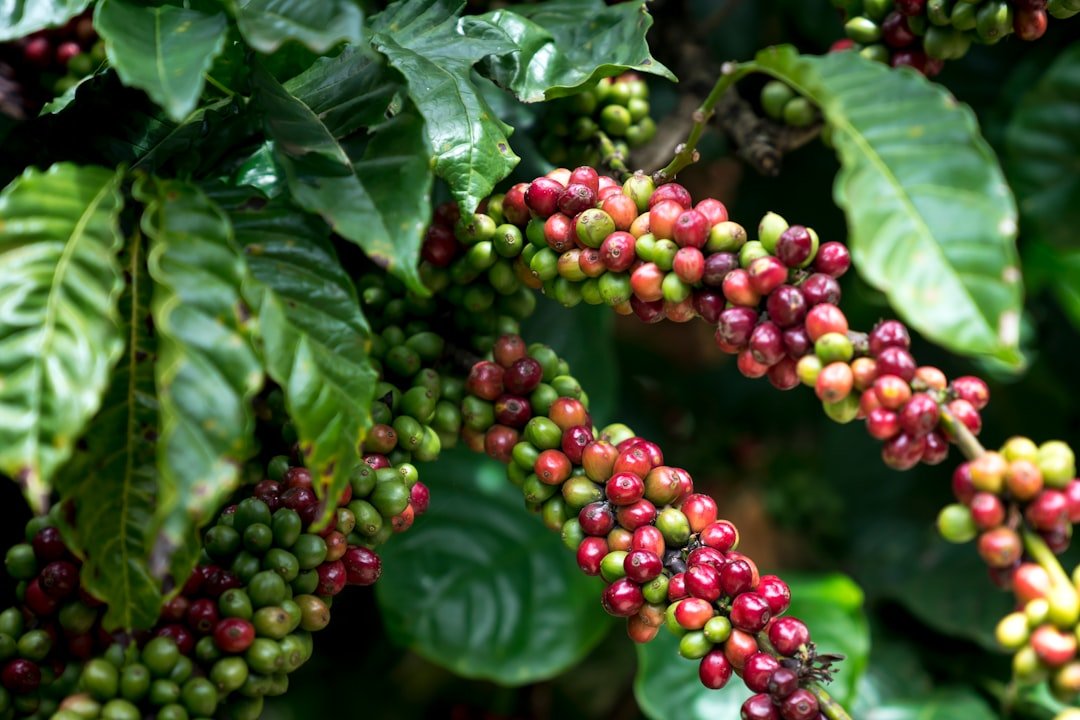
Specialty coffee has great PR. Peach-note tasting cards, handsome bags, a farm story that makes you want to book a flight. But for all the talk about transparency and taste, the industry still struggles to show where the money actually goes.
And that matters, because specialty coffee is not just a delicious cultural flex. It is an economic system. Farmers, exporters, roasters, cafés, margins, risk, logistics, climate pressure—and, somewhere in the middle, a lot of very polished storytelling.
To be clear, the issue is not that coffee people care too much about quality. We love quality. We are Italian. We have opinions about extraction and somehow still have friends. The problem is that quality talk can become a beautifully lit distraction from messier questions: who got paid, on what terms, for how long, and with what protection when prices swing or climate hits hard?
That is the real lens here. Not “is this coffee good?” but “what does this bag actually prove?” Because a label can tell you altitude, variety, process, and tasting notes of bergamot, cacao nib, or suspiciously specific apricot jam. It can still tell you almost nothing about how value moved from farm to cup. Slightly less romantic, sure. Much more useful.
What is specialty coffee, really?
Specialty coffee is coffee graded at 80 points or above on the Specialty Coffee Association’s 100-point scale, typically with fewer defects, clearer flavor expression, and more traceable sourcing than commodity coffee. In practice, though, the term also signals a retail culture around roasting, origin storytelling, and perceived ethics—not all of which are equally transparent.
That formal 80+ score matters. It is the technical line between specialty-grade coffee and the vast ocean of commodity coffee. In cupping terms, graders look for cleanliness, sweetness, acidity, body, balance, and overall flavor performance, while also counting defects. Put simply: the coffee has to taste distinct, not just fine.
This is where people get tripped up. The technical definition is about sensory quality and physical standards. The market definition is much bigger, fuzzier, and, frankly, cooler-looking on a shelf. For a lot of drinkers, specialty coffee now means all of these things at once: better coffee, smarter roasting, more ethical sourcing, nicer branding, pricier bags, and probably a barista with at least one tote bag featuring an extremely niche slogan.
Some of that overlap is fair. Specialty coffee roasters often do source more carefully, roast more intentionally, and share more detail than mass-market brands. But “speciality” has become a container for assumptions. If it tastes better, people assume it was traded better. If the bag names a farm, people assume the producer earned more. If a roaster talks about relationships, people assume the relationship was commercially balanced. That is a lot of trust to load onto one adjective.
Also worth saying: many specialty lots are made from arabica coffee beans, but arabica alone does not equal specialty. That should be obvious, yet here we are. Arabica is a species. Specialty is a quality designation. You can have mediocre arabica and exceptional arabica. You can have arabica that is clean but forgettable, and arabica that is electric—floral, syrupy, layered, alive. The bean type matters. It is just not the whole screenplay.
What speciality coffee does tell you, pretty reliably, is that someone cared about cup quality. What it does not tell you, on its own, is whether anyone cared enough to disclose the economics behind that quality. And that gap—between what the label implies and what it proves—is where the conversation gets interesting.
If you want a clearer baseline on what the term technically covers, what the label really proves is still a useful place to start before asking harder questions about trade and transparency.
Why does speciality coffee not always mean fair trade?
Speciality coffee can be traceable, high scoring, and beautifully marketed without revealing what farmers were paid, how contracts were structured, or who absorbed the risk. Quality and fairness can overlap, but they are not the same thing, and the label alone does not prove ethical trade.
“Traceable” sounds comforting because it feels specific. There is a farm name. Maybe a producer portrait. Maybe GPS coordinates, if we are getting fancy. Maybe a line about volcanic soil, washed processing, and a family tradition stretching back three generations. Lovely. Useful, even. But traceability and fairness are not the same thing, and acting like they are has let plenty of brands coast on vibes.
The 2026 Coffee Barometer puts this pretty bluntly. According to reporting from Daily Coffee News, after assessing 15 of the world’s largest coffee roasters and traders, not one disclosed pricing structures, contract durations, risk-sharing arrangements, or premiums paid above the commodity price. Not one. That is not a paperwork mix-up. That is a pattern. And as Barometer co-author Sjoerd Panhuysen told Daily Coffee News, the issue starts with “the absence of even the most basic disclosures.” The report’s conclusion lands even harder: opacity is a choice. Honestly, that line deserves more bag space than half the tasting notes out there.
That is the myth worth retiring. If you can trace a coffee back to an origin, you know where it came from. Great. You do not automatically know whether the trade was fair. The more revealing question is often not “Which farm is this from?” but “What were the terms of trade?”
Because here is the part that never makes it onto the front of the bag in elegant script: a named lot can still move through a system where value stacks up downstream while producers absorb the most risk upstream. The Barometer’s first installment makes that imbalance painfully clear. Record-high commodity prices have not fixed the underlying vulnerabilities facing producers, including thin margins, rising input costs, freight, energy, and climate exposure.
That is the part more consumers deserve to know: coffee can be expensive for you and still economically fragile for the person who grew it.
Origin names, micro-lot language, and producer photos can create intimacy. Sometimes that intimacy is real and earned. Sometimes it is just very good packaging with a passport stamp. The modern specialty market has trained people to read for provenance, but not always for power. Who set the terms? Who carried the downside? Was there a long-term contract? A premium? Any risk-sharing? If none of that is disclosed, then “traceable” may be working more as a mood than a meaningful accountability tool.
For a deeper look at how these blind spots affect producers, what farmers really earn adds important context to the gap between premium retail pricing and farm-level reality.
Why younger drinkers are changing speciality coffee faster than purists want to admit
If specialty coffee feels louder, weirder, more customizable, and less interested in old gatekeeping rituals lately, that is not your imagination. That is the market moving. According to Fresh Cup, specialty coffee consumption hit a 14-year high, driven largely by 25–39-year-olds. That is a pretty big clue about where the category is headed—and why some old-school purists are probably stress-cleaning their cupping spoons.
Younger drinkers are not rejecting quality. They are just expanding the definition of what a quality coffee experience can be. That can mean a carefully dialed-in filter coffee, yes. It can also mean cold foam, co-ferments, custom drinks, bright branding, and cafés that feel social instead of vaguely sacred. Some people read that as the category losing discipline. A more honest read? Specialty is no longer a niche club whispering about citrus acidity in the corner. It is a culture now.
That shift matters because it changes what brands can get away with. An earlier era of specialty often rewarded expertise theater: hyper-technical tasting notes, minimalist packaging, a little mystery, a little exclusivity. But younger consumers, especially Gen Z, have a sharp radar for authenticity theater. They do not want the perfect script. They want proof, participation, and something real enough to survive a follow-up question.
Fresh Cup captures that tension well: younger customers want customization and novelty, but they are also values-driven and skeptical of corporate posturing. They increasingly want authentic offline experiences and to feel part of something meaningful, not just marketed to. That is a big shift. It means a brand cannot perform ethics in the same polished tone it uses to perform flavor. The audience is savvier now.

Here is the sneaky insight under all the aesthetics: louder menus and more expressive branding do not automatically make coffee less serious. Sometimes they make the category more honest. Why? Because they force the industry to admit that coffee has always been cultural as well as agricultural. It is pleasure, ritual, identity, convenience, status, comfort, social life. Not just cupping scores and elevation.
The old specialty script often implied that if consumers were educated enough, they would all eventually prefer the purest possible expression of the bean. Very tidy theory. Real people, however, contain cravings. They want a washed Ethiopian on Tuesday and something iced, foamy, and mildly unserious on Friday. That does not weaken specialty coffee. It proves the category is alive.
There is a commercial lesson in that too. Younger buyers are less impressed by immaculate origin mythology if the rest of the brand feels evasive. A coffee company can be playful, design-forward, and trend-aware without becoming hollow. But if it uses personality to distract from missing information, people notice. Maybe not immediately. But eventually. The internet is undefeated at spotting “authenticity” that feels a little too workshop-tested.
So yes, younger drinkers are changing the category. Faster than some purists would like. And probably for the better, because they are pushing specialty to become more culturally open while also demanding more honesty under the hood. Less ceremony, more receipts. Healthy, honestly.
Speciality coffee roasters love origin stories—but origin control is the real power move
Origin stories are catnip in coffee. Fair enough. Place matters. Variety matters. Processing matters. The best speciality coffee roasters know how to tell those stories well, often with real care. But there is a difference between telling an origin story and actually controlling what happens across origin, processing, roasting, and service.
That is why the example of Nandan Coffee in India is so interesting. As profiled by Sprudge, Nandan is a farm-to-cup company rooted in its own estate in Tamil Nadu. It grows, processes, roasts, and serves coffee exclusively from its own estate, and its roastery is located at origin. That means the company oversees every stage more directly than most businesses in the category can.
That should make you pause for a second. Roasting at origin is still unusual enough to do that.
Why does it matter? Because it collapses distance. Fewer layers can mean fewer chances for the story to drift away from the economics. If the same company grows the coffee, processes it, roasts it, and serves it, the line between narrative and accountability gets tighter. Not magically perfect, obviously. Vertical control is not an automatic ethics certificate. But it does create a structure where provenance is not just a marketing asset. It is operational reality.
Contrast that with the standard specialty model. Many specialty coffee roasters—and plenty of speciality coffee roasters, if we are speaking fluent Google—are excellent curators. They source from importers, exporters, producer groups, and farms with care and intention. They may build real relationships and pay meaningful premiums. But the chain is often still fragmented. “Relationship coffee” can mean anything from deep long-term collaboration to a once-a-year purchase with excellent email manners.
That does not make curation bad. Far from it. Great roasting is a craft, and great buying is a skill. But structurally, there is a difference between proximity and control. A roaster may know a lot about a producer and still have limited visibility into every commercial layer between farmgate and final shelf. That is one reason origin storytelling can be so polished while trade transparency stays patchy.
For the origins conversation, this is where things get more interesting than “single-origin versus blend.” The next question may be: who controls value creation after harvest? Who decides where the coffee is milled, where it is roasted, who captures the branding margin, who owns the consumer relationship, and who gets to turn provenance into premium?
That is power. Not the sexy kind that shows up in tasting notes, but the kind that shapes who benefits most from specialty’s cultural cachet.
And yes, there is a little Italian resonance here too. In food and drink, provenance has always mattered. But provenance without stewardship is just geography in nice shoes.
The next status symbol in specialty roasted coffee will be receipts
For years, specialty coffee has sold distinction through scarcity and sensory intrigue: geisha varieties, anaerobic lots, rare fermentations, tiny releases, wild flavor notes that sound half dessert menu, half chemistry set. Some of that is thrilling. Some of it is genuinely delicious. But if the category wants to keep its credibility, the next marker of seriousness probably will not be rarity alone.
It will be receipts.
That prediction lines up with where the research is heading. A recent review covered 137 peer-reviewed publications from 2000 to 2024 on coffee sustainability, mapping work focused on stakeholder roles, byproduct reuse, consumer behavior, and digital traceability. The researchers, from the University of Naples Parthenope and the University of Tuscia, found that sustainability research in coffee has grown significantly—but remains fragmented.
That fragmented part matters. More research does not automatically mean clearer accountability. More dashboards do not equal better outcomes. More traceability tech does not mean more justice. In fact, one of the more interesting points in the review is why research accelerated in the late 2010s: climate instability, consumer demand for ethical products, and emerging technologies like blockchain and IoT all pushed the conversation forward.
Very modern. Very promising. Also very capable of becoming shiny distractions if nobody asks what the data is actually proving.
Blockchain can tell you where a coffee moved. IoT can monitor conditions. Certifications can signal standards. None of that, on its own, tells you whether a producer got a sustainable deal. That is the trap. Specialty sometimes mistakes information density for honesty. A bag can have a QR code, a processing breakdown, a producer quote, and a little cluster of sustainability icons—and still dodge the commercially awkward specifics.
Those specifics are exactly where the next real differentiation lies for specialty roasted coffee. Not another exotic process note. Not another font choice whispering “quiet luxury, but make it coffee.” The brands that stand out next may be the ones willing to say:
- how they think about pricing,
- whether they buy repeatedly or opportunistically,
- what traceability actually includes,
- how waste is handled at origin or in production,
- what producer relationships look like in bad years, not just good ones.
That kind of specificity is less glamorous than a tasting note featuring blood orange and jasmine. But it is more persuasive.
And for consumers, it changes the status game. The smartest coffee buyer in the room may soon be the one asking boring-sounding, devastatingly useful questions. Not “Is this rare?” but “How transparent are the terms?” Not “How exclusive is this lot?” but “What evidence supports the claims around it?” Not “How beautiful is the farm story?” but “What happens when the conversation turns from cherries and citrus to contracts and cash?”
That is where specialty grows up a little. Not by abandoning flavor—mai e poi mai, absolutely not—but by refusing to let flavor do all the moral heavy lifting.
If speciality coffee wants to keep its cultural cool and moral cachet, flavor alone is no longer enough. The next time you shop, enjoy the tasting notes—seriously, that part is fun—but look past them too. Ask what the roaster is willing to disclose when the conversation gets less poetic and more commercial.
Because the smartest way to love coffee now is not to become cynical. It is to become specific.
Frequently Asked Questions
What is the difference between speciality coffee and regular coffee?
Speciality coffee is graded at 80 points or above and usually has fewer defects, clearer flavor, and stronger traceability than commodity coffee. Regular coffee is typically built for consistency and scale, while speciality coffee is sold for distinct taste and origin character.
How do specialty coffee roasters choose beans?
Specialty coffee roasters usually choose beans through cupping, sample roasting, sourcing relationships, harvest timing, and processing quality. The best roasters look beyond flavor alone and also consider traceability, consistency, and long-term supply potential.
Are arabica coffee beans always speciality coffee?
No. Arabica coffee beans are a species, not a quality guarantee. Many speciality coffees are arabica, but speciality status depends on cup score, defects, processing, and overall quality—not just the bean type.
What makes specialty roasted coffee taste different?
Specialty roasted coffee often tastes different because the green coffee starts with better quality and clearer origin character. Roasting is usually designed to preserve sweetness, acidity, and texture rather than flatten those qualities for uniformity.
Sources
- Review: Coffee Sustainability Research is Growing but Fragmented — https://dailycoffeenews.com/2026/07/15/review-coffee-sustainability-research-is-growing-but-fragmented/
- Inside the 2026 Coffee Barometer, Part 2: What Companies Are Not Saying — https://dailycoffeenews.com/2026/07/14/inside-the-2026-coffee-barometer-part-2-what-companies-are-not-saying/
- Inside the 2026 Coffee Barometer, Part 1: Prices Swing, Structures Don't — https://dailycoffeenews.com/2026/07/02/inside-the-coffee-barometer-part-1-prices-swing-structures-dont/
- How Specialty Coffee Brands Are Keeping Up With Gen Z Consumers — https://freshcup.com/how-specialty-coffee-brands-are-keeping-up-with-gen-z-consumers/
- Build-Outs Of Coffee: Nandan Coffee In Bangalore, India — https://sprudge.com/build-outs-of-coffee-nandan-coffee-in-bangalore-india-1074602.html
