
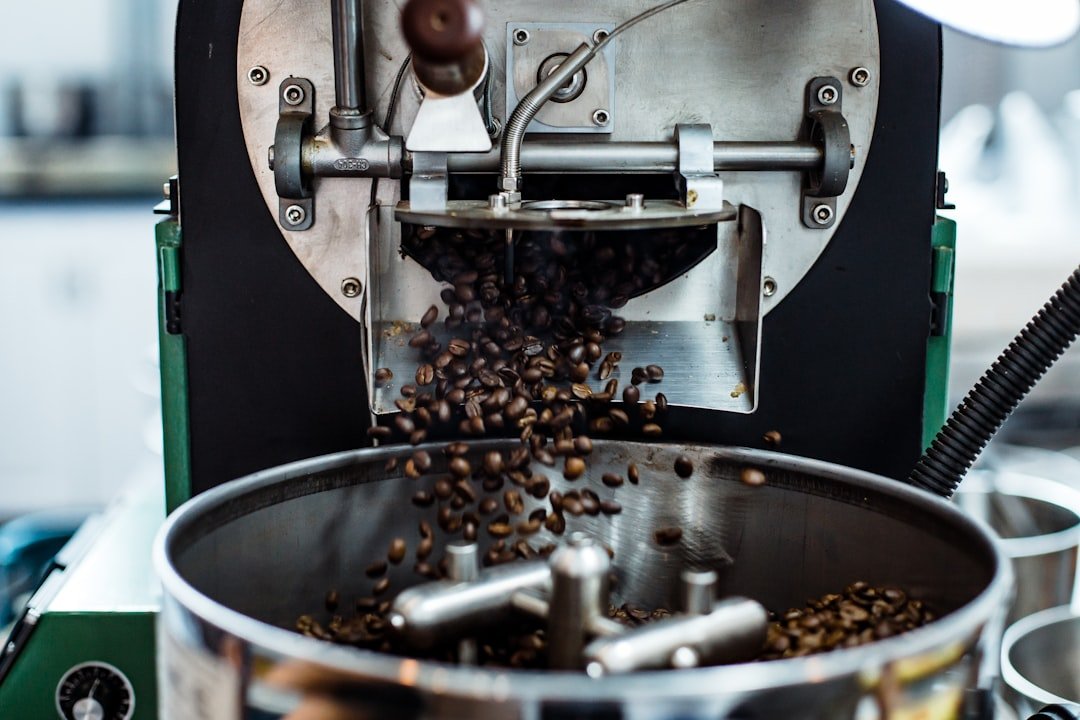
The most important coffee tech in 2026 is not the robot barista doing latte art for your camera roll. It is the quietly competent software making sure a café survives the 8:12 a.m. rush without its espresso machine having a complete breakdown.
That is the twist. For years, coffee has been obsessed with spectacle: app-controlled brewers, spaceship-looking interfaces, and machines that seem designed by someone with strong opinions about oat milk. Fun, sure. But the real shift is happening in the background, where infrastructure tech is turning almost invisible—repair platforms, machine-grinder automation, sensor data, and traceability systems built right into the coffee production process itself. Less theater. More “your cappuccino tastes right every single time.”
And honestly, that matters. If you are serious about coffee—or just not thrilled by the idea of paying for a latte that tastes like confusion—this changes what quality even means. It is not just origin notes and crema photos anymore. It is uptime. It is consistency. It is whether a café can hold the line when the line is, in fact, out the door. It is whether claims about coffee production and processing are traceable enough to mean something beyond nice packaging copy.
So yes, this is a bit of a reality check on current coffee trends. The future of coffee is not necessarily louder, shinier, or more dramatic. It might just be fewer breakdowns, fewer remakes, fewer mystery variables, and smarter decisions from the farm all the way to the bar.
What is coffee tech actually doing right now?
Coffee tech is making coffee businesses less fragile right now by reducing machine downtime, stabilizing espresso quality, speeding up service, and improving traceability across coffee production and processing. The biggest gains are coming from repair systems, automation, sensor data, and connected workflows—not flashy machines replacing baristas.
Less sexy than “robot café takeover,” yes. Much more useful, also yes.
A clean example comes from Vixxo Café Solutions, a new repair and maintenance platform covered by Daily Coffee News. It launched in Dallas, Phoenix, and Denver, and it is built for operators who do not have giant in-house service teams standing by. Think independent cafés, multi-unit franchisees, and regional coffee businesses that need help quickly—not a three-day email chain and a vague “we’re looking into it.” According to the report, the platform uses customer-supplied information plus IoT and sensor data to speed up diagnosis, track service history, source parts, and support maintenance workflows.
That matters more than people think. Coffee service is one of those industries where one tiny failure can set off a full domino chain. Grinder drifting out of calibration? Shots start running weird. Steam issue? Milk drinks pile up. One machine down during peak? Suddenly the whole mood shifts from “neighborhood café sanctuary” to “everyone is quietly furious.” The glamorous side of coffee rarely mentions that operational resilience is often the difference between a beloved local spot and a very stylish place with one-star reviews about wait times.
Vixxo’s model is interesting because it treats repairs like an information problem, not just a wrench problem. That is a subtle but important shift. If a platform can collect service history, combine it with machine data, and help technicians diagnose faster, downtime becomes a lot more manageable. Invisible does not mean unimportant. It means the customer never has to notice there was a problem in the first place. Which is, frankly, the dream.
Then there is the espresso side. World Coffee Portal highlighted Nuova Simonelli’s C-Automation campaign, which frames advanced machine tech as workflow simplification rather than barista replacement. Smart move. The core idea is that when the machine and grinder work together, they can reduce shot variability, stabilize extraction and dosing, and lower remake rates during busy service.
Here is the part people tend to miss: a lot of inconsistency in café coffee does not come from a barista lacking skill. It comes from the sheer number of micro-adjustments needed to keep coffee tasting stable under pressure. Temperature shifts. Grinder drift. Changes in humidity. Shot timing. Bean behavior. Coffee is dramatic. It always has been. Automation that removes repetitive instability at the source does not erase craft; it protects it.
The café winning in 2026 may not be the one with the most futuristic countertop flex. It may be the one that can serve a consistent flat white under pressure, keep the machine running, and avoid remaking three drinks because the grinder had a mood swing. That is the real innovation story. Operational resilience. Not exactly TikTok bait, but very nice if you enjoy drinking coffee that tastes like the café meant it.
If you want to understand how stability at the bar affects the cup itself, espresso extraction time is one of the clearest places to start. Consistency is rarely one dramatic breakthrough; it is usually a pile of small variables behaving themselves.
The hottest coffee trends are weirdly unsexy
If you want the most consequential coffee trends right now, stop staring at the gadget reveal and look at the spreadsheet, the dashboard, the maintenance log, and the traceability map. Yes, that sentence had all the charm of a logistics meeting. Stay with us.
A Daily Coffee News report on a review published in Sustainable Futures summarized findings from 137 peer-reviewed studies from 2000 to 2024 on coffee sustainability research. The review, conducted by researchers at the University of Naples Parthenope and the University of Tuscia in Italy, identified digital tools like blockchain, AI, IoT, and GIS as central themes in the conversation around traceability, logistics, farm decision-making, and consumer transparency.
That is not niche anymore. That is a signal.
One of the most interesting takeaways from the review is that the research is growing—but it is fragmented. Which, if we are being honest, feels very coffee. Coffee is excellent at pilot projects, small-batch experiments, and concept-stage excitement. Scaling systems across a supply chain? Different sport entirely. You can have ten clever tools doing ten isolated things and still not have a system that actually works.
And that fragmentation matters because the market is getting less patient with disconnected ideas. A traceability initiative that cannot talk to sourcing data, production records, or customer-facing information may look great in a presentation and still create very little real value. Same goes for automation that solves one workflow bottleneck while creating two new ones. The future belongs less to interesting tech and more to tech that works with other tech without requiring everyone involved to become part-time software engineers.
The data layer is getting strategic fast, too. World Coffee Portal recently pointed to new market-intelligence tools, including an interactive Brand Tracker dashboard monitoring the top 20 branded coffee chain operators across major global markets with five years of data. It also highlighted new trend reports focused on topics like disruptive technology and specialty coffee.
That tells you something. Serious coffee businesses are no longer treating data as optional background admin. They are treating it as competitive infrastructure. Market risers, fallers, growth trajectories, emerging players—those are not just investor curiosities. They shape expansion, pricing, staffing, menu design, and equipment decisions. Very little about your morning cortado feels connected to a dashboard somewhere, but increasingly, it is.
Here is the quiet surprise: the most powerful tech trend in coffee may be the one that gets the fewest headlines because it does not look flashy on camera. A better maintenance workflow is not thrilling content. A dashboard that helps operators see where they are losing margin is not going viral. A traceability system that verifies processing details is not exactly cinema. But these are the systems deciding who stays consistent, who scales, and who gets left behind with a gorgeous machine and a deeply unstable business.
Why the smartest cafés want tech that disappears
The best café tech should be almost invisible to the customer. If guests notice the system more than the coffee, something has gone sideways.
That is the thesis. It is worth saying plainly because coffee culture sometimes mistakes visible effort for actual quality. We have all seen the performance version of specialty coffee: the overcomplicated workflow, the gadget parade, the sense that you are watching a science fair project with excellent pastries. There is charm in ritual, obviously. But if the system is so demanding that it steals attention from hospitality, it stops being helpful.
Nuova Simonelli’s C-Automation framing gets at this neatly. According to World Coffee Portal, the point is not to push baristas aside. It is to reduce the constant manual correction that eats up attention during service. Integrated automation helps stabilize extraction and dosing, with the machine and grinder working together so variability gets handled upstream instead of in the middle of a rush.
That changes the barista’s job in a good way. Less firefighting. More actual service.
And this is where the automation-kills-craft panic starts looking a little thin. Good automation does not flatten skill; bad automation does. Good automation removes repetitive instability—the stuff no one romanticizes when they are being honest—so skill can show up where it matters. Talking to a customer. Dialing in flavor intentionally, not reactively. Managing flow. Delivering consistency across dozens or hundreds of drinks.
A small but fascinating truth here: some of the most handmade-feeling café experiences are backed by highly engineered systems. The customer feels ease, warmth, and confidence because somebody behind the scenes built a setup that minimizes randomness. That is not less authentic. That is craft with adult supervision.
Younger consumers create an interesting tension here. They want authenticity, and fair enough—they should. But they also expect speed, personalization, and consistency. They want the drink modified just so, they want it now-ish, and they would prefer it not taste wildly different every time. Invisible tech is how cafés square that circle without turning the bar into a live tech demo.
There is a psychological side to this, too. The more seamless the workflow, the more a café can preserve its personality. If staff are buried in troubleshooting, the whole room feels tense. If systems are stable, the café can actually be what people want it to be: a social space, a work stop, a ritual, a tiny moment of order in a chaotic day. Slightly dramatic thing to ask of espresso equipment, maybe. Still true.

That same logic applies at home, too. If you have ever wondered why café drinks can feel more stable than what you make in your kitchen, why home coffee tastes different than your café comes down to workflow, equipment behavior, and repeatability more than romance.
From honey coffee processing to blockchain: where tech meets the bean
A lot of coffee-tech coverage gets stuck at the café counter, but the bigger story runs much deeper into the coffee production process. Tech is reshaping how information moves through farming, processing, logistics, export, roasting, and finally consumer-facing storytelling. And that matters because coffee quality is not born at the espresso machine. It arrives there after a long chain of decisions, risks, and transformations.
Take honey coffee processing. Despite the name, producers are not pouring honey on coffee beans. Misleading? A little. Memorable? Absolutely. Honey processing refers to a method where some of the sticky fruit mucilage—the sweet layer around the seed—is left on during drying after the outer skin is removed. How much is left on, and how the coffee dries, can influence sweetness, body, and complexity in the cup.
Here is the part many people do not realize: honey processing is not new. What is changing is the importance of proving and clearly communicating processing methods. As coffee language gets more specific—washed, natural, honey, anaerobic, carbonic maceration, experimental fermentations—the commercial value of precision goes up. If a roaster or café is describing a coffee one way, buyers increasingly want systems that make that description trustworthy, not just poetic.
That is where digital traceability enters the chat.
The sustainability research review covered by Daily Coffee News identified digital traceability as one of the key themes in the literature, alongside stakeholder roles, byproduct reuse, and consumer behavior. Blockchain, AI, IoT, and GIS all show up in that conversation for different reasons. Some tools help track goods and records across the supply chain. Some support farm decision-making. Some improve logistics visibility. Some give consumers more transparent information.
This is especially relevant in coffee production and processing, where a single lot’s identity can get blurry if records are weak or disconnected. Processing details are not just nerdy flavor notes; they can affect pricing, quality control, and market positioning. If you are buying a coffee marketed as honey-processed from a specific region under specific conditions, better data systems make it easier to verify that story.
And yes, there is a marketing angle here. Coffee loves a good story. Sometimes a little too much. Tech can help processing stories become trustable rather than merely marketable. That is a big difference.
It matters at origin beyond storytelling, too. Better digital systems can support decisions around harvest timing, drying management, logistics coordination, and risk tracking. Even the broader coffee processing industry is being pushed toward more measurable, connected workflows because climate instability and market volatility make guesswork more expensive. One weak handoff in the chain can damage value all the way down the line.
A useful distinction here: the coffee production process usually refers to the full path from cultivation through harvesting, processing, drying, milling, export, roasting, and brewing. Processing, more specifically, is the stage where harvested coffee cherries are transformed into stable green coffee—through methods like washed, natural, or honey coffee processing. People often use the terms interchangeably, but they are not the same. Production is the whole movie. Processing is a crucial act in the middle.
And that difference is becoming easier to see precisely because technology is making each stage easier to document, analyze, and optimize. Once you can map what happened, where, and when, quality stops being a mystery and starts becoming a system. If you want a deeper look at how post-harvest choices shape flavor, washed vs natural coffee is still one of the clearest comparisons for understanding why processing matters.
Coffee’s next power move is resilience, not novelty
If you want to know where serious coffee conversation is headed, do not just watch product launches. Watch the rooms where money, agriculture, logistics, and risk are all being discussed together.
The 2026 World Coffee Innovation Summit is a perfect example. According to Daily Coffee News, this year’s theme is “Moving the Needle: Securing Scalable Coffee & Cocoa Resilience.” Not exactly the language of gimmicks. Very much the language of sectors realizing they need systems that can survive pressure.
The numbers tell the story too: organizers expect more than 200 attendees, from 25+ countries, with 60+ speakers, and at least 75% senior-level attendees across C-suite, VP, and director roles. That is a meaningful signal. Coffee tech is no longer just a trade-show curiosity or a barista-side conversation. It is a boardroom issue now.
And look at who is in the room: the World Bank Group, FAO, Google, major agribusiness firms, financiers, global traders. Once those players are part of the same conversation, the question changes. It stops being “what is cool?” and becomes “what scales, what survives, and what creates measurable value?”
That shift matters because resilience sounds boring right up until you need it. Then it becomes the whole story.
A resilient coffee business can handle machine failure, supply volatility, labor pressure, climate stress, shifting consumer demand, and tighter margins without collapsing into chaos. A resilient supply chain can preserve quality and information across multiple handoffs. A resilient café is one where the guest experience still feels smooth even when the backend is doing serious work to hold everything together.
There is a line in the summit coverage worth paying attention to: resilience is becoming a competitive advantage. That lands. For years, resilience could be treated like a cost center—worthy, maybe, but not exactly glamorous. Now it is starting to look a lot more like a growth strategy. If your systems reduce fragility, you can deliver better consistency, protect quality, respond faster, and make smarter decisions. That is not just operationally nice. That is commercially powerful.
So the next time a brand tries to sell you the future of coffee with a flashy machine and a lot of sci-fi mood lighting, ask a better question: does this reduce fragility anywhere in coffee production and processing? Does it improve uptime, traceability, service flow, or decision-making? Or is it just expensive theater with a nice render?
Because the future of coffee may not look dramatic at all. It may look like fewer interruptions, cleaner data, steadier quality, and systems so well designed you barely notice them. Very Italian, honestly. Confidence without shouting.
Frequently Asked Questions
What is coffee tech?
Coffee tech includes the tools and systems used to improve how coffee is grown, processed, tracked, brewed, and served. That ranges from espresso equipment to repair platforms, sensor monitoring, automation, traceability software, and data dashboards.
What are the biggest coffee trends right now?
Some of the biggest coffee trends are happening behind the scenes, including automated calibration, service software, digital traceability, and AI or IoT tools for supply-chain visibility. The most important trend is not spectacle but systems that improve consistency and resilience.
What is honey coffee processing?
Honey coffee processing is a method where the outer skin of the coffee cherry is removed but some sticky mucilage stays on during drying. No actual honey is added, and the method can influence sweetness, body, and complexity.
What is the coffee production process?
The coffee production process covers the full path from cultivation and harvesting to processing, drying, milling, export, roasting, brewing, and service. Processing is one stage within that larger chain, not the whole system by itself.
Sources
- Vixxo Launches Café Solutions Platform Pairing Techs with Cafe Operators — https://dailycoffeenews.com/2026/07/15/vixxo-launches-cafe-solutions-platform-pairing-techs-with-cafe-operators/
- Review: Coffee Sustainability Research is Growing but Fragmented — https://dailycoffeenews.com/2026/07/15/review-coffee-sustainability-research-is-growing-but-fragmented/
- Simplify coffee – stay traditional with Nuova Simonelli — https://www.worldcoffeeportal.com/news/simplify-coffee-stay-traditional-with-nuova-simonelli/
- World Coffee Innovation Summit Returning to London in October — https://dailycoffeenews.com/2026/07/09/world-coffee-innovation-summit-returning-to-london-in-october/
- Your Q3 2026 update from the World Coffee Portal research team — https://www.worldcoffeeportal.com/news/your-q3-2026-update-from-the-world-coffee-portal-research-team/
