

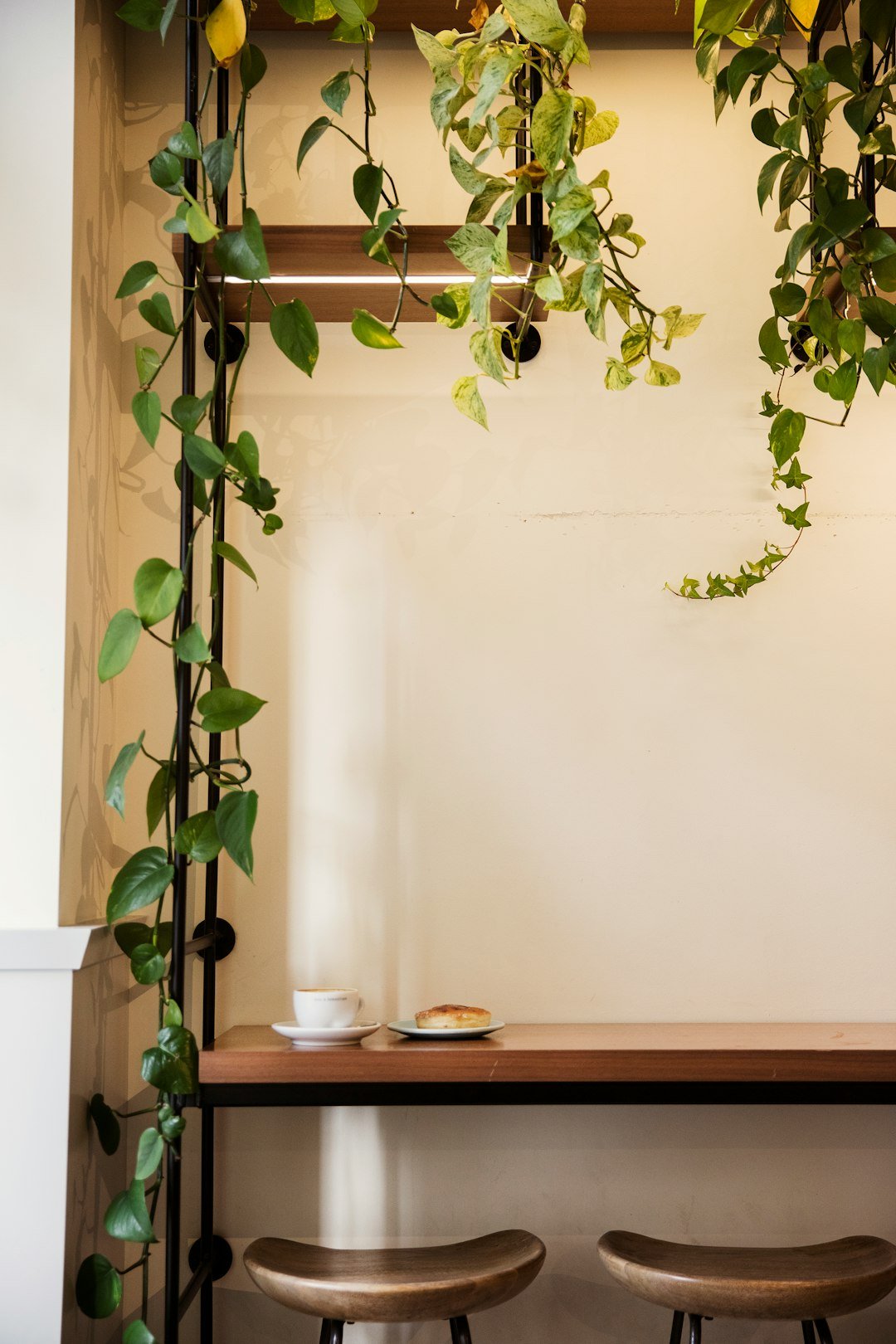
The hottest office perk in 2026 isn’t a standing desk, a meditation room, or one of those absurdly fancy sparkling water taps. It’s a tiny table by a window, decent Wi-Fi, one available outlet, and a barista who doesn’t side-eye you for opening your laptop after the second coffee. That’s the new corner office. And if you’ve noticed more people taking meetings next to a cappuccino foam heart instead of under fluorescent lights, you’re not imagining it. The office didn’t disappear. It just wandered into a café, ordered something strong, and found better lighting.
The office didn’t disappear — it got a better soundtrack and an espresso machine
For a while, the remote-work story sounded very neat: people escaped the office, went home, and lived happily ever after in sweatpants. Great theory. Real life had other ideas.
What actually happened is more interesting. Plenty of people realized home is not always a great place to work. Sure, the snacks are there. Sure, your chair can technically be a couch. But home also comes with laundry, deliveries, roommates, kids, dogs, existential drift, and that weird mental blur that kicks in when your bedroom, office, dining room, and “place where I panic-check email” all occupy the same 700 square feet.
So people started looking for a middle ground. Not full corporate HQ. Not full domestic cave. Enter the coffee shop.
That’s a big reason why coffee shops are the new office and what it means for work culture is more than a catchy headline. It tells you what workers have been missing. Not just desks. Not just internet. Structure. Energy. Presence. The feeling that a day has an actual shape.
Hospitality operators have noticed. According to Bar & Restaurant News, coffee is increasingly being treated as an all-day category rather than just a morning rush product, with venues designing spaces and menus around longer stays and more varied customer behavior. That matters. A lot. It means cafés aren’t built only for quick caffeine pit stops anymore. They’re being shaped for lingering, meeting, reading, typing, snacking, and hanging around long enough to justify one more order. Coffee, in other words, isn’t just fuel now. It’s infrastructure.
That shift changes the emotional role of a café too. A coffee shop used to be a stop. Now it’s often the setting.
There’s also a cultural correction happening here. Home can be isolating. Offices can feel sterile, performative, and somehow both too loud and too soul-sucking at the same time. Coffee shops land in the middle with a quieter kind of intelligence. They offer ambient life without demanding that you fully join in. You can be alone without feeling stranded. You can work without feeling watched. Spoons clink, milk steams, chairs scrape, someone laughs in the background, and your brain goes, ah. Right. Society.
That’s the part nobody really tells you about hybrid work. It didn’t just separate work from one building. It made people hyper-aware that environment is a productivity tool. Not in a grim corporate-optimization way. In a human way. You don’t just want a place to answer emails. You want a place that lets you feel like a functioning person while you answer them.
And coffee shops, maybe by accident at first, got very good at that. If part of the appeal is the atmosphere itself, it helps to understand why the coffee shop experience matters in digital life, especially when so much of work now happens through screens.
Why coffee shops are the new office and what it means for work culture
Home is comfortable, which sounds ideal until you realize comfort and focus are not always best friends. The same softness that makes home relaxing can also make it weirdly hard to begin. There’s no threshold moment. No transition. No little psychological costume change. You just… keep existing, but now with spreadsheets.
A café fixes that with surprisingly little effort.
You leave the house. You order. You wait. You carry the cup to a table. You sit down. Work starts. That tiny sequence acts like a switch. Apparently a three-minute espresso ritual can do the work of an entire morning routine. Good to know.
Traditional offices, meanwhile, solve one problem and create several more. They offer collaboration, yes. They also offer badge swipes, forced proximity, overbooked conference rooms, desks nobody likes, and the kind of background chatter that makes noise-canceling headphones feel less like a gadget and more like survival equipment. A lot of people don’t miss the office itself. They miss what the office used to provide: separation, momentum, a little social texture.
Cafés hit a sweet spot. Enough ambient buzz to keep your brain awake. Not so much that every nearby conversation becomes your business. There’s research behind this too. Studies on ambient noise, including widely cited work published in the Journal of Consumer Research, suggest moderate background noise can support abstract thinking and creativity better than total silence or high noise levels. Translation: the low hum of a café may actually help your brain click into gear better than your apartment’s dead quiet or an office’s chaotic volume. Very convenient for the coffee industry, obviously, but also completely believable if you’ve ever had your best idea while pretending to “just answer a few emails” over an americano.
And cafés aren’t judged only on roast quality anymore. Eater Seattle’s roundup of the best Wi-Fi cafés for working from home makes that pretty clear. The criteria include strong internet, seating layout, quietness, spaciousness, and how friendly a place is to longer stays. Read that again and you can watch the category shifting in real time. A good café is now often expected to function as a temporary workstation, not just a place to grab a drink.
That’s a huge tell.
People aren’t simply buying coffee. They’re buying access to a third place. Sociologist Ray Oldenburg popularized that phrase to describe spaces that are neither home nor work, but support social life and community. The twist now is that work has partly moved into the third place. So the third place is doing double duty: social buffer, productivity zone, emotional softener.
And yes, there’s something mildly ridiculous about paying $5 for a drink and feeling like you rented a better brain for two hours. But that’s also the point. What people want isn’t luxury. It’s light structure without corporate surveillance. Autonomy without isolation. A place where they can be visible, productive, and not entirely alone, without anyone asking them to circle back.
Honestly, that may be the most modern desire of all.
But here’s the Italian reality check: cafés were never meant to be coworking spaces
Now for the fun part. The American café-as-office trend makes total sense. It works. It’s useful. But from an Italian coffee-culture perspective, it’s also a little… how do we put this lovingly… unhinged.
In Italy, the bar — what many Italians call a coffee bar or café — has traditionally been built around rhythm, ritual, and speed. You walk in, order an espresso, drink it standing at the counter, exchange a few words, maybe scan a headline, maybe bump into someone you know, and then you leave. It’s not a campsite. It’s punctuation.
That distinction matters.
Classic Italian coffee culture isn’t about turning coffee into a four-hour workstation accessory. It’s about using coffee as a deliberate reset. A shot of espresso is small, fast, and concentrated, which feels spiritually correct for the pace of the ritual itself. You stop. You sharpen. You continue. There’s real wisdom in that.
And yes, there are rules. Actual ones. Not fake internet travel rules made up by someone who studied abroad for six weeks.
Cappuccino is generally a morning drink in Italy, usually paired with breakfast, and ordering one after late morning will instantly mark you as not local. Not illegal, obviously. The coffee police are still fictional. But culturally, it reads a little off because milk-heavy drinks are tied to breakfast, while later coffee moments tend to be sharper and shorter: espresso, macchiato, caffè corretto if the mood gets festive. Italians also often drink espresso standing at the bar because it’s quicker and traditionally cheaper than sitting at a table. The architecture encourages circulation, not occupation. If you want the deeper cultural logic behind that habit, see why Italians never order cappuccino after 11am.
Right? The whole design logic is basically the opposite of the laptop café.
That contrast makes the American trend more revealing, not less. What’s happening in the U.S. is powerful precisely because it flips the original logic of the coffee bar. It takes a ritual built for brevity and turns it into a semi-private workstation. It stretches a pause into a place.
But maybe the Italian instinct still has something to teach work culture. Maybe productivity doesn’t need more endless docking, more charger worship, more six-hour marathons in one seat. Maybe it needs more punctuation. More short, sharp breaks that actually clear your head instead of becoming just another place where you stay permanently online.
The Italian coffee bar says: have the coffee, have the moment, then move. That’s not anti-work. It’s anti-drift.
And honestly, modern work could use a lot less drift.
The café office is changing café culture too — and not always in charming ways
Of course, once coffee shops become workplaces, coffee shops start acting a little more like workplaces.
You can see it in the design. More outlets. Bigger communal tables. Banquettes that somehow support both brunch and laptop posture. Menus that stretch beyond morning into lunch, afternoon snacks, and evening drinks. According to Bar & Restaurant News, operators are increasingly treating coffee as an all-day profit driver, which means cafés are being programmed for longer dwell times and broader customer needs. That’s not just a beverage strategy. It’s a spatial one.
Eater Seattle’s list shows the same shift from the customer side. People now look for cafés that are “good for working” the way they once looked for cafés with the best croissant. Layout becomes part of the value proposition. Quiet corners matter. Seating variety matters. Wi-Fi reliability matters. A place can basically brand itself as remote-work-friendly without ever saying coworking space out loud.
Smart. Also a little bittersweet.
Because when cafés become offices, they can lose some of the looseness that made them cafés in the first place. A room full of open laptops and AirPods has a very different energy from a room full of conversation, newspaper reading, flirting, people-watching, and the occasional dramatic spoon stir. It can flatten the vibe. Everyone is present, but not exactly available. The room is full, yet somehow socially muted.
There’s a strange irony in that. Coffeehouses historically mattered because they were places where ideas circulated. In 17th- and 18th-century Europe, coffeehouses became hubs for discussion, politics, commerce, and debate. They were not quiet. They were alive. Today’s café office can be lively in its own way, but it can also feel like a collection of private bubbles sharing one electrical grid.
And then there’s the etiquette issue. The one everybody understands and nobody really wants to say out loud.
One coffee does not cover six hours of rent, electricity, internet, bathroom use, labor, and the opportunity cost of a table that could turn multiple times. That’s just math. Hospitality economics are not powered by vibes alone. So as workers use cafés more like offices, cafés have to quietly decide what kind of hospitality they can actually afford. Some add time limits. Some reserve laptop-free tables. Some redesign for mixed usage. Some just hope people will read the room and order a second drink or a snack without needing a sign to explain capitalism.

That tension matters because it reveals the cultural collision underneath the trend. Workers want refuge, rhythm, and flexibility. Cafés want to be welcoming, profitable, and not accidentally turned into underpriced desk rentals. Both sides are reasonable. Both sides are adjusting in real time.
And that adjustment changes behavior. You can feel it in the tiny rules people now absorb: don’t take the four-top if you’re solo, buy something else after a while, avoid calls in the quiet corner, tip well, don’t spread your stuff like you’re annexing territory. This isn’t office etiquette and it isn’t classic café etiquette either. It’s a new code for a blended space.
Which is fascinating, because blended spaces are basically the signature design challenge of this entire work era.
What this shift says about work culture: people are craving ritual, not just flexibility
Zoom out a little and the story isn’t “remote workers like lattes.” That’s too shallow — and honestly a little insulting to everyone involved.
The deeper story is that people are rebuilding structure where old structures have weakened.
For decades, office life imposed rhythm whether you liked it or not. You commuted. You arrived. You ate lunch around a certain time. You took breaks because other people took breaks. You left, ideally. Some of that structure was annoying. Some of it was quietly useful. Once hybrid and remote work loosened those external markers, people had to invent new ones for themselves. Turns out that’s harder than productivity gurus on the internet would have you believe.
Coffee shops help because they offer micro-rituals. Small, repeated actions with outsized psychological effect.
You walk there.
You order.
You wait.
You choose a seat.
You open the laptop.
You work for a stretch.
You get another drink.
You reset.
That sequence sounds almost comically basic, but basic is exactly why it works. Ritual doesn’t have to be grand to be effective. It just has to be repeatable and meaningful enough to mark time. Maybe what a lot of people miss about offices isn’t management. It’s transitions.
This is where Italian coffee culture feels oddly relevant again. The strongest coffee traditions aren’t built on endless consumption. They’re built on intentional pauses. A caffè isn’t just a beverage. It’s a moment with edges. You stop doing one thing, have the coffee, and return to life a little more awake, a little more human. There’s a reason those rituals last. They respect attention. That same rhythm is part of why counter coffee hits different in Italian bar culture.
Modern work culture, by contrast, often treats attention like an always-on utility. Stay reachable. Stay responsive. Stay logged in. Stay available. Keep the tabs open. Keep the status green. Efficient on paper, exhausting in practice.
The café office offers a partial rebellion against that. Not a full one. You’re still working. You’re still online. But the environment sneaks in a little humanity. There are smells. Sounds. Physical movement. Tiny moments of eye contact. A beginning and an end that aren’t entirely digital. For a lot of people, that’s enough to make the day feel less like a software subscription and more like actual life.
And that may be what the future workplace really looks like: not one fixed headquarters, but a network of ritual-rich spaces. Cafés. Hotel lobbies. Neighborhood bars in their quieter hours. Libraries. Shared studios. Maybe even actual offices, if they can remember that people aren’t only there for bandwidth and badges. They’re there for atmosphere, cadence, and connection.
So if you’re wondering why coffee shops are the new office and what it means for work culture, the answer isn’t just convenience. It means workers are choosing environments that restore something the modern workday has worn thin: rhythm. Presence. Human-scale interaction. A sense that productivity works better when it has texture.
And maybe that leaves a better question than “Should cafés become offices?” Maybe the smarter question is whether work itself should borrow more from café logic. Shorter bursts. Better breaks. More intentional transitions. Less performative occupancy. Fewer hours spent proving you’re at your desk, wherever that desk happens to be.
Next time you work from a café, notice what you’re really there for. Focus? Company? Better coffee, obviously. Or the ritual — that small ceremony that makes the day feel organized, social, and a little more alive?
Your answer says a lot about where work culture is headed.
Sources
- Bar & Restaurant News — https://www.barandrestaurant.com/food-beverage/coffees-staying-power-hospitality-operators-turn-daily-ritual-all-day-profit-driver
- Eater Seattle — https://seattle.eater.com/maps/best-wi-fi-cafes-seattle-work-from-home
- Journal of Consumer Research — https://academic.oup.com/jcr/article/39/4/784/1795620
- Encyclopaedia Britannica — https://www.britannica.com/topic/coffeehouse
- Treccani Encyclopedia — https://www.treccani.it/enciclopedia/caffe/
Frequently Asked Questions
Why are coffee shops becoming the new office?
Coffee shops offer something many home offices and corporate spaces lack: structure, ambient energy, and light social presence. For many workers, that mix makes it easier to focus without feeling isolated or overly monitored.
Do coffee shops actually help people work better?
They can. Moderate background noise, a change of environment, and simple rituals like leaving home and ordering coffee can help some people feel more alert, creative, and mentally organized.
Is it rude to work for hours in a coffee shop?
Not necessarily, but etiquette matters. Order regularly, avoid taking oversized tables, keep calls brief, and pay attention to how busy the café is so you’re not treating hospitality like free office rent.
How does Italian coffee culture differ from the café office trend?
Traditional Italian coffee culture is built around quick, intentional pauses rather than long stays. Espresso at the bar is usually about reset and rhythm, while the modern café office turns that pause into a longer work session.
