

You can taste a broken coffee system before you have the vocabulary for it. The cup lands flat, harsh, weirdly hollow, or just aggressively fine. And that’s the real hot take: why the best sustainable coffee also happens to taste the best has less to do with moral reward and more to do with operational discipline. Coffee made with real long-term care is usually handled better at every step: better farms, better picking, better fermentation, better water, fewer shortcuts, and more precision.
That’s the real answer to why the best sustainable coffee also happens to taste the best. Flavor and sustainability are not separate lanes, one for your conscience and one for your palate. Usually, they are the same story from two angles. If a coffee system is built to survive more than one harvest, more than one trend cycle, and more than one quarterly spreadsheet panic, the result is usually a cleaner, sweeter, more consistent cup.
And yes, “sustainable” gets thrown around a lot. We have all seen the leafy green label doing emotional heavy lifting while the coffee itself gives very little. A compostable-looking bag does not automatically mean the coffee inside was grown, processed, transported, and brewed with any serious level of care. But when sustainability reflects actual operational discipline, not just packaging theater, it becomes one of the clearest quality signals you can get.
The Hot Take: Why the Best Sustainable Coffee Also Happens to Taste the Best
A lot of coffee conversations still treat sustainability like a bonus feature. Nice if it is there. Separate from taste. As if ethics lives on one shelf and quality lives on another. That is not how coffee works.
Flavor is just the visible tip of a very unglamorous iceberg. Underneath that cup are agricultural decisions, labor conditions, fermentation control, drying protocols, storage standards, transportation realities, water chemistry, and brewing consistency. If any one of those gets sloppy, the cup notices.
So if you are asking why the best sustainable coffee also happens to taste the best, here is the unromantic answer: systems built for resilience usually produce better outcomes. Producers who can plan long-term are more likely to maintain their trees properly, invest in soil health, pay for selective harvesting, monitor fermentation, and protect the coffee after harvest. Roasters and cafés with a sustainability mindset often care more about reducing waste through precision, which also improves consistency.
There is a reason serious coffee people obsess over process. Flavor is not magic. It is what happens when hundreds of small decisions go right.
This is also where the fluffier version of sustainable falls apart. If sustainability only exists in branding copy, it tells you almost nothing. But if it shows up in stronger farm resilience, smarter resource use, more controlled processing, and materials that reduce waste without messing up the brew experience, then it starts to mean something. Better yet, it starts to taste like something.
Here is the part that tends to surprise people: a lot of what we call better coffee taste is really just the absence of preventable defects. Cleaner acidity. More sweetness. Less bitterness. More clarity. Those are not random gifts. They are often proof that fewer things went wrong upstream.
And honestly, that should make you more optimistic, not less. Better coffee does not require some mythical unicorn bean harvested at moonrise. It requires systems that are cared for well enough to let good coffee stay good.
Great Taste Starts on Farms That Can Think Beyond the Next Harvest
The best cup you will drink this week probably started with someone making patient, expensive, deeply unsexy decisions months earlier.
That matters because coffee farming is not stable by default. Daily Coffee News recently reported on a Costa Rican study exploring biennial production cycles, the on-year and off-year rhythm where harvest volumes naturally swing from one season to the next. Those swings do not just disrupt farm income. They make consistency harder, and consistency is a huge part of what most people experience as quality.
If a farm has a strong year followed by a weaker one, cash flow gets messy fast. And when cash flow gets messy, ideal farm management gets harder to maintain. Pruning gets delayed. Inputs get cut back. Labor decisions get tougher. Harvest timing gets squeezed. Selective picking, choosing ripe cherries instead of strip-picking everything at once, becomes less feasible. Every one of those choices shows up in the cup.
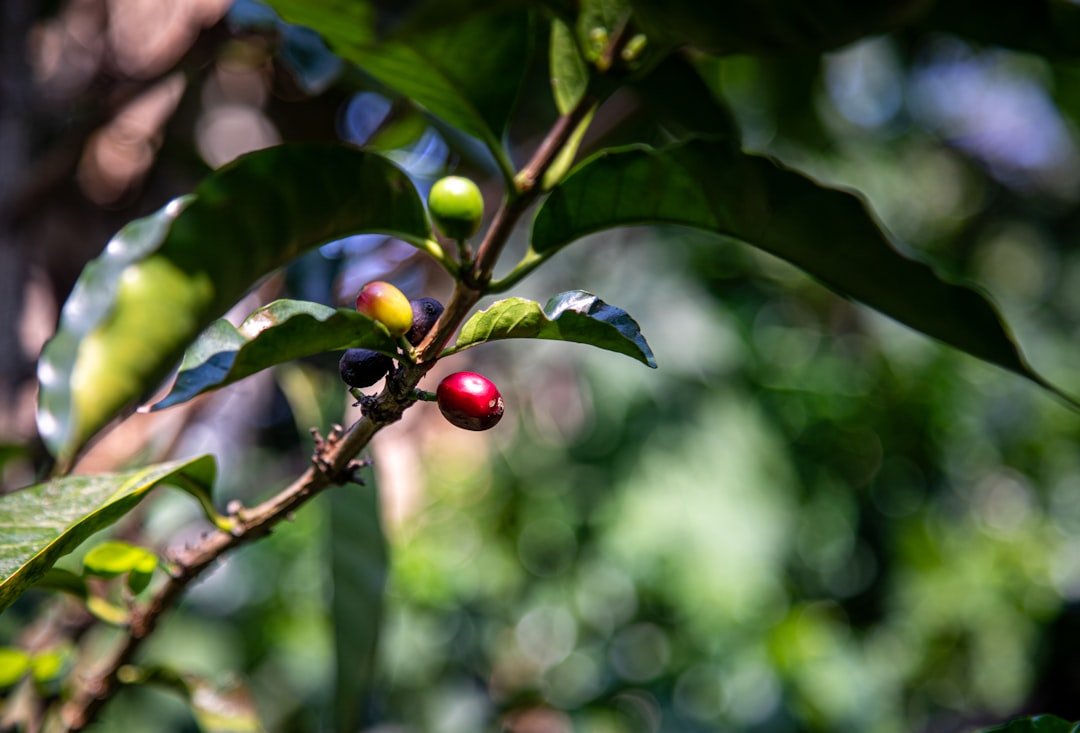
Sweetness in coffee often starts with ripe fruit. That sounds obvious, but it is easy to underestimate. A surprising number of quality problems begin with uneven cherry ripeness. If producers can afford careful picking and sorting, they can reduce underripe and overripe cherries entering the lot. That usually means cleaner flavor, better balance, and fewer vegetal or fermented off-notes. Sustainability, in this context, is not a moral accessory. It is what gives a farm enough breathing room to do things properly.
Daily Coffee News also reported on how fertilizer and energy price shocks are making coffee production more expensive. Those rising costs squeeze producers from multiple directions at once. If fertilizer becomes harder to afford, plant health and future yields can suffer. If energy costs rise, processing and drying become harder or more expensive to manage. These are not abstract concerns. They become cup-level consequences.
This is where cheap coffee starts to look suspicious. Cheap for whom? Cheap compared to what? Cheap at what cost?
Because the hidden price of bargain coffee usually shows up as rushed harvests, uneven cherries, compromised drying, or lower investment in post-harvest care. Your palate can often detect that before your brain catches up. Maybe you do not think, “This lot appears to reflect economic pressure on farm labor and input availability.” You just think, “Why does this taste weirdly thin and bitter?”
That instinct is often right.
A resilient farm can think beyond the next invoice. It can improve soil care. It can manage shade thoughtfully. It can invest in labor and post-harvest infrastructure. It can protect quality instead of sacrificing it for survival. And while sustainability conversations often zoom in on environmental outcomes, economic sustainability is what makes all the other good decisions possible.
One more underappreciated point: consistency is a luxury. Not flashy luxury. Real luxury. The kind where the coffee tastes good not just once, but repeatedly, because the system behind it is stable enough to repeat excellence. For more on how coffee systems can reduce waste after production, see how coffee waste can have a second life beyond the bin.
Sustainability Is Flavor Control in Disguise
Let us talk fermentation, because this is where coffee gets gloriously technical.
A recent Scientific Reports study, “Microbial community dynamics during Coffea arabica cv. Arara fermentation and their relationship with specialty coffee quality,” examined how microbial activity during fermentation affects sensory outcomes in specialty coffee. Translation: the tiny invisible life forms active during post-harvest processing can shape whether your coffee ends up tasting vibrant and complex or muddled and off.
That should change how you think about flavor immediately. Coffee taste is not just bean quality. It is process quality too. Fermentation is not a rustic side quest where producers toss cherries in a tank and hope for poetry. Managed fermentation is controlled biology. Time, temperature, microbial populations, oxygen exposure, moisture, and sanitation all matter.
And here is the sustainability connection that does not get enough attention: producers who manage fermentation and post-harvest systems carefully are often practicing the exact kind of disciplined resource management that also reduces waste and protects long-term viability. Careful water use. Better tank management. Cleaner process flows. More attention to drying conditions. More consistency in outcomes. Better flavor. Better resource stewardship. Same mindset.
That mindset matters more than any one technique. The producer asking, “How do we reduce variability, improve process, and waste less?” is usually also asking, “How do we make this coffee taste incredible?” Those are not two separate personalities. They are the same operating philosophy.
Sprudge recently covered new research into coffee-quality measurement, highlighting more precise tools that could help the industry understand and reproduce desirable flavors more effectively. Coffee has long relied on sensory evaluation, which remains essential, but better measurement systems can help identify what is actually driving quality and how to repeat it.
That is the key insight here: quality is not only about discovering amazing coffee. More and more, it is about measuring, managing, and reproducing amazing coffee with greater precision. Which means the future of great coffee may look less like romantic chaos and more like elegant control.
This is why sustainability and quality so often rise together in premium coffee. Not because every sustainable coffee is automatically delicious. But the practices tied to meaningful sustainability, careful management, reduced waste, long-term planning, respect for inputs, and better infrastructure, also happen to be the exact practices that protect flavor.
Or, more simply, sustainability is often flavor control in a less obvious outfit. If you are curious how long-term agricultural planning supports coffee quality, our post on climate-resilient coffee varieties saving coffee adds useful context.
Even the Water Matters
Now for the least glamorous hero in coffee: water.
Not beans. Not grinders. Not your barista’s tattoo choices. Water.
Fresh Cup recently reported on Bluewater’s Café Station 1 and how water precision can improve extraction, reduce limescale, and cut maintenance waste in cafés. It is a practical example of sustainability and cup quality improving together instead of competing.
This matters because coffee is mostly water. Around 98 to 99 percent of the cup is water, depending on the brew. So if the water chemistry is off, even beautifully grown and expertly roasted coffee can taste flat, bitter, chalky, sour, or strangely muted. You can have fantastic coffee and still brew it into mediocrity because your water is working against you.
Water composition affects extraction, how the soluble compounds in coffee dissolve into the cup. Too much hardness, too little buffering, mineral imbalance, or scale buildup in equipment can all distort flavor. And scale does not just hurt taste. It reduces machine efficiency, increases maintenance, and can shorten equipment life. Waste in coffee is often not dramatic or visible. It is procedural, with tiny inefficiencies piling up all day.
That is the sneaky insight here: waste is often a flavor issue wearing a logistics costume.
If your machine builds up scale and starts performing inconsistently, you waste coffee through bad shots and recalibration. If your water is off, you overcompensate with grind changes, longer brew times, or repeat brews. If extraction is inconsistent, you waste labor, beans, energy, and customer goodwill. Nothing says sustainability problem quite like dumping another bad shot because the first two tasted wrong.
And this applies beyond cafés. At home, the same logic holds. Intelligent brewing is sustainable brewing. Not in a sanctimonious way, but in a practical “why ruin good coffee and spend more doing it?” way.
Sustainability does not stop at origin. It follows the coffee all the way into the cup. A system that uses water more intelligently, protects equipment, and extracts flavor more consistently is better for resources and better for taste. You do not have to choose between them. That trade-off is mostly outdated.

A clean side-by-side graphic works well here: one column showing a wasteful coffee system with uneven farming, sloppy fermentation, mineral-heavy water, and inconsistent brewing, and the other showing a precision coffee system with farm care, controlled fermentation, proper water, and a cleaner final cup. Same product category, very different outcomes.
If that all sounds a little technical for a conversation about pleasure, remember this: precision is what protects pleasure. The sweetest, clearest, most satisfying coffees are rarely the result of winging it.
The Old Trade-Off Is Falling Apart
There used to be an assumption that if you wanted the ethical option, you had to accept some compromise. Maybe it tasted a little worse. Maybe it was less convenient. Maybe the packaging was awkward. You chose it because it was the right thing, not because it was the best thing.
That logic is aging badly.
Younger coffee drinkers, especially the ones who care what is in the cup, are much less interested in vague ethical halos and much more interested in whether the system is visibly smarter. They want traceability. Better materials. Better process control. Better taste. Less waste. Fewer contradictions. If a brand says it cares, the obvious follow-up is where exactly that care shows up.
And the answer cannot just be a soft green color palette and a promise to care for the planet. Most people have developed a healthy skepticism toward performative sustainability. The modern coffee drinker is not asking for sainthood. They are asking for coherence.
That is why the best sustainable coffee feels so compelling right now. It does not ask you to lower your standards. Usually, it meets higher ones. The coffee tastes better because the system behind it is more disciplined. The packaging makes more sense because it is designed to reduce waste without killing convenience. The materials are smarter because people are tired of pretending excess is the only way to signal premium.
That cultural shift matters. Luxury used to signal abundance, even waste. More layers. More material. More spectacle. But the new luxury is precision. Fewer compromises. Better execution. Things that feel good because they actually are good.
That is also where modern pod coffee gets interesting. Not all convenience formats have earned trust, fair enough. But the category changes when convenience stops requiring a quality apology or an environmental side-eye. Smarter pod materials, cleaner extraction, and less wasteful systems are exactly the kind of functional sustainability people respond to now. If you want a deeper look at packaging trade-offs, read Compostable Coffee Pods vs Aluminum Pods: Real Impact.
That is part of why compostable pods have become such a smart flex when they are done well: they fit real life, they do not ask you to sacrifice taste, and they feel like someone actually thought the system through.
We think that is a healthier place for coffee culture to be. Less guilt. More standards.
And maybe that is the simplest answer to why the best sustainable coffee also happens to taste the best: the same people building smarter coffee systems are usually unwilling to accept mediocre flavor. They care too much about the farm, the process, the cup, what gets wasted, and what gets repeated. Once you see that, the old trade-off starts to look fake. Sustainability versus taste is not really the choice. In great coffee, sustainability is often the reason taste had a chance to be great in the first place.
Frequently Asked Questions
Why does sustainable coffee often taste better?
Sustainable coffee often tastes better because the systems behind it are managed more carefully. Better farming, selective picking, controlled fermentation, and smarter brewing all reduce defects and improve clarity, sweetness, and consistency.
Does sustainable coffee always mean higher quality?
No. A sustainable claim alone does not guarantee great flavor. But when sustainability reflects real operational discipline rather than marketing, it often aligns with the same practices that protect coffee quality.
How does water affect sustainable coffee flavor?
Water affects extraction, balance, and equipment performance, so poor water can ruin even excellent coffee. Better water management also reduces waste, maintenance, and inconsistent brewing, making it both a flavor and sustainability issue.
Why is farm resilience important for coffee taste?
Farm resilience gives producers the ability to invest in ripe picking, soil health, labor, and post-harvest care. Those decisions directly influence sweetness, cleanliness, and consistency in the final cup.
Sources
- Sprudge, https://sprudge.com/a-shocking-new-way-to-determine-the-quality-of-a-cup-of-coffee-966851.html
- Fresh Cup, https://freshcup.com/bluewater-group-helps-cafes-perfect-their-water-with-cafe-station-1/
- Daily Coffee News, https://dailycoffeenews.com/2026/05/04/costa-rica-study-explores-the-social-impact-of-biennial-production-cycles/
- Daily Coffee News, https://dailycoffeenews.com/2026/05/05/the-war-in-iran-is-making-coffee-production-more-expensive/
- Scientific Reports, https://www.nature.com/articles/s41598-026-44864-z
