
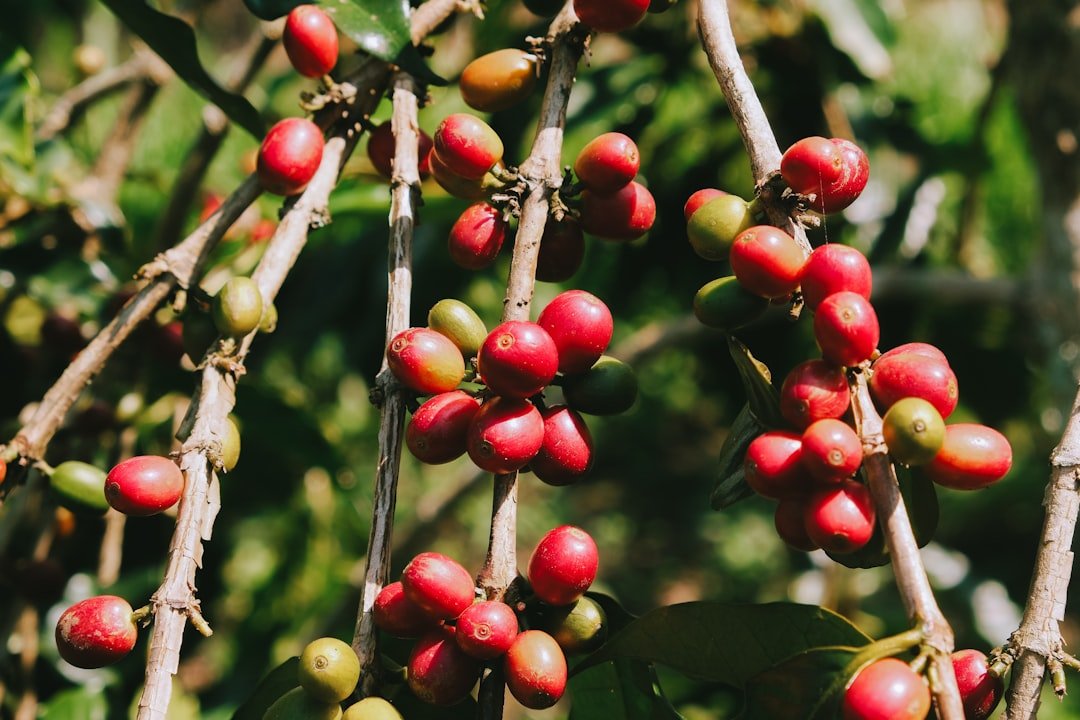
“100% arabica” has become the coffee equivalent of “luxury apartment” on a rental listing. Arabica coffee beans sound reassuring on a bag, but the phrase gives you very little useful information about quality, origin, or what will actually happen in your cup.
Arabica coffee has a labeling problem, and plenty of grocery shelves are still stuck in 2016. “100% arabica” looks reassuring on a bag, but it tells you very little about what’s about to happen in your cup.
In 2026, the useful questions got sharper. Where did the coffee grow? What happened after harvest? Which roads, ports and warehouses did it pass through before it reached your mug? Add a few deeply inconvenient weather events and you’re much closer to the full picture.
FoodNavigator’s coverage of Coffee Barometer 2026 notes arabica hit US$4.40 per pound in February 2025, the highest ever recorded. Then Perfect Daily Grind reported that ICE-certified arabica stocks fell to 226,242 bags in August 2026, hovering near the lowest level since 1999. Flavor still matters, obviously. Shipping routes matter too. So does rain that shows up late, or frost that shows up at all.
What are arabica coffee beans, really?
Arabica coffee beans are the seeds of Coffea arabica, the species most people connect with brighter acidity, more aroma and less caffeine than robusta. That is why arabica coffee usually sits at the premium end of the shelf, but the label alone does not guarantee quality, careful processing, or a better-tasting cup.
That part gets lost constantly. “100% arabica” is a species label. It says nothing about whether the coffee was picked carefully, processed well, or stored like anyone involved actually wanted it to taste good. You can absolutely buy a dull arabica. Plenty of bags pull it off with impressive consistency. If cherries are handled badly or grown under rough conditions, the cup can still taste like wet cardboard with LinkedIn Premium.
A useful reality check came from the University of Florida. In a 2026 Crop Science paper titled “First assessment of agronomical performance of Coffea arabica in the southern US conditions,” researchers tested four arabica cultivars at Homestead, around 30 miles south of Miami. According to Daily Coffee News, the team started with 48 plants germinated in 2022, transplanted them in 2023, saw first fruit set in 2024, and pulled meaningful data from the 2025 harvest.
That level of detail matters because cultivar choice changes the result. So do soil conditions, heat, labor pressure, disease risk, and how much management a farm can afford in a given season. Florida may or may not become a serious coffee origin. The study still makes the point cleanly: quality comes from a long chain of decisions, and none of them fit neatly on a front label.
If you want to read coffee bags like someone who actually cares what goes in the grinder, look past the species claim. Check origin. Check altitude. Check process. Washed, natural, anaerobic. Those details tell you far more about the cup, and they tell you what happened before the coffee ever made it to your kitchen. That’s where farm to cup coffee starts to mean something you can trace, instead of something a copywriter wrote after one oat flat white too many. For a broader species comparison, see Arabica vs Robusta: the real difference explained.
Why coffee regions suddenly matter more
Species tells you the plant. Coffee regions tell you why one arabica tastes floral and crisp while another lands heavy, jammy, or a little tired after a rough season and an even rougher trip.
Take Colombia. Most people picture the postcard first: mountains, careful picking, beautiful cups. Fair enough. But Perfect Daily Grind’s August 2026 recap includes the part nobody prints on the bag. After the 10 August 2026 earthquake, farms, homes, roads, and other infrastructure were affected across Risaralda, Valle del Cauca, Caldas, Antioquia, Chocó, Quindío. Colombia’s Buenaventura port, which handles more than 60% of the country’s coffee exports, reopened only partially, with intermittent traffic. One damaged route can turn a clean origin story into a logistics mess before lunch.
You can see the same thing, maybe even more clearly, in ethiopian coffee regions. “Ethiopian” gets used like it’s a complete tasting note, which is lazy and a little unfair to Ethiopia. Yirgacheffe, Sidama, and Guji are different places with different elevations, different local varieties, and their own processing habits. A washed Yirgacheffe can drink tea-like and floral. A natural Guji often comes in louder, fruitier, almost candy-bright when it’s handled well. Sidama can swing either way, beautifully, depending on the lot and the producer.
Same country, different cups. That should not be shocking, yet coffee marketing still manages to act surprised every few months.
That helps explain why so much of the 2026 conversation around traceable microlots and origin-specific storytelling has stuck. Daily Coffee News, for example, reported on high-scoring microlots heading to the Best of Congo Cooperatives Auction on 26 August 2026. Buyers are paying closer attention to named lots and specific origins. It gives you a better way to taste place, and honestly, a smarter way to buy coffee. If origin labels still feel incomplete, this guide to what coffee of origin labels still don’t reveal adds useful context.
Then there’s Florida, quietly trying to pull up a chair. The University of Florida trial, backed in part through funding linked by Daily Coffee News to Severin Hacker of Above Ground Coffee, suggests coffee regions are not fixed forever. They shift at the edges. Climate gets a vote. Capital usually wants one too. Bold.
Arabica has a fragility problem
When arabica prices spike, people outside coffee tend to read that as prestige. Traders read stress. Producers usually read a week they would happily erase from memory.
FoodNavigator’s reporting on Coffee Barometer 2026 says arabica reached US$4.40/lb in February 2025, with climate disruptions in Brazil driving much of the chaos. Brazil accounts for about 35% of total global coffee production, so weather trouble there travels fast. A frost in the wrong part of Brazil can introduce itself in your morning espresso with zero warning. Efficient, in the worst possible way.
At the same time, the market is full of contradictions. Perfect Daily Grind, citing a Reuters poll and Sucafina market data, reported ICE-certified arabica stocks at 226,242 bags in August 2026. Tight. The same roundup also said traders expect arabica to slide to around US$3/lb by the end of 2026, with a projected 1.7-million-bag surplus in 2025/26 widening to 8.2 million bags in 2026/27. The reason was a projected 17.2% jump in Brazilian output to 75 million bags. Coffee can say “short supply” and “lower prices ahead” in the same breath and somehow mean both. Commodities love drama.
For anyone who likes the phrase farm to cup coffee, this is where the romance gets tested. Coffee Barometer first launched in 2006, and the 2026 edition says the structural conditions of the sector remain largely unchanged: producer incomes still sit below living-income benchmarks, labor is still poorly paid, while climate pressure keeps getting worse. Then EUDR arrives in January 2027, adding more compliance work across supply chains. Better traceability is good. It also costs time and money, and smaller producers are rarely sitting around with spare admin hours.

If a farm cannot stay viable through price swings, weather hits, and new paperwork, the map of arabica coffee beans gets smaller. Quietly at first. Then all at once, if enough growers decide the math no longer works.
Frequently Asked Questions
What are arabica coffee beans?
Arabica coffee beans are the seeds of the Coffea arabica plant species. They are generally known for higher acidity, more aromatic complexity, and lower caffeine than robusta, but the label alone does not guarantee quality.
Is arabica coffee better than other coffee?
Arabica coffee is often treated as premium, but better depends on origin, processing, freshness, and roasting. A poorly handled arabica can taste worse than a well-produced robusta or blend.
Why do coffee regions matter for flavor?
Coffee regions shape altitude, climate, soil, varieties, and processing traditions, all of which affect taste. That is why coffees from places like Yirgacheffe, Sidama, and Guji can taste very different even within the same country.
What does farm to cup coffee actually mean?
Farm to cup coffee means looking beyond the species label to trace how coffee was grown, processed, transported, and stored. It is useful only when those steps are specific and transparent, not just marketing language.
Sources
- Florida-Grown Coffee Gets Its First Serious Field Test — https://dailycoffeenews.com/2026/08/26/florida-grown-coffee-gets-its-first-serious-field-test/
- High-Scoring Microlots Head to Best of Congo Cooperatives Auction — https://dailycoffeenews.com/2026/08/26/high-scoring-microlots-head-to-best-of-congo-cooperatives-auction/
- Coffee News Recap, 21 Aug: Global Coffee Awards Europe set for October, Colombian coffee exports partially resume throug — https://perfectdailygrind.com/2026/08/coffee-news-recap-21-august-2026/
- Coffee News Recap, 28 Aug: ICE-certified arabica stocks fall close to lowest levels since 1999, C price forecast at US$3 — https://perfectdailygrind.com/2026/08/coffee-news-recap-28-august-2026/
- Are global coffee sustainability strategies falling short? — https://www.foodnavigator.com/Article/2026/07/27/are-global-coffee-sustainability-strategies-falling-short/
