

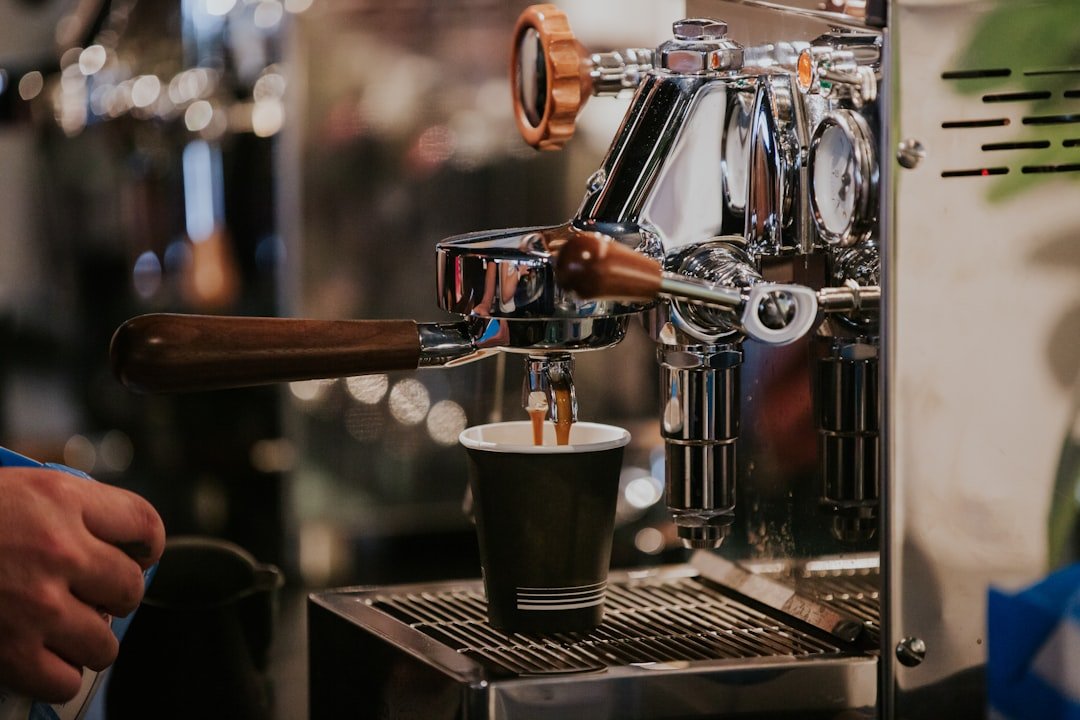
The breve latte and the American twist on espresso drinks may be the most unapologetically bold pairing in café culture. Italy gave the world espresso discipline. America took one sip, nodded respectfully, and asked what would happen if it were creamier. The answer is the breve latte: rich, velvety, and completely uninterested in restraint.
A breve latte is simple. Espresso meets steamed half-and-half instead of regular milk. That one substitution changes the entire personality of the drink. It is richer than a standard latte, softer around the edges than a cappuccino, and not exactly the kind of order people stumble into by accident.
That is why the breve says something bigger about American coffee culture. Tradition arrives, gets admired, and then gets remixed into something more customizable, more indulgent, and usually larger than anyone in Italy intended. If you want a broader example of how espresso drinks evolve once they cross borders, the story echoes what happened with the Americano’s famously improvised origin.
Coffee culture now runs on personalization: extra shots, fewer shots, alt milks, protein add-ins, cold foam, sweet cream, and house specials with names that sound suspiciously like startup brands. In that world, the breve feels current again. It fits the little-treat economy perfectly. Life may be expensive, but at least your espresso can show up dressed like quiet luxury.
There is also something refreshingly honest about it. A breve does not pretend to be virtuous. It is not wrapped in wellness language or trying to pass itself off as a health food. It is espresso with half-and-half. Full stop.
More importantly, the breve is not random excess. It belongs to a long American habit of taking European coffee traditions and adapting them to local taste. Sometimes that means bigger sizes. Sometimes sweeter drinks. Sometimes more dairy than a Roman barista would care to imagine before noon. But the instinct stays the same: make espresso more approachable, more flexible, and more obviously pleasurable.
Breve Latte and the American Twist on Espresso Drinks
Italian espresso culture is famously codified. Drinks are smaller, faster, and more tied to time and place. You stand at the bar. You drink your espresso quickly. A cappuccino has its lane. A macchiato has its lane. The whole system is less about self-expression and more about respecting a format that exists for a reason.
In the United States, coffee took a different route. Espresso did not arrive as a fully protected ritual. It arrived as inspiration. American café culture treated it less like sacred text and more like a base format that could be stretched, sweetened, flavored, chilled, supersized, or carried around for 45 minutes between meetings. One culture optimized for precision and routine. The other optimized for choice and portability.
Even the latte tells that story. In Italy, caffè latte often refers to coffee and milk in a domestic context rather than a giant takeaway café drink. In the United States, the latte became its own species: espresso, lots of steamed milk, and often a cup size that would make an Italian porcelain demitasse feel personally attacked.
According to the Specialty Coffee Association, modern specialty cafés helped standardize espresso-based drinks in ways that balanced tradition with local service styles. In the U.S., that quickly translated into broader menus and wider customer appeal rather than strict preservation of old-world norms.
That is where the breve fits. It is not exactly a mistranslation. It is more like a very American rewrite.
By the late 20th century, American espresso bars were normalizing experimentation at scale. Flavored syrups became standard. Extra shots became a flex. Whipped cream stopped seeming unusual. Low-fat milk had its era, then soy, almond, oat, coconut, and sweet cream each took a turn. Espresso became less a fixed ritual and more a modular platform.
The National Coffee Association has tracked the rise of specialty coffee in the U.S. for years, noting how espresso-based beverages became part of daily habits far beyond traditional café settings. That growth happened partly because espresso drinks were made friendlier to more people: softer, sweeter, less intimidating, and more customizable.
The breve did not create that shift by itself, but it absolutely belongs on that family tree. In the same way newer hybrid drinks keep stretching espresso into fresh territory, the breve helped establish the logic behind drinks people now order without a second thought. You can see that same remix instinct in modern café mashups like dirty chai latte and espresso hybrid drinks.
The mildly provocative take is this: the breve latte is less a betrayal of espresso than a very American sequel. Same main character. Bigger budget. More dramatic lighting. Less interest in restraint.
Coffee history is full of adaptations like this. Traditions survive because people keep changing them. If every espresso drink had stayed frozen in one cultural context, coffee would not have become the global language it is now. It would just be a museum exhibit with crema.
Why Half-and-Half Changes Everything
Half-and-half sounds like a minor substitution. It is not. It changes texture, sweetness perception, and the entire emotional register of the drink.
Regular whole milk in the U.S. typically contains around 3.25% milk fat. Half-and-half usually falls in the 10.5% to 18% range, depending on the product and applicable regulations. That difference matters immediately in a hot espresso drink.
First, texture. A breve feels denser and silkier because fat adds body and creates a longer, more lingering mouthfeel. Instead of the lighter softness of steamed milk, you get something that coats the palate more fully. That coating can make the drink seem sweeter even when no sugar has been added.
Dairy science research has long shown that fat influences flavor release, aroma perception, and mouthfeel. Those factors shape how sweetness and indulgence are perceived. In practical terms, a breve often tastes dessert-adjacent before syrup ever enters the conversation.
The foam changes too. Milk foam depends heavily on proteins, but fat has a major role in texture and stability. Too much fat can make perfect foam harder to achieve than it is with standard milk, which is one reason a well-made breve feels plush rather than airy. You are not chasing dry cappuccino foam here. You are chasing velvet.
Flavor is where half-and-half really starts rewriting the script. Because fat coats the palate, it tends to soften sharp acidity and mute bitterness. The brighter edges of espresso get rounded off. Chocolate notes feel deeper. Caramel notes feel fuller. Nutty notes become more obvious. A medium or darker espresso blend can taste almost truffle-like in a properly made breve.
This is also why the drink can feel sweet without actually being sugary. Richness, texture, and aroma all work together to create that impression. The dairy does a surprising amount of the heavy lifting.
The tradeoff is important. A breve is not universally flattering to every coffee. Delicate, floral, citrusy espressos, especially lighter roasts designed to show off origin clarity, can get flattened under that much dairy weight. If your espresso tastes like bergamot and apricot on its own, half-and-half may politely erase the apricot and tuck the bergamot into storage.
That is not a flaw. It is pairing logic. The breve tends to work best with coffees built for body, chocolate, toasted nuts, caramel, and lower-to-medium brightness. It is not better than a latte. It is just more selective about what kind of espresso it wants to become.
There is another detail worth noticing: heat changes sweetness perception too. Warm dairy amplifies comfort cues in ways cold drinks do not. The same espresso that feels sharp in an iced drink can feel rounded and almost confectionary in a hot breve. That is part chemistry and part psychology. Human beings have never been neutral about warm creamy things.
How the Breve Quietly Changed American Espresso Expectations
A lot of Americans did not enter coffee culture through straight espresso. They came in through drinks that made espresso feel less severe. The breve was one of them.
That matters because espresso, on its own, can be intense. It is concentrated, and if it is pulled badly it can be bitter or sour in a hurry. Even when it is excellent, it asks for attention. Not everyone wants their first café experience to feel like an exam. Drinks with more dairy and softer textures gave people another way in.
The breve, with its rounded edges and luxurious body, made espresso feel less like a challenge and more like a reward. That shift helped shape broader U.S. expectations around espresso drinks. Plenty of people now assume espresso should be softened, stretched, sweetened, or texturally cushioned.
You can see the breve’s logic everywhere. Mochas make espresso friendlier through chocolate and milk. White chocolate drinks do the same with even less subtlety. Pumpkin-spice menus follow the same formula in seasonal costume. Sweet cream cold foam applies the same principle from above instead of within. The through-line is simple: many people want coffee to feel pleasurable first and analytical second.
Purists sometimes treat these drinks like distractions from real coffee, but that misses how culture actually forms. Café habits are built through repetition and pleasure. If a creamy espresso drink got someone comfortable walking into coffee shops, learning what they like, and eventually caring about roast, origin, or extraction, then that drink did not weaken coffee culture. It expanded it.
The breve was part of that expansion. Quietly, yes. It was never as globally iconic as the cappuccino or as chain-menu famous as the flavored latte. But it helped normalize the idea that espresso could support comfort-first drinks without losing its identity entirely.

There is also a direct line from breve logic to modern café behavior. Oat milk lattes took off partly because people wanted a creamy, soft espresso experience with a different kind of body. Sweet cream cold brews exploded because texture changes flavor expectation. Shaken espresso drinks with flavored foam follow the same instinct in a newer format.
The quietly nerdy part is that menu trends train palates over time. Once drinkers get used to espresso wrapped in creamy textures, they start expecting less bitterness, less aggression, and more balance from coffee in general. That expectation can pressure cafés to improve espresso quality too. If the espresso is harsh, no amount of half-and-half is going to save the drink from tasting disappointing.
So yes, the breve made espresso more approachable. But it also helped redefine what approachable espresso should taste like: balanced, rounded, and integrated rather than punishing.
Is the Breve Latte Actually Good or Just Extra?
This is where coffee arguments turn into philosophy with steam wands.
If coffee is mainly about clarity, terroir, precision, and preserving every aromatic note a producer and roaster worked to reveal, the breve can feel like hanging velvet curtains over a window. The view is still there somewhere, but now the room is making a stronger statement.
But if coffee is also about ritual, pleasure, comfort, and the very human satisfaction of drinking something that tastes genuinely good, the breve makes perfect sense. More than that, it makes cultural sense. It answers a real desire: keep espresso’s depth, but make the experience softer, warmer, and more indulgent.
The trick is tasting it on its own terms. A great breve should feel balanced, not greasy. Rich, not tiring. Sweet, but not cloying. The espresso should still lead the drink, even if the dairy is giving it a very flattering filter.
If the coffee disappears completely, the proportions are off. If the half-and-half tastes separated or oily, the steaming is off. If the whole thing feels like melted dessert with no structure, that is not the breve format failing. That is execution failing.
This matters because people often compare a breve to a traditional latte as if one must be the upgraded version of the other. That is the wrong framework. A breve is not a better latte. It is a different drink with a different sensory goal.
A latte aims for softness and balance. A cappuccino aims for contrast and foam structure. A breve aims for texture, richness, and rounded flavor. Those are different ambitions, not rankings.
How to Judge a Good Breve
- Notice the finish. A good breve lingers pleasantly without feeling slick.
- Check whether the espresso still shows up. You should taste cocoa, toasted sugar, nuts, or roast structure, not just generalized creaminess.
- Pay attention to sweetness. The best breves often taste sweeter than they are because texture is doing so much of the work.
- Watch for fatigue. If a few sips in you already feel palate exhaustion, the drink is probably overbuilt.
That last point is underrated. Richness needs restraint too. Even indulgent drinks need proportion to stay enjoyable.
The opinionated takeaway is that the breve is worth respecting precisely because it is so un-Italian in spirit. Not anti-Italian. Just distinctly American in the way it treats espresso as a starting point instead of a boundary. It reveals something true about coffee culture: drinks evolve because people break rules in ways they actually want to drink.
That is how traditions stay alive. They travel. They adapt. They get louder. Sometimes they pick up half-and-half along the way.
For a brand with Italian roots and a front-row seat to how coffee keeps changing, that is not offensive. It is interesting. Espresso culture is healthiest when people care enough to argue about it, remix it, and order another round.
And if you are still wondering whether the breve latte and the American twist on espresso drinks deserve this much analysis, the answer is yes. Coffee people can build an entire worldview out of foam texture. That is part of the fun.
The breve may never be the most orthodox espresso drink on the menu. Good. Orthodoxy rarely tastes this comforting.
Sources
- Specialty Coffee Association, https://sca.coffee/research/protocols-best-practices
- National Coffee Association, https://www.ncausa.org/Research-Trends/Market-Research/NCDT
- U.S. Food & Drug Administration / Electronic Code of Federal Regulations, https://www.ecfr.gov/current/title-21/chapter-I/subchapter-B/part-131
- International Dairy Journal, https://www.sciencedirect.com/journal/international-dairy-journal
- Encyclopaedia Britannica, https://www.britannica.com/topic/espresso
- Smithsonian Magazine, https://www.smithsonianmag.com/history/how-coffee-transformed-the-world-180958894/
Frequently Asked Questions
What is a breve latte?
A breve latte is an espresso drink made with steamed half-and-half instead of regular milk. That swap creates a richer texture, fuller body, and softer flavor than a standard latte.
How is a breve different from a latte?
A latte uses steamed milk, while a breve uses steamed half-and-half. The result is a creamier, denser drink that tastes richer and often seems sweeter even without added sugar.
Why is the breve considered an American twist on espresso drinks?
The breve reflects a broader American habit of adapting espresso traditions toward comfort, customization, and indulgence. It keeps espresso at the center while making the overall experience softer and more approachable.
Does a breve latte taste sweeter than a regular latte?
It often does, even without extra syrup. The higher fat content in half-and-half changes mouthfeel and flavor perception, which can make the drink seem rounder and sweeter.
