

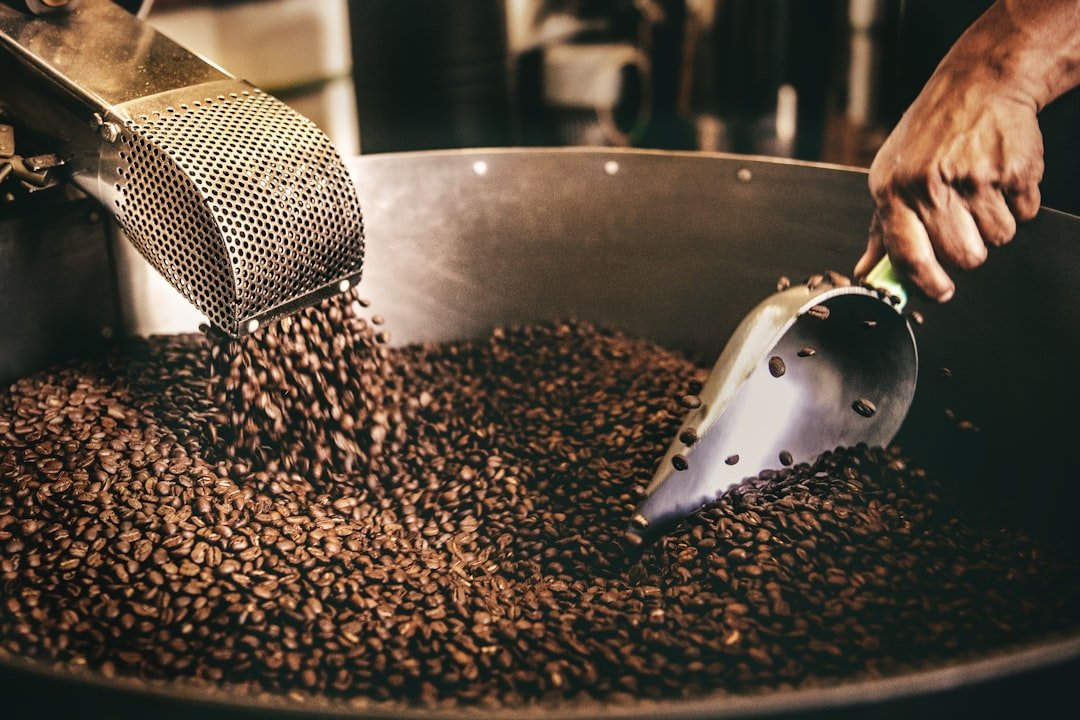
PT Aneka Coffee Industry is the kind of company most coffee drinkers never notice, yet it helps determine what coffee reaches global markets, in what format, at what quality level, and at what price. While consumer attention often goes to cafés, packaging, and origin stories, the real structure of the coffee trade depends on manufacturers that can process, standardize, pack, and ship coffee reliably. That is where this company becomes far more important than its low public profile suggests.
This is not a story about latte art or lifestyle branding. It is a story about processing lines, export systems, manufacturing discipline, and the infrastructure that decides whether coffee gets where it needs to go in the form buyers actually need. According to parent-company information from PT Prasidha Aneka Niaga Tbk, PT. Aneka Coffee Industry operates in Sidoarjo, East Java, producing instant coffee and roasted ground coffee for broader commercial markets rather than chasing consumer-brand visibility.
That detail matters because it places the company inside the machinery of coffee trade itself. Its influence is less visible at the café counter and more visible in availability, consistency, and pricing across markets. In an era when coffee culture often overvalues aesthetics, businesses like this shape the practical side of coffee at scale. Readers interested in how Indonesian coffee companies build export strength can also see Pascucci’s earlier look at PT Aneka Coffee Industry and Indonesia’s export edge.
The real story of PT Aneka Coffee Industry
If you have never heard of PT Aneka Coffee Industry, that does not mean it is small. More often, it means the company is built for reliability rather than visibility. Consumer brands are designed to be seen. Manufacturers are designed to be depended on.
Official business information from PT Prasidha Aneka Niaga Tbk places PT. Aneka Coffee Industry in Sidoarjo, East Java, with a focus on instant coffee and roasted ground coffee production. On paper, that may sound plain. In industrial coffee, though, plain often means structurally important. It means the company operates in the critical middle zone between agricultural output and finished commercial product, where coffee stops being a raw idea and becomes usable inventory.
That middle zone is where much of global coffee reality lives. Beans must be processed, standardized, packed, documented, shipped, and delivered in forms that buyers can actually use. A café can post a beautiful espresso shot online. A manufacturer has to worry about moisture control, batch consistency, packaging integrity, export paperwork, and whether a buyer on the other side of the world receives product that performs exactly as promised.
Pascucci’s previous coverage described the company as a behind-the-scenes node in Indonesia’s export chain, emphasizing quality control, processing, logistics, and export systems rather than consumer branding. That distinction is revealing. When a company repeatedly appears in discussions about systems instead of storytelling, it usually means it has a backstage role with front-row consequences.
That matters even more now because coffee consumers live in a market where aesthetics can make a tiny brand look huge and a large industrial player look invisible. Supply chains do not care about aesthetics. Buyers care about repeatability. Retailers care about continuity. Importers care about specifications. Manufacturers care about throughput. If you want to understand who actually influences what coffee is available and affordable, you have to look beyond the shelf and into the infrastructure.
That is what makes PT. Aneka Coffee Industry interesting. Not because it is trying to become the coolest name in coffee, but because it does not need to.
Why Indonesia’s coffee future may depend on processing muscle
Indonesia has one of the richest coffee identities in the world. Sumatra, Java, Sulawesi, and Flores already carry weight in global coffee language. There is terroir, regional distinction, and processing diversity. But origin appeal alone does not build a durable export future.
A country can produce excellent coffee and still miss commercial opportunities if it cannot process, standardize, and ship that coffee reliably at scale. This is where companies like PT Aneka Coffee Industry stop looking like background players and start looking like strategic assets.
Pascucci’s April 2026 article framed the company as part of Indonesia’s export advantage because of its role in quality control, logistics, processing, and export readiness. That framing is useful because it shifts the focus from brand image to capability. International buyers do not only need great beans. They need coffee that arrives on spec, in the agreed format, with consistent performance across shipments and with deadlines and documentation handled correctly.
That side of coffee is often under-discussed. The industry loves talking about where coffee is grown, but it talks far less about who can convert agricultural output into stable export business. Yet that conversion step is where value is protected or lost.
Indonesia’s next coffee chapter may belong increasingly to companies that can bridge farm output and international demand. Not by replacing origin identity, but by making origin commercially legible. That means more operational competence around authenticity, not less authenticity. For a broader view of how processing innovations can reshape flavor and market outcomes, see this Pascucci article on new coffee processing methods creating new flavors.
Call it processing muscle. Call it industrial discipline. Either way, it is the difference between a beautiful possibility and a repeatable business.
The instant coffee angle coffee snobs still underestimate
Many coffee enthusiasts still hear the phrase instant coffee and react dismissively. That reaction may be emotionally familiar, but it is economically weak.
Official company and trade-show materials show PT. Aneka Coffee Industry active in instant coffee and roasted ground coffee manufacturing for B2B markets. That is not a sign of lesser relevance. It is a clue to where real coffee volume lives globally. If you want to understand mainstream coffee economics, you cannot pretend every important decision happens in a specialty café.
Instant coffee remains a major category worldwide because it solves practical problems well. It is convenient, shelf-stable, easy to ship, and suitable for markets where brewing equipment is limited, time is short, kitchen space is small, or consistency matters more than ritual. It also fits many commercial use cases that specialty media rarely covers because soluble coffee formats are not especially glamorous.
The International Coffee Organization has long tracked coffee consumption growth across regions and formats, and soluble coffee continues to matter in many markets because it lowers preparation barriers and broadens access to coffee consumption. Instant coffee is not merely a budget compromise. In many cases, it is a format optimized for real life: busy mornings, office kitchens, institutional buyers, and distribution chains that need shelf stability.
None of this means instant coffee replaces specialty café culture. They serve different needs. But companies with instant capability often have a firmer grip on broad-market coffee economics than trendier consumer brands. They operate where scale, practicality, and repeat demand intersect.
It also takes real manufacturing skill. Soluble coffee production is not simply coffee made easier. It requires process control, formulation discipline, quality assurance, and consistency across large production runs. The consumer experience may feel simple, but the production reality is highly technical.
So if PT Aneka Coffee Industry is strong in instant and roasted ground coffee, that should not make observers think less of the company. It should suggest that the business understands where broad-market coffee power actually sits.
The financial backdrop makes the story more real
Coffee culture often prefers flavor notes and branding narratives, but the business itself also runs on working capital, payroll, inventory timing, and the ability to buy coffee when market conditions demand it. That is why January 2026 reporting around PT Prasidha Aneka Niaga Tbk deserves attention.
According to EmitenNews, the company planned to use proceeds from a reported Rp67 billion land sale for coffee working capital and employee salaries, while noting that the coffee business is run through PT Aneka Coffee Industry in Sidoarjo. This is not dramatic scandal material. It is something more useful: a reminder of what actually keeps coffee operations moving.
Coffee supply chains are not run on branding energy. They are run on cash flow. That sounds obvious, yet coffee coverage often ignores it. The industry gets plenty of stories about café openings, packaging refreshes, and limited releases, while some of the most meaningful signals sit in financing decisions and operating-capital realities. If a company needs to support coffee purchasing and payroll, that reveals the timing pressures and liquidity demands of commodity-linked operations.
That is especially true in coffee, where price volatility is common. Green coffee markets can swing sharply. Inventory decisions can age badly. Export businesses often have to commit resources before revenue fully arrives. Payroll, unlike a packaging redesign, is not optional.
So yes, this financial backdrop makes the PT. Aneka Coffee Industry story less romantic. That is a good thing. Romanticism works for café menus. Industry analysis needs a more sober lens.

There is another important point here. Companies connected to real manufacturing and export operations face a different level of operational reality than pure branding businesses. They have to buy, process, store, pay, and deliver. Their constraints are physical, financial, and immediate. That does not make them more admirable by default, but it does make them more revealing. If you want to see what the coffee industry is actually dealing with, follow the companies that have to keep factories and shipments running.
Trade-show visibility and factory scale matter more than they look
Trade fairs rarely make exciting consumer content, but they can reveal a great deal about who is serious in global coffee manufacturing. Both Gulfood Manufacturing and Gulfood list PT Aneka Coffee Industry in exhibitor contexts that emphasize manufacturing capability, export orientation, and commercial coffee production rather than lifestyle storytelling.
That matters because these are not environments built for café hype. They are built for buyers, distributors, sourcing teams, and commercial conversations that often happen quietly and then shape market behavior for months or years afterward. This is where supply relationships are built without much public drama.
The exhibitor materials point toward scale and repeatability rather than flash. Not brand mythology, but capability. Not founder lore, but production and export readiness. In B2B coffee, that may be the more consequential kind of credibility.
You can also see why search interest around terms like Lab PT. Aneka Coffee Industry appears in this context. People searching that phrase are often looking for evidence of quality systems, testing, and manufacturing assurance. That makes sense because modern coffee quality is not only a farm story or a roasting story. It is also a lab-and-process story.
Moisture, particle size, solubility performance, microbiological safety, packaging stability, and documentation standards are not glamorous topics, but they are essential. Consumers are often trained to think quality begins with origin and ends with taste. Industry professionals know quality also lives in verification, controls, and process discipline. A lab in this context is not a side detail. It is part of the mechanism that makes consistency possible at scale.
Consistency itself is deeply underrated in coffee. Uniqueness gets most of the praise, but if you are supplying commercial buyers across markets, consistency is not mediocrity. It is competence. It means your systems can deliver predictable outcomes repeatedly. That takes training, equipment, standards, and operational maturity.
So yes, the factory-scale angle can feel boring. The trade-show angle can feel boring. The quality-lab angle can feel boring. In global coffee, though, boring is often a compliment. Buyers trust companies that can deliver consistent product, proper documentation, and disciplined production without drama because drama is bad for business.
That may be the clearest way to understand PT Aneka Coffee Industry: not as a company chasing coffee celebrity, but as a company positioned in the part of the industry where trust is earned through repeatability.
Why PT Aneka Coffee Industry is worth watching
The future of coffee will not be shaped only by the brands consumers see on café shelves or by whoever is best at making a bag look expensive. It will also be shaped quietly and structurally by companies like PT. Aneka Coffee Industry that most consumers never post about. These are the processors, exporters, and manufacturers that turn agricultural complexity into commercial reality.
That should change how people think about influence in coffee. When you ask who really controls coffee quality and availability, the answer is often not the most visible brand. It is the company that can keep production moving, quality consistent, documentation correct, and export systems functioning.
That is why PT Aneka Coffee Industry deserves attention. Not because it is trying to become the face of coffee, but because it helps decide what coffee the world actually gets.
Sources
- Pascucci USA, https://pascuccicoffee.com/blogs/blog/pt-aneka-coffee-industry-and-indonesia-s-export-edge
- EmitenNews, https://www.emitennews.com/news/psdn-jual-lahan-rp67-miliar-untuk-beli-kopi-dan-bayar-gaji-karyawan
- Gulfood Manufacturing, https://www.gulfoodmanufacturing.com/exhibitor-press-releases/pt-aneka-coffee
- Gulfood, https://www.gulfood.com/exhibitors/pt-aneka-coffee-industry
- PT Prasidha Aneka Niaga Tbk, https://prasidha.co.id/product.html
- International Coffee Organization, https://www.ico.org/
Frequently Asked Questions
What does PT Aneka Coffee Industry do?
PT Aneka Coffee Industry produces instant coffee and roasted ground coffee in Sidoarjo, East Java. Its role is mainly in manufacturing, processing, and export-oriented supply rather than consumer-facing branding.
Why is PT Aneka Coffee Industry important in coffee exports?
The company matters because it supports the systems that make coffee commercially usable at scale, including processing, quality control, packaging, and export readiness. Those capabilities help determine consistency, availability, and buyer confidence across markets.
Is PT Aneka Coffee Industry focused on instant coffee?
Yes, official company and trade-show materials indicate that instant coffee is one of its core product areas, alongside roasted ground coffee. That makes it relevant to large-volume, practical coffee markets where convenience and shelf stability are essential.
What is Lab PT. Aneka Coffee Industry likely referring to?
It most likely refers to the company’s quality-control and testing functions tied to manufacturing assurance. In commercial coffee production, lab systems help verify consistency, safety, performance, and compliance before products move into export channels.
