
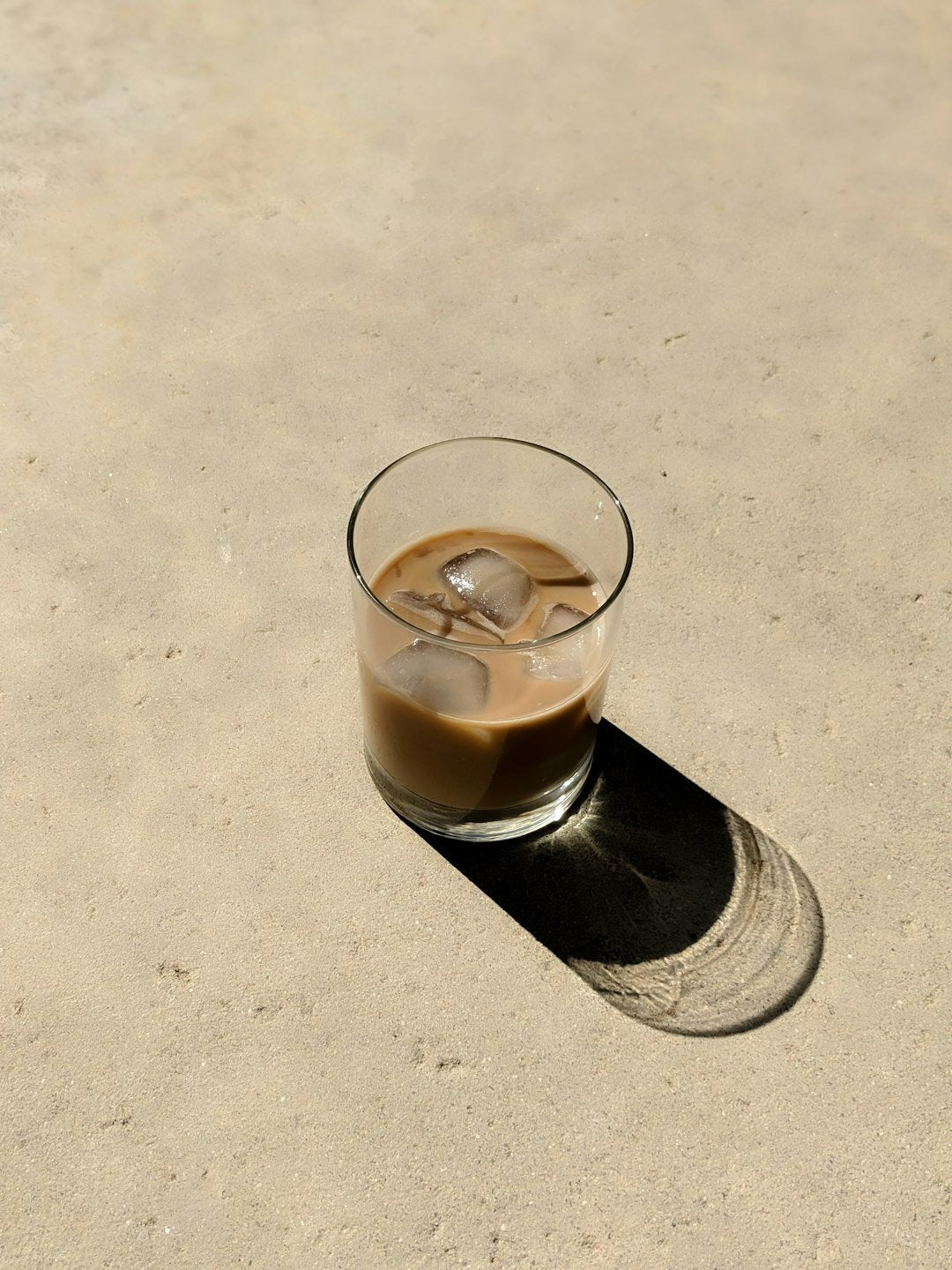
The cold brew vs americano debate looks like a menu decision, but it usually reveals something bigger about how you want coffee to work in your life. One drink is built for long sipping, portability, and customization; the other stays closer to espresso culture, clarity, and ritual.
One says, “I need this to last through emails, errands, and maybe a light existential wobble.” The other says, “Give me something clean, sharp, and honest, then let me continue being a person.”
That’s the split.
Cold brew is the socially cool order. Effortless. Photogenic. The kind of drink that lounges in a glass bottle like it has a sublet in Brooklyn. But the Americano is often the more honest one, especially if you care about espresso culture, clarity of flavor, and the idea that coffee can be a ritual instead of just a chilled delivery vehicle for caffeine.
Yes, brew mechanics matter. But the usual “one is steeped cold, one is espresso plus water” explanation only gets you halfway there. The more interesting part is what these drinks mean. Cold brew is built for lingering, customizing, carrying around all day, and turning coffee into a portable lifestyle object. The Americano runs on a different logic: coffee should be fresh, brief, aromatic, and taken with purpose.
If you have ever wondered why one drink feels like an accessory and the other feels like punctuation, you are in the right place.
Which is better: cold brew or Americano?
If you want a smoother, sweeter, often more caffeinated drink to sip slowly, choose cold brew. If you want a cleaner, more aromatic cup that stays closer to espresso culture, choose an Americano. The better choice depends less on strength and more on whether you want coffee as a long session or a sharp ritual.
Cold brew got popular in part because it is engineered for ease. It is typically steeped for 12 to 24 hours, which softens acidity and brings out a rounder, naturally sweeter profile, according to Fresh Cup’s reporting on the drink’s mainstream rise.
That softer profile matters more than coffee people sometimes like to admit. A lot of drinkers do not want their coffee picking a fight with them at 8:12 a.m. They want it smooth, low-drama, and ready.
And cold brew is no longer some niche café flex. Fresh Cup notes that “cold brew” was added to Merriam-Webster’s Collegiate Dictionary in 2025, which says a lot about how permanent the drink has become in modern coffee culture.
The Americano, meanwhile, has a different appeal. Especially iced, it is often framed as brighter, more espresso-forward, and more aromatic than cold brew. The Starbucks explainer on iced Americano, cold brew, and iced coffee makes that distinction clearly: cold brew reads smoother and mellower, while iced Americanos read more vivid and espresso-led.
So which is better? Cold brew wins convenience culture. Americano wins if you actually want to taste espresso instead of sanding down all its edges. If you are also comparing other chilled coffee styles, cold brew vs iced coffee is worth understanding too, because temperature alone does not tell you much about flavor.
Cold brew didn’t win because it tastes better—it won because it fits modern life
Cold brew did not take off because everyone suddenly developed a refined devotion to long-steeped extraction. It won because it fits how people live now: portable, batch-made, fridge-friendly, and built for mornings that are less graceful ritual and more “where are my keys and why is Slack already mad?”
The consumer numbers make the point. According to FoodNavigator’s coverage of the National Coffee Association’s 2026 Specialty Coffee report, nearly half of US adults drink specialty coffee daily, putting specialty ahead of traditional coffee at 42%. Even more telling, adults aged 25 to 39 had 69% past-week specialty coffee consumption, the highest of any age group.
That is basically the sweet spot for modern cold coffee culture: people who care about flavor, image, convenience, and options all at once.
And specialty coffee no longer means one thing. The NCA definition cited by FoodNavigator includes premium brewed coffee, espresso-based drinks, non-espresso drinks like cold brew, frozen blended drinks, and ready-to-drink formats in cans or bottles. Coffee has become less a single beverage and more a modular system.
Cold brew fits that system perfectly.
Think about the mechanics of a morning ritual coffee in real life. You wake up late. You have six minutes to become coherent. You want caffeine, yes, but you also want something that can sit in a cup holder, survive a commute, and still taste decent if you forget about it for twenty minutes. Cold brew is ideal in that scenario. It does not need to be consumed immediately. It does not fall apart if your timing is bad. It asks very little of you.
Fresh Cup also notes that cold brew often lands around 150–200mg of caffeine per 8oz, compared with 80–120mg for iced coffee. Café recipes vary, of course, and not every cold brew is a rocket-fuel situation. But perception matters almost as much as chemistry. Cold brew carries a reputation for being serious fuel, and that helped build its identity.
People do not just order it for taste. They order it for what it says about output, stamina, and getting through the day with a polished face and a slightly alarming calendar.
That is why cold brew can feel like the coffee equivalent of athleisure: functional, streamlined, casual-looking, but secretly optimized. Kind of perfect for an era that wants everything to appear effortless while being meticulously engineered behind the scenes.
Once a term enters the dictionary and the mass market at the same time, it stops being subculture and starts being infrastructure. That is a big shift. It means cold brew is not just a menu item anymore. It is one of the default ways people think coffee can exist.
Why the Americano still matters if espresso culture means anything
An Americano is simple, but not simplistic. It stretches espresso with water, yes, but it still begins with espresso. That matters because crema, aromatics, extraction quality, bean character, and roast balance still shape the cup. You can lengthen the drink, but you have not erased its architecture.
That is why the Americano still matters if italian coffee and espresso culture mean anything beyond aesthetics on a café wall.
In Italy, coffee has traditionally been woven into the rhythm of the day in a way that is practical, not precious. You drink espresso standing at the bar. You drink it quickly. You do not turn it into a two-hour side quest with oat foam, three syrups, and a full emotional backstory. There are social codes around it too, which you can see in habits explored in why Italians never order cappuccino after 11am.
The point of coffee in that world is not maximum volume. It is precision and timing.
To be fair, Italians do not treat the Americano itself as some sacred domestic ritual the way they do espresso. Espresso is the core language. The Americano is more like a translation: useful, flexible, easy for people who want a longer cup. But compared with cold brew, it still respects espresso’s logic much more closely. It says, “I want this to go a little longer, but I am not abandoning the original idea.”
That is a very different mindset from cold brew, which is basically coffee redesigned for endurance.
So here is the contrarian take: if cold brew is coffee optimized for all-day use, the Americano is espresso translated for people who want more volume without betraying the source. A compromise, yes, but a principled one.
There is also something quietly brave about ordering an Americano. It reveals more. A bad Americano cannot hide behind sweetness, creaminess, or twenty hours of mellowing. If the espresso shot is over-extracted, stale, or flat, you will know immediately. The drink is more transparent, which means your café has to be more honest too.

Flavor is the real split: dessert coffee vs transparent coffee
This is where it gets personal, because flavor is not just chemistry. It is preference, mood, and your tolerance for being told the truth before noon.
Cold brew usually mutes acidity and spotlights chocolatey, nutty, low-toned sweetness. It can taste round, soft, and almost creamy even when there is no dairy anywhere near it. That is part of why people love it so easily. It does not show up with sharp elbows. It is welcoming.
An Americano is less interested in being universally likable. Since it starts hot and fresh with espresso, it preserves more top notes, aromatics, and roast structure. You get more sparkle, more roast definition, more of the bean’s personality, good or bad. If the espresso has citrus, floral notes, or bittersweet depth, the Americano lets that stay visible.
Mainstream menus have noticed this split too. Starbucks’ 2026 press coverage on cold foam makes that clear: brands are layering new flavors and textures across cold brew, iced coffee, and espresso drinks because cold beverages are now competitive menu real estate.
That means cold coffee is where customization lives, where flavor trends show up first, and where coffee starts flirting very openly with dessert.
And honestly, sometimes that is fun.
This is also where tiramisu coffee enters the chat. That dessert-inspired style usually borrows from cocoa, creaminess, mascarpone-like richness, and sweetness. Cold brew often makes a better base for that kind of build because its softer profile plays nicely with indulgent additions. It is already mellow. It does not fight back. It lets the extras have their moment.
An Americano is less forgiving. Add tiramisu styling to it and the drink can work, but the espresso will still insist on being heard. It is not great at cosplay. If cold brew can become dessert coffee without much resistance, the Americano stays, deep down, coffee first.
That is the real flavor divide: dessert-adjacent versus transparent.
If your ideal drink usually wears cold foam, syrup, sweet cream, or cocoa dusting, cold brew makes a lot of sense. No shame there. But if you want to know what the coffee itself is doing, an Americano is the stricter mirror. Less flattering sometimes. More revealing always.
A small but useful comparison: the same bean can feel like two completely different ingredients depending on whether it becomes cold brew or espresso. Cold extraction tends to emphasize the bass notes. Espresso, especially diluted into an Americano, can keep the treble. Same coffee family, very different personalities.
The Italian verdict: your order reveals your coffee philosophy
Ordering cold brew says, “I need coffee to travel with me.” Ordering an Americano says, “I am willing to meet coffee where it is.”
A little dramatic? Sure. But coffee is weirdly good at exposing how you move through the world.
In classic Italian habit, coffee is not usually designed to accompany you for three hours. It is taken in short, intentional moments: a quick espresso at the bar, a brief stop between tasks, a little reset. A punctuation mark, not a background soundtrack.
That is one reason espresso culture still feels fresh after all these years: it assumes your attention is worth something. Coffee gets a moment. Then the day moves on.
Cold brew works from the opposite assumption. It blurs into the day. It sits beside your laptop. It joins your commute. It survives meetings. It becomes part beverage, part accessory, part emotional support object in a clear plastic cup.
That is not an insult. It is just a different philosophy.
And this is where Italian coffee culture can be clarifying without getting snobby. Real Italian coffee rules are often practical rather than mystical. No cappuccino after 11 a.m. Espresso is commonly drunk standing at the bar. Coffee is consumed fresh. There is less obsession with endless customization and more respect for immediacy, consistency, and timing. The ritual is small on purpose.
That does not mean Italy has no cold coffee tradition. It does. There are chilled and shaken drinks, and variations like italian cold coffee preparations in different places, but they are not culturally equivalent to the giant, slow-sipping cold brew format that dominates American café life.
That is the part many people miss. Not every cold coffee tradition points toward the same idea of what coffee is for.
So no, this is not anti-cold-brew snobbery. Classic Italian coffee tends to value freshness over storage, immediacy over endurance, and ritual over hyper-customization. It asks you to stop for a second. Cold brew asks to come with you.
That is why the more interesting question in the cold brew vs americano conversation is not just “which has more caffeine?” Useful, yes. But not the whole story. The better question is whether you want coffee to blur into the day or interrupt it on purpose.
One is a companion. The other is a cue.
Neither is morally superior. But they do reveal something.
If you love cold brew, maybe your life asks coffee to be adaptable, smooth, and always available. If you love an Americano, maybe you want a longer drink that still respects espresso’s bones. The point is not to pick the one that sounds cooler. Pick the one that matches your rhythm.
Because the best morning ritual coffee is not the trendiest order on the board. It is the one that fits how you actually live and maybe, if you are lucky, nudges you a little closer to how you would like to live too.
What is espresso culture?
Espresso culture is a coffee philosophy built on immediacy, short extraction, freshness, and bar service. In Italy, espresso is less a luxury event and more a daily punctuation mark, something quick, intentional, and woven into normal life rather than stretched into an all-day beverage commitment.
What makes that different from a lot of modern café culture is the emphasis on timing. Espresso is meant to be consumed soon after it is made, while the aromatics are still lively and the texture still makes sense. It is coffee that asks for presence, even if only for thirty seconds.
What makes Italian coffee different?
Italian coffee is different because it is shaped as much by ritual and social codes as by beans or roast. It values balance, consistency, timing, and everyday habit over endless novelty.
That is why the details matter: cappuccino is usually a morning drink, espresso is often taken standing at the bar, and coffee is treated as a small but meaningful part of the day. Less spectacle. More rhythm.
What is tiramisu coffee?
Tiramisu coffee is a dessert-inspired coffee style that borrows the familiar flavors of tiramisu, think cocoa, creamy sweetness, and mascarpone-like richness. It usually shows up through cold foam, sweet cream, flavored syrups, or layered cold drinks.
Cold brew often supports this style more naturally because its mellow profile leaves room for dessert flavors to come through. An Americano can do it, but it tends to keep the espresso more exposed, which makes the drink feel less like dessert and more like coffee wearing dessert accessories.
What makes a good morning ritual coffee?
A good morning ritual coffee matches your actual rhythm. If your mornings are fast, chaotic, and mobile, cold brew makes sense because it is portable, forgiving, and easy to prep ahead. If you want your coffee to create a real pause, an Americano often works better because it starts fresh and rewards attention.
The best ritual is the one you will actually keep. Romanticizing a perfect coffee moment is nice. Having one that fits Tuesday is better.
Is there such a thing as Italian cold coffee?
Yes, there is such a thing as italian cold coffee, but it is not culturally the same as the oversized cold brew model common in the US. Italy has chilled and shaken coffee traditions, and some bars serve refreshing cold espresso-style drinks designed for immediacy and pleasure.
The difference is philosophical. Italian cold coffee is often still tied to freshness and quick consumption, while American cold brew is built for long steeping, portability, and extended sipping. Same temperature zone, very different attitude.
Frequently Asked Questions
What is espresso culture?
Espresso culture centers on freshness, short extraction, and quick bar service. It treats coffee as a brief, intentional ritual rather than an all-day drink.
What makes Italian coffee different?
Italian coffee is shaped by timing, habit, and social codes as much as flavor. It usually favors balance, immediacy, and simple daily ritual over heavy customization.
What is tiramisu coffee?
Tiramisu coffee is a dessert-inspired style built around cocoa, creamy sweetness, and mascarpone-like richness. Cold brew often suits it better because its mellow flavor leaves more room for indulgent additions.
What makes a good morning ritual coffee?
A good morning ritual coffee fits your real schedule and taste. Cold brew works well for busy, mobile mornings, while an Americano is better if you want a fresh, focused pause.
Sources
- ‘Cold Brew’ Is Now in the Dictionary. What Does That Say About Contemporary Coffee Culture? — https://freshcup.com/cold-brew-is-now-in-the-dictionary-what-does-that-say-about-contemporary-coffee-culture/
- Coffee Science: Iced Americano, cold brew or iced coffee — what’s the difference? — https://about.starbucks.com/stories/2026/coffee-science-iced-americano-cold-brew-or-iced-coffee-whats-the-difference/
- US Specialty Coffee Growth Driven by Flavor and Younger Drinkers — https://www.foodnavigator.com/Article/2026/06/17/us-specialty-coffee-growth-driven-by-flavor-and-younger-drinkers/
- Coffee News Recap, 5 Jun: Arabica futures fall to lowest levels since Nov 2024, specialty coffee consumption remains at — https://perfectdailygrind.com/2026/06/coffee-news-recap-5-june-2026/
- How cold foam is bringing new flavors into coffee at Starbucks — https://about.starbucks.com/press/2026/how-cold-foam-is-bringing-new-flavors-into-coffee-at-starbucks/
