

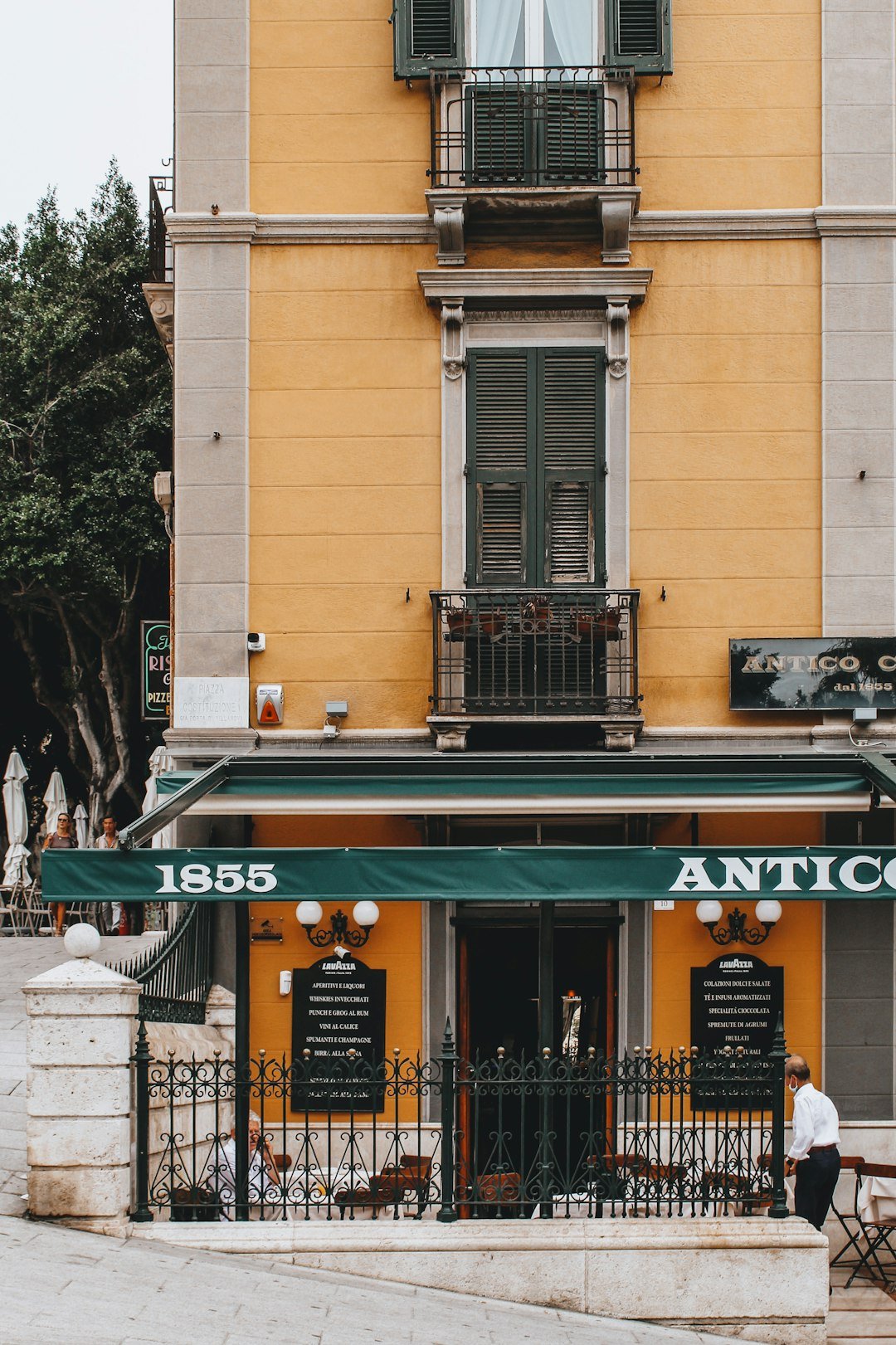
Let’s ruin the fantasy right away: the golden age of European café society and what we can learn from it wasn’t just spoons, smoky mirrors, and one tortured poet acting like heartbreak invented writing. Cute image. Not exactly false. Just wildly incomplete.
The better version is sharper. The golden age of European café society and what we can learn from it has less to do with romance and more to do with infrastructure. Cafés were low-cost networking hubs, information exchanges, informal offices, reading rooms, and social equalizers before anyone started calling them “third spaces” and charging coworking prices for the privilege.
What made Vienna, Paris, Milan, and Trieste so powerful wasn’t slowness for slowness’s sake. It was disciplined lingering. That’s the trick. People stayed, but with purpose: to read, to listen, to be seen, to overhear, to argue, to make themselves available to chance. Very different energy from opening your laptop in public and answering Slack like you’ve been taken hostage.
That’s why this still hits. In an era of remote-work blur, inbox dread, and lunch eaten over a keyboard, the golden age of European café society and what we can learn from it feels weirdly current. Those old cafés understood something a lot of modern workspaces still miss: people need ritual, affordable public life, and just enough social friction to think better.
Not nostalgia cosplay. Not “buy a trench coat and move to Paris.” Something more useful than that.
The Myth vs. the Reality: Europe’s Café Golden Age Was More Like a Social Engine Than a Pretty Backdrop
Broadly speaking, the golden age of European café society runs from the 18th century into the early 20th. Across Vienna, Paris, Venice, Trieste, Milan, and beyond, cafés became central to public life. Not decorative to it. Central.
That distinction matters.
It’s easy now to picture cafés of the past as elite salons full of people with excellent bone structure and suspiciously open schedules. But historically, coffeehouses and cafés were often much more mixed than that. Students, merchants, journalists, clerks, artists, political organizers, and intellectuals all used them. Not because they were chasing a vibe. Because they were useful.
A café offered a semi-public room in a growing city. Sounds minor until you realize how rare that was. Home was private. The office, if you even had one, was structured and limited. Streets were public but chaotic. The café sat in the middle: accessible, social, and full of information.
And information was a huge draw. In many European coffeehouses, newspapers and journals were available to read on site. UNESCO’s description of Viennese coffee house culture explicitly notes the role of newspapers and the practice of spending time in these spaces as part of a distinctive social world. So the café wasn’t just somewhere to consume caffeine. It was somewhere to consume the city.
That’s the bit people forget. Before feeds, notifications, and doomscrolling, cafés worked like live information networks. You could read papers you didn’t subscribe to. Hear business gossip before it became official news. Catch the mood of a neighborhood, or an entire political class, just by paying attention.
The original “real-time updates” were basically a shared newspaper, a marble table, and one man in a coat speaking way too loudly.
Historians have long noted how coffeehouses in Europe became linked to journalism, debate, and public opinion. The British Library, for example, has written about coffeehouses as places where news circulated and discussion flourished. While that’s often framed through London, the broader model traveled across Europe: coffee plus access plus conversation equals a public sphere.
Yes, “public sphere” sounds academic, because it is. Philosopher Jürgen Habermas famously argued that coffeehouses helped shape spaces for critical public discussion in Europe. You don’t need to sign up for the full theory to get the point: cafés helped people become citizens, not just customers.
That’s a stronger legacy than nice chairs and Art Nouveau lighting.
And compared with today, the contrast is a little brutal. We romanticize the look of café life while ignoring the structure that made it meaningful: regulars, shared habits, repeated encounters, low barriers to entry, and the expectation that being there might lead to something besides finishing a drink.
Why Cafés Became the Original Third Space — and Why They Worked Better Than Today’s “Work From Anywhere” Fantasy
The practical genius of the classic European café was simple: for the price of a coffee, you got temporary membership in urban life.
Warmth. Light. Seating. Human presence. Newspapers. Conversation. A place to think without being alone, and to be alone without disappearing. That’s not indulgence. That’s smart city design before anyone gave it a TED Talk.
Vienna is probably the clearest example. The Viennese coffeehouse became famous for letting patrons linger for hours. UNESCO describes it as a place “where time and space are consumed, but only the coffee is found on the bill.” Iconic line. For good reason. It captures an entire philosophy of public life: don’t rush people out. Let thought, observation, and conversation actually happen.
Tell a modern café investor the product includes “time and space” and they’ll either nod thoughtfully or need to lie down.
The Viennese model worked because it balanced affordability with dignity. You didn’t need private-club money to participate. You needed enough for a coffee and the confidence to sit down. That gave the city a middle layer between domestic isolation and formal institutions.
Now, Italy is a different story. And this is where it gets especially good.
In Italy, the bar is not usually a place to camp out for six hours with a laptop, a charger, and a spreadsheet you’re pretending to care about. It’s a ritualized checkpoint. You step in, order, take your caffè standing at the counter, exchange a few words, maybe scan the room, maybe greet the barista who already knows your rhythm, and then you get on with your day.
Fast? Yes. Shallow? Not even close.
This is where outsiders often misread Italian coffee culture. They see the speed and assume it’s anti-social. It’s actually the opposite. Espresso at the bar is democratic and communal precisely because it’s brief. Everyone has access. Everyone shares the same space. There’s no need to perform productivity. You’re just there. Fully there. For one small, meaningful ritual. For a deeper look at this rhythm, see why counter coffee hits different in Italian bar culture.
Tiny masterclass, honestly.
And if this sounds quaint, compare it with “work from anywhere,” which often means working everywhere while belonging nowhere. Kitchen table. Bed. Airport gate. Slack on your phone. Half your social life outsourced to group chats. Your environment keeps changing, but none of it feels like a real place.
The old café model, whether Viennese lingering or Italian quick-bar ritual, offered something sturdier: repeat contact with the world. Same room. Similar hour. Familiar faces. A pattern your brain could trust.
There’s research behind that too. Sociologist Ray Oldenburg, who popularized the term “third place,” argued that informal public gathering spaces are essential for community life, civic engagement, and social well-being. Home is the first place. Work is the second. Third places are where a society gets breathable. That idea also connects naturally with why the coffee shop experience matters in digital life.
A lot of modern life is technically flexible and emotionally airless. The café solved that a long time ago.
The Best Part Wasn’t the Coffee — It Was the Rules
Hot take, but a correct one: café society worked because it had rules.
Not annoying rules. Social choreography.
That’s what made these spaces feel alive instead of random. People understood the script. They knew the tempo. They knew how to enter the scene without making it weird.
Italian coffee culture is full of this, and yes, some of it sounds hilariously specific until you realize how much ease it creates.
Take espresso standing at the bar. It’s efficient, affordable, and social. In many Italian bars, drinking your coffee al banco, at the counter, is cheaper than sitting at a table. That’s not stinginess. It reflects two different uses of space. The counter is for rhythm. The table is for time. Same coffee world, different social job.
Then there’s the cappuccino rule. No cappuccino after 11 a.m., generally speaking. Is anyone going to arrest you? Obviously not. Order what you want. But the Italian logic is real: milk-heavy coffee belongs to breakfast hours. After that, many Italians switch to espresso. It’s partly digestive habit, partly cultural timing, partly just a shared sense of what fits the day. If you want the full cultural backstory, read why Italians never order cappuccino after 11am.
And honestly, there’s something refreshing about a culture that lets beverages keep a schedule.
Another overlooked rule: regularity matters. People return to the same bar not only because the coffee is good, though yes, that helps, but because recognition is part of the experience. The barista knows your order. You know where to stand. The morning has shape. Trust builds quietly.
That’s a bigger deal than it sounds. Behavioral science consistently shows that rituals reduce decision fatigue and create emotional stability. A study published in Nature Human Behaviour found that regular routines and stable habits can support well-being and structure daily life. The old cafés understood this intuitively. They didn’t need an app to tell them that consistency supports mood.
Across Europe, similar scripts existed. In Parisian cafés, the ritual of ordering, reading, debating, and being seen created a legible public scene. In Vienna, the coffeehouse became known for extended reading, writing, and discussion. In Italy, the bar is still woven into the cadence of the day: morning caffè, maybe a mid-morning stop, often another quick shot after lunch.
The useful lesson here is a little sneaky: freedom without ritual turns into friction fast. If every coffee moment can be anything, it often becomes nothing in particular. The old cafés worked because people mostly knew what kind of moment they were stepping into.
No wonder it feels calming.
Café Society Was a Soft Power Machine: Status, Politics, and Creative Work All Happened Over Small Cups
Cafés mattered because they blurred categories.
That’s where a lot of their power lived.
Writers sat near merchants. Journalists crossed paths with activists. Artists listened to financiers. Students absorbed the manners and arguments of older generations. Not every table changed history, obviously. Some people were just avoiding home for an hour and ordering another coffee. Respect. But enough unexpected collisions happened that cafés became culturally productive in a way highly sorted modern life often isn’t.
Viennese coffeehouses are probably the textbook case. They were linked to major writers, thinkers, and intellectual circles, and their role in literary and social life is widely documented. UNESCO’s recognition of Viennese coffee house culture as intangible cultural heritage wasn’t about latte art. It was about the coffeehouse as a social institution.
Paris offers another famous model. Cafés there became deeply tied to literary and political life, especially in the 19th and early 20th centuries. Histories of Parisian café culture regularly point to these spaces as sites of discussion, publication planning, artistic exchange, and public visibility. You didn’t just go to a café to hide. Sometimes you went to be visibly part of a scene.
Then there’s Trieste, one of Europe’s most underrated coffee cities. Port city, multilingual crossroads, layered history, serious coffee identity. Trieste’s café culture developed at the intersection of trade, empire, literature, and commerce. Coffee arrived there not only as a drink but as a commodity, a business, a port-side reality. Which makes its cafés especially interesting: they weren’t just intellectual spaces, but commercial and cultural junction points too.
Basically, “wait, Trieste has that much coffee history?” is the correct reaction.
The bigger point is that cafés offered low-stakes proximity. You didn’t need to pre-book a networking call. You didn’t need to optimize your personal brand. You just had to be present enough, often enough, in a place where different kinds of people overlapped.
That kind of overlap is harder to find now than we like to admit.
Algorithms mostly show you more of what you already like. Coworking spaces can be useful, but they’re often socially narrow by design. Group chats are efficient but selective. Even your favorite café can become a bubble if it’s used purely as a private workstation, headphones on, eyes locked to a screen.
Golden-age café society offered something messier and better: accidental exposure to people, arguments, tastes, moods, and ideas you didn’t preselect.
Excellent fuel for original thinking.

What We Should Steal From the Golden Age — Without Turning Our Lives Into Period Drama
No one is asking you to carry a fountain pen and refer to your friends as “the circle.” Relax. The point of studying the golden age of European café society and what we can learn from it isn’t to reenact it. It’s to borrow the parts that still outperform our current habits.
1. Build repeat rituals, not endless choice
Modern life loves options. Usually too many. New app, new café, new routine, new “best” spot every week. Sounds exciting until you realize constant novelty can make public life feel weirdly thin.
The old café model suggests something smarter: repetition builds belonging.
Go to the same place sometimes. Same day of the week. Same hour. You don’t need to become a local legend. Just become familiar enough that the room starts to recognize you, and you start to recognize it back. Social friction drops. Tiny interactions get easier. Spontaneous conversation becomes more likely.
This is one reason neighborhood bars in Italy matter so much. They’re not just beverage outlets. They’re rhythm machines.
2. Separate coffee moments by purpose, in a very Italian way
Not every coffee should become a workstation.
Honestly, this might be the most useful lesson of the lot.
In Italy, coffee moments are often purpose-built. A quick espresso at the bar is for focus, reset, transition. A slower sit-down coffee can be for conversation. Another can be for reading the paper. One after lunch can mark the day’s second wind.
That’s much more elegant than treating every café visit as a vague soup of inbox management, scrolling, and pretending to “work on a project.”
Try giving your coffee moments a job. One is for speed. One is for meeting someone. One is for thinking on paper. One is for doing absolutely nothing for eight minutes except drinking something properly made. Suddenly the day has contours.
Very Italian. Very sane.
3. Reclaim attention through ambient public life
A good café gives you just enough stimulation. Cups clinking. Low conversation. Movement at the edge of your focus. A reminder that the world exists beyond your task list.
That kind of environment can sharpen thought in ways total isolation often can’t. There’s research here too: moderate ambient noise has been associated with improved creative cognition in some settings, according to a study published in the Journal of Consumer Research. Not nightclub noise. Not construction-site chaos. Just enough atmosphere to loosen rigid thinking.
So yes, your brain may genuinely benefit from being around a little life.
The old cafés knew this by instinct. They offered company without obligation. Presence without pressure. You could think while staying in contact with the human world. Pretty good setup.
4. Learn the lost art of being present without broadcasting it
This one stings a little, because yes, we all live online.
But golden-age café society was social without being content-first. You were there to participate, not to prove you had participated. The point wasn’t to document the table. The point was the table.
That changes behavior. It makes you listen harder. Look longer. Stay in the moment a bit more honestly. It also protects something rare: experiences that matter even when nobody else sees them.
A very old-school flex.
5. Respect ritual because it makes freedom easier
The best European café traditions were never just about snobbery, stereotypes aside. They were often shorthand for social ease.
Stand at the bar for a quick espresso. Don’t overcomplicate breakfast coffee. Return to the places that know you. Understand whether the moment calls for speed or lingering. These tiny patterns save energy. They reduce awkwardness. They help public life flow.
You don’t need to get dogmatic about it. Nobody needs cappuccino police. But a little structure can make daily life feel less scattered and more lived.
Maybe that’s the real answer hiding inside the golden age of European café society and what we can learn from it.
The old cafés weren’t magical because they were old. They were powerful because they made ordinary urban life more intelligent. They gave people affordable access to information, ritual, community, and chance encounter. A place to think, to watch, to talk, to reset. Sometimes quickly, like an Italian espresso at the bar. Sometimes slowly, like a Viennese afternoon with newspapers and no rush.
We tend to frame modern productivity as a tools problem. Better software. Better calendars. Better systems. But café culture suggests something else: maybe some of what we’re missing is social architecture.
A room.
A ritual.
A repeated hour.
A good coffee.
A reason to leave the house and rejoin the human experiment.
Not bad for a small cup.
Sources
- UNESCO — https://ich.unesco.org/en/RL/viennese-coffee-house-culture-00874
- Encyclopaedia Britannica — https://www.britannica.com/topic/coffeehouse
- British Library — https://www.bl.uk/restoration-18th-century-literature/articles/coffee-houses-centres-of-news-debate-and-culture-in-17th-century-london
- Encyclopaedia Britannica — https://www.britannica.com/biography/Jurgen-Habermas
- Project for Public Spaces — https://www.pps.org/article/roldenburg
- Nature Human Behaviour — https://www.nature.com/articles/s41562-019-0670-2
- Journal of Consumer Research — https://academic.oup.com/jcr/article/39/4/784/1797765
- Italy Magazine — https://www.italymagazine.com/featured-story/italian-coffee-culture-10-rules-italians-live
- La Cucina Italiana — https://www.lacucinaitaliana.com/trends/restaurants-and-chefs/how-to-drink-coffee-like-an-italian
- The New York Times — https://www.nytimes.com/1998/07/12/travel/trieste-journal-in-this-italian-city-even-the-coffee-is-austro-hungarian.html
Frequently Asked Questions
What was the golden age of European café society?
It generally refers to the period from the 18th century to the early 20th century when cafés became central to urban life across cities like Vienna, Paris, Milan, and Trieste. These spaces functioned as social hubs, reading rooms, informal offices, and places for debate rather than just spots to drink coffee.
Why were European cafés so important historically?
European cafés gave people affordable access to information, conversation, and public life in growing cities. They helped mix social groups, circulate news, and create the kind of repeated public contact that supports civic culture and creative exchange.
What can modern life learn from European café society?
Modern life can borrow its emphasis on ritual, repeat visits, and purpose-driven coffee moments. Instead of treating cafés as generic work zones, we can use them to create structure, social connection, and better attention.
How is Italian coffee culture connected to café society?
Italian coffee culture shows how short, repeatable rituals can still create strong public life. Quick espresso at the bar encourages presence, recognition, and social ease without requiring long stays or expensive habits.
