
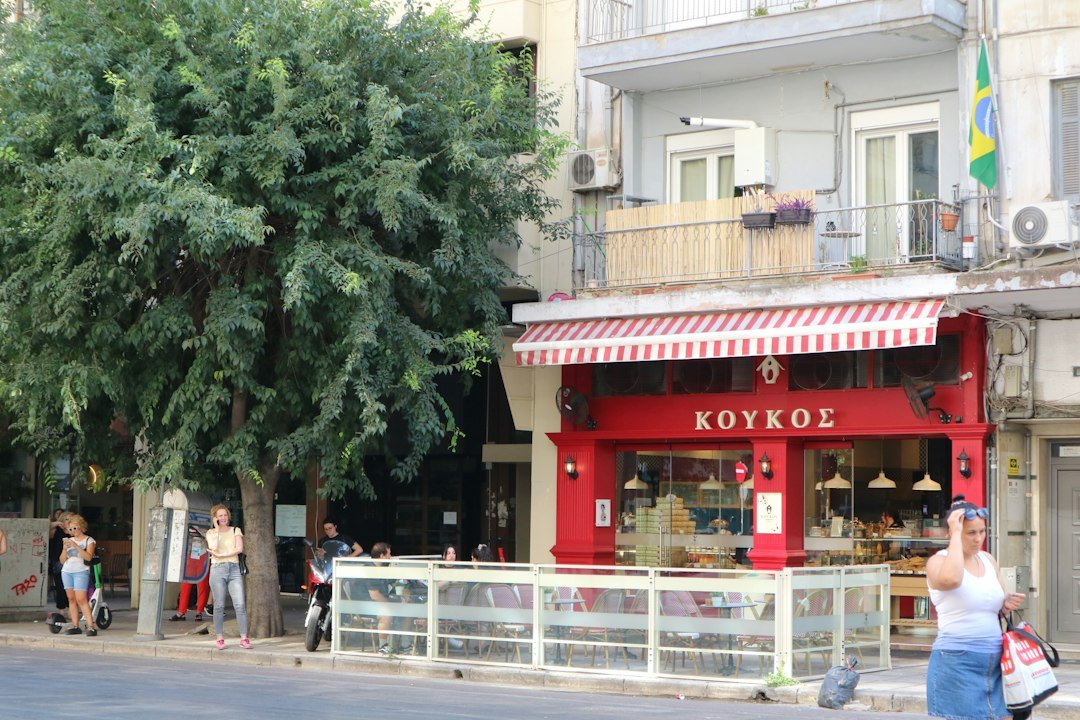
Freddo espresso fixed iced coffee before most cafés even admitted iced espresso had a problem.
Athens came up with it in 1991 for a very obvious reason: Greek summers regularly blow past 35°C / 95°F, and nobody wants an espresso slowly turning into beige ice water while they sit outside for two hours.
A lot of iced espresso drinks elsewhere still feel improvised. Shot over ice, quick prayer, carry on. Greece got much more precise: concentrated espresso, chilled fast, aerated on purpose, then served in a way that still tastes like coffee ten minutes later. Useful when the table next to you has already ordered a second round and no one is leaving anytime soon.
What is freddo espresso?
Freddo espresso is a Greek cold coffee made by pulling espresso, usually a double shot, then chilling it quickly with ice in a shaker or mixer so it forms a light foam while keeping its strength. It was developed in Athens in 1991, and it differs from both cold brew and an iced Americano.
That clears up about half the internet.
A proper freddo starts with fresh espresso extraction, often a double ristretto using about 14–16 grams, according to Glass and Note. Then it gets shaken or blended briefly with ice and poured over fresh ice. The result is cold espresso with body, a little crema-like foam, and enough concentration to survive the trip from machine to glass without going flat.
It also has a sibling: freddo cappuccino. Same espresso base, then a cap of cold frothed milk. Order accordingly if milk before 10 a.m. changes your entire personality.
The flavor lands differently because the drink was built around temperature from day one. Shaking adds air, which gives it that soft foam layer and a texture that feels brisk with a little creaminess. Upstreet Journal traces some of that visual drama back to Greece’s earlier frappé habit, which began in September 1957 at the Thessaloniki International Trade Fair when Dimitrios Vakondios, working a Nescafé stand, improvised with cold water and a shaker because he couldn’t find hot water. Very fairground chaos. Very good outcome.
If you’ve searched cafe freddo, caffe freddo, or freddo coffee, this is probably the drink you meant. The trouble is that outside Greece those names get used loosely for almost any cold coffee with vaguely Mediterranean energy. In Greece, the words point to a specific café habit, with a method people actually expect.
Why Greece invented the cold espresso worth copying
Greece had a head start because cold coffee was already part of daily life before espresso fully took over. The frappé had dominated Greek summers for decades after Vakondios’ 1957 accident in Thessaloniki. So when espresso culture expanded in Athens in the early 1990s, the country already knew cold coffee worked. It wanted a version with better flavor and more backbone.
That fit the way people there actually drink coffee. Kantara Food describes Greece’s “café economy” as a social constant, even during the economic crisis, when younger people still paid a few euros for one coffee and stayed for hours. The older kafeneio tradition goes back to the 15th century. Coffee is slow on purpose there. Siga siga: easy, unhurried, no one hustling you out because you’ve been sitting with one glass and a dying phone battery since noon.
Then the weather made the case for everyone. Source 5 notes that summer temperatures regularly exceed 35°C / 95°F. By 1994, Glass and Note says 72% of Athens’ licensed cafés served freddo espresso. That figure deserves a slightly raised eyebrow because it comes from one source, but the broader pattern stays consistent across the reporting: the drink spread fast because it suited the city.
America built plenty of iced coffee around size. Greece built one for staying power.
Freddo espresso works because it keeps espresso intact
The smartest thing about freddo espresso is simple: once it’s cold, it still tastes like espresso.
Pascucci’s own industry piece says Athens cafés landed on the format in 1991 and “got something very right.” They built a cold espresso for summer heat and long table time, with enough structure to hold up in the glass.
That took technique. Glass and Note links freddo’s rise to the spread of stronger espresso infrastructure in Greece between 1995 and 2005. La Marzocco Linea PB and Nuova Simonelli Appia II machines appeared across more than 4,200 Greek cafés. A national drink gets very reliable once enough bars can make it well on a busy afternoon. Romance helps. Machine consistency helps more.

There’s also a quality trap here that coffee people know and everyone else can taste. Cold service exposes roast flaws fast. Too dark and the cup goes ashy. Too light and the coffee can disappear under the ice. Source 4 points directly to origin, processing, and roast profile as key variables. This is where specialty roasted coffee earns its place, because chilled espresso has nowhere to hide. No syrup blanket. No whipped-cream distraction. You need sweetness, enough body, and a roast developed carefully enough to stay articulate when the temperature drops.
Could arabica colombian coffee work? Absolutely. A washed Colombian Arabica can bring brightness and sweetness, but the roast and extraction still decide whether the drink comes out clean or thin. Freddo is ruthless that way. Politely ruthless.
Glass and Note also reports that freddo accounts for about 68% of espresso-based beverage sales in Greece from May through September. Picture Athens in August and that number suddenly feels very normal.
If you want a broader look at how Greek iced espresso compares with other cold coffee formats, see why Greece’s iced espresso wins. For a cleaner comparison with another chilled classic, this guide to cold brew vs Americano helps explain where freddo sits.
Why “cafe freddo” on a menu usually misses
Outside Greece, cafe freddo and caffe freddo often mean “here is some cold coffee and an optimistic accent mark.” The name travels faster than the method. You’ll see it attached to iced Americanos, syrup-heavy lattes, or whatever a café already knows how to serve cold. Meanwhile the original drink came out of Athens in 1991 with a fairly specific playbook.
Greek café culture kept that playbook alive. Kantara Food notes that international chains are less visually dominant in Greece than local cafés, and that matters. Local bars kept serving freddo as an everyday order, not a seasonal special written in suspiciously cheerful chalk. Repetition wins. A drink becomes culture when enough people order it on a random Tuesday without photographing it first.
So if a menu offers freddo coffee, ask one mildly annoying question: is it espresso shaken with ice and served with that light foam, or is it just cold coffee in borrowed Greek tailoring? The answer tells you a lot.
Frequently Asked Questions
Is cafe freddo the same as freddo espresso?
Often, but not always. Outside Greece, cafe freddo can mean almost any cold coffee, while in Greece freddo espresso refers to a specific espresso-based drink developed in Athens in 1991.
What does caffe freddo mean?
Literally, it suggests cold coffee. If you want the Greek original, look for freddo espresso or freddo cappuccino rather than relying on a vague menu label.
Is freddo coffee the same as cold brew?
No. Greek-style freddo coffee starts with freshly extracted espresso, then gets chilled and aerated, while cold brew steeps for hours and tastes softer and less aromatic.
Does specialty roasted coffee matter for freddo espresso?
Yes. Cold service exposes roast flaws quickly, so coffees with sweetness, body, and careful roast development hold up much better over ice.
Sources
- Freddo, frappé and the Greek relationship with coffee — https://journal.upstreet.io/freddo-frappe-greek-coffee/
- Από την Αθήνα του 1991 στο σήμερα: Η ελληνική ιστορία πίσω από τον Freddo Espresso — https://www.protothema.gr/greece/article/1857791/apo-tin-athina-tou-1991-sto-simera-i-elliniki-istoria-piso-apo-ton-freddo-espresso/AMP/
- A GREEK LEGEND: FREDDO ESPRESSO — https://kantarafood.com/en/a-greek-legend-freddo-espresso/
- Freddo Coffee: Why Greece Still Nails Cold Espresso — https://pascuccicoffee.com/blogs/blog/freddo-coffee-why-greece-s-cold-espresso-still-wins
- Freddo Espresso: Greece’s Iced Espresso Revolution and How to Make It Authentically — https://glassandnote.com/culture/freddo-espresso-recipe
