

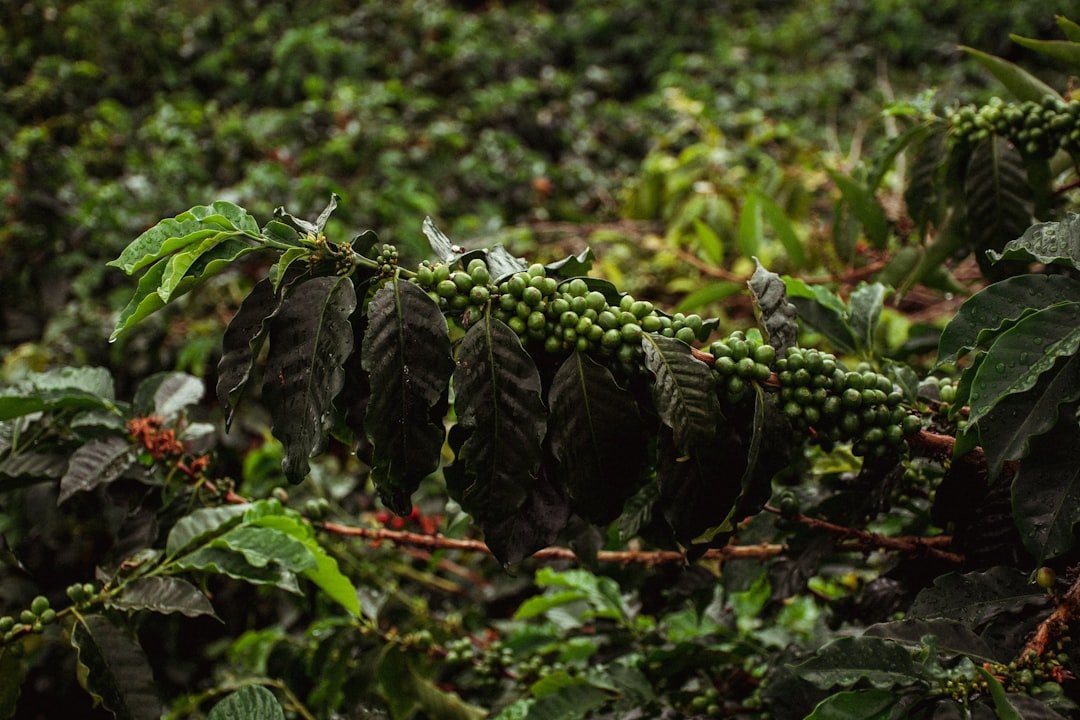
Coffee had a strange little identity crisis in the 20th century. For a while, the industry tried to turn it into corn: more sun, more chemicals, more neat little rows, less forest, more yield on paper. Everyone applauded the “efficiency,” then acted baffled when birds vanished, pests got cocky, soils wore out, and a lot of coffee started tasting flatter than it had any right to. Not exactly a win.
The funny part is that coffee was never built for that system in the first place. It’s a forest understory plant, not a tiny caffeinated solar panel. So if you’ve ever wondered how shade-grown coffee protects biodiversity and tastes better too, the answer goes way beyond a feel-good eco label. Shade-grown coffee isn’t some trendy add-on. It’s more like coffee getting back to the conditions it actually likes.
And that matters, because “productive” and “smart” are not the same thing. Shade-grown coffee can support birds, pollinators, bats, amphibians, healthier soils, and steadier water cycles, while also creating conditions that may help cherries ripen more slowly and develop more complexity in the cup. Which is a lot more interesting than the usual fake choice between “good for the planet” and “good coffee.” In plenty of cases, the same farm ecology that protects biodiversity also helps build better flavor.
How Shade-Grown Coffee Protects Biodiversity and Tastes Better Too
Humans have a real talent for taking something beautifully complex, stripping out all the nuance, and calling it optimization. That’s basically what happened with coffee.
Starting in the 1970s and 1980s, many producers in Latin America shifted from traditional shaded systems to more intensive full-sun cultivation, often encouraged by agronomic programs focused on maximizing output through high-yield varieties, fertilizers, and pesticides. The logic looked clean enough: remove shade trees, plant coffee more densely, increase photosynthesis, harvest more cherries. Spreadsheet people were thrilled.
But coffee farms are not spreadsheets. They’re ecosystems.
Research summarized by the Smithsonian Migratory Bird Center and scholars like Ivette Perfecto and colleagues has shown that converting diverse shade coffee into sun coffee often slashes habitat value for birds, insects, and other wildlife, while increasing dependence on external inputs and simplifying the farm environment overall. In plain English: if you bulldoze the ecological support system, don’t be shocked when the system starts sending you a bill.
That’s the real problem with “optimized” sun coffee. It treated shade like dead weight, when in many places shade was quietly doing important work the whole time: moderating temperature, protecting soils, cycling nutrients, holding moisture, supporting predators of crop pests, and maintaining habitat for species that, frankly, do not care about your quarterly yield target.
And there’s another piece people miss: flavor can suffer under brute-force production models. Not always. Not automatically. But enough that quality-focused growers and roasters pay close attention to how farm environment shapes bean development. More output isn’t always better output. If that sounds obvious, congrats — you’re already ahead of a decent chunk of industrial agriculture history.
For a broader look at why ecological farming often improves the cup itself, see why sustainable coffee tastes better every time.
Coffee Was Born for the Canopy, Not the Spotlight
Arabica coffee did not emerge in a blazing, treeless field. It evolved in the montane forests of Ethiopia, where it naturally grows as an understory shrub beneath a canopy. That one fact explains a lot.
According to World Coffee Research, Coffea arabica is adapted to relatively mild temperatures and can experience stress under excessive heat. In its original habitat, filtered light and moderated temperatures are just normal life. So while coffee can absolutely be grown in more exposed conditions, partial shade is much closer to its ecological comfort zone than full-sun monoculture.
Traditional coffee systems in many regions reflected that reality. Farmers grew coffee under mixed canopies of native or useful trees — species that could provide timber, fruit, nitrogen fixation, firewood, or erosion control along with shade. These agroforestry systems weren’t just pretty. They were layered, practical landscapes. Coffee in the understory. Shade trees above. Leaf litter below. Birds in the branches. Insects doing insect things. Soil organisms handling the quiet work nobody puts on the bag.
Sun-grown coffee systems changed that formula by removing or drastically reducing canopy cover to maximize planting density and short-term yields. The farm becomes simpler. Cleaner-looking, maybe. More “productive” in one very narrow sense. But ecologically, it’s a bit like replacing a neighborhood with a parking lot and then wondering why nobody hangs around.
Shade trees create habitat layers that support actual biodiversity, not just vague “nature” branding. The Smithsonian Migratory Bird Center has long documented how shade coffee farms can provide winter habitat for migratory birds, especially in the Americas. Some shaded coffee systems can support bird diversity levels much closer to natural forests than full-sun farms do. Which is a pretty wild thing to realize about your morning coffee.
And birds are just one part of the cast. Diverse shade can also support pollinators like bees, insect predators, bats, amphibians, reptiles, and a whole web of organisms connected to canopy complexity and microclimate stability. FAO resources on agroforestry and biodiversity repeatedly point to tree-based farming systems as important for species conservation, soil protection, and resilience in agricultural landscapes.
One important nuance, though: not all shade-grown coffee is equal. This part matters.
A farm with a few scattered non-native shade trees is not the same thing as a biodiverse agroforestry system with layered canopy structure and mixed native species. Research by Jha and colleagues emphasizes that biodiversity outcomes depend on shade density, tree species richness, management intensity, and the surrounding landscape. Translation: “shade-grown” can cover a lot of ground, and some versions are doing a lot more than others.
So yes, shade coffee can be amazing for biodiversity. But the gold standard isn’t token shade. It’s diverse shade.
Biodiversity Isn’t Just Nice-to-Have — It’s Free Farm Labor
One of the dullest myths in sustainability is that biodiversity is some sentimental extra. Like a decorative throw pillow for farms. Nice touch, technically optional. In reality, biodiversity is working.
A lot.
Take pest control. Coffee faces serious pest pressure, including the coffee berry borer (Hypothenemus hampei), one of the crop’s most damaging insect pests globally. Studies by Philpott and others have shown that birds, bats, ants, and predatory insects in more complex coffee agroecosystems can help suppress pest populations. Not perfectly. Not magically. But meaningfully.
This is one of those facts that quietly rewires how you think about a farm. A bird in a coffee tree isn’t just there for the vibes. It may actually be part of the pest management strategy.
Likewise, beneficial insects can help keep leaf-eating pests and other herbivores in check. More habitat complexity tends to support more natural enemies, and more natural enemies can reduce the need for chemical interventions. Again, not a total substitute in every context, but a real ecological service with real economic value.
Pollinators are another underrated part of the picture. Coffee is largely self-fertile, which means it can set fruit without cross-pollination. That has led some people to assume bees don’t matter much for coffee. Not true. Research, including studies cited by Jha and colleagues, has found that bee activity can improve fruit set and, in some contexts, bean weight or quality-related metrics. One widely cited study in Costa Rica found that proximity to forest increased pollinator services and improved coffee yields and quality indicators. Tiny unpaid consultants with wings. Respect.
Then there’s soil, which is where the serious long-game benefits show up.
Shade trees contribute leaf litter that builds organic matter, supports soil biota, and helps recycle nutrients. Their roots can stabilize slopes, improve infiltration, and reduce erosion — especially important in mountainous coffee landscapes where heavy rain can wash away topsoil in a hurry. Canopy cover can also reduce evaporation and help soils retain moisture.
Basic farm ecology? Sure. But it’s also exactly the kind of thing that gets more valuable as weather gets weirder.
The FAO has repeatedly emphasized that agroforestry systems can improve resilience by buffering climatic extremes, improving soil health, and diversifying farm functions. Shade can lower maximum temperatures around coffee plants, reduce heat stress, and create a more stable microclimate. World Coffee Research also notes that Arabica is vulnerable to rising temperatures and climate change, which means systems that moderate heat and support plant health are not quaint throwbacks. They’re practical adaptation tools.
So biodiversity isn’t just morally nice. It’s operationally useful. It helps farms work.
Better Ecology, Better Flavor? Yes — but Not in a Simplistic Way
Now for the part coffee people love to debate: does shade-grown coffee actually taste better?
The honest answer is yes, it can — but not because shade is some magical flavor switch that turns every cup into jasmine, peach, and poetry. Coffee quality depends on a stack of variables: variety, altitude, temperature, soil, rainfall, harvest timing, processing, drying, storage, and roasting, to name a few. Shade is one meaningful variable among many.
Still, it matters.
Under shaded conditions, coffee cherries often ripen more slowly because temperatures are moderated and direct solar stress is reduced. That slower maturation can allow more time for the development of sugars, organic acids, and aromatic precursors. Research on coffee quality, including work by H. A. M. van der Vossen and more recent specialty coffee agronomy literature, has linked slower bean development and cooler growing conditions with denser beans and potentially more nuanced cup profiles.
That’s the mechanism in plain terms: less rush, more development.
If you’ve tasted coffees with layered sweetness, balanced acidity, and that calm, composed kind of complexity rather than one-note intensity, you’ve already tasted what careful growing conditions can help create. It’s not that shade alone makes flavor. It’s that shade can help set up the conditions where better flavor becomes more likely.
This is especially true in environments where full sun pushes plants into faster ripening or greater stress. Heat can speed up maturation in ways that reduce complexity. Coffee cherries can look ready before they’ve developed the internal chemistry you’d want for a more expressive cup. A little patience from the ecosystem can do wonders.
That said, there are caveats. Some shade systems can reduce yields too much if canopy is overly dense or poorly managed. Excessive shade can also create disease issues in certain climates if airflow and humidity aren’t well balanced. And a badly processed shade-grown coffee can absolutely taste worse than a well-grown sun coffee.
But as a broad principle, the logic holds: if full-sun coffee is the productivity hack, shade-grown coffee is the long game. Less brute force. More finesse.

That long game tends to appeal to people who care about what’s actually happening in the cup, not just what the front of the bag says. Because flavor, like style, usually gets more interesting when it isn’t trying so hard.
The Real Tradeoff Nobody Talks About: Yield Now vs Resilience Later
Here’s the uncomfortable part: sun coffee spread for a reason. It can produce higher short-term yields, especially with high-input management. For farmers under intense economic pressure, that promise is hard to ignore. More coffee per hectare can mean more income — at least initially, and at least under the right conditions.
That part is real. Pretending otherwise would be unserious.
But it’s also not the whole story.
Higher-yield sun systems often rely more heavily on synthetic fertilizers and pesticides, especially as ecological checks and balances decline. Soil can degrade faster without canopy protection and regular organic inputs from trees. Heat stress can increase. Water dynamics can worsen. Pest outbreaks can hit harder in simplified landscapes. And the farm becomes more vulnerable to climate shocks because it has fewer built-in buffers.
This is where “efficient” starts looking a little suspicious.
A farming system that squeezes high output for a while while degrading the conditions that made production possible is not efficient in any meaningful long-term sense. It’s just borrowing from the future at an absurd interest rate.
For younger coffee drinkers — especially people who care about quality, design, and whether the things they buy actually make sense — this matters. Great coffee is not guaranteed. Arabica faces mounting pressure from climate change, including warming temperatures, shifting rainfall, and increased pest and disease risks. If the industry wants exceptional coffee to still exist in 10, 20, or 30 years, it needs systems that are resilient, not merely aggressive.
That’s one reason shade-grown coffee feels less like nostalgia and more like smart modern design. It works with ecological complexity instead of trying to steamroll it. It values durability over extractive speed. It understands that premium should mean more than polished branding and a minimalist bag.
If you want to explore how farming systems are adapting to warming conditions, read climate-resilient coffee varieties saving coffee.
And yes, there’s a broader sustainability angle here too. If you care about lower-waste choices in your routine, it makes sense to care about farming systems that are less extractive from the start. Better systems mean fewer dumb tradeoffs.
That’s really the vibe: not perfection, just smarter choices that age well.
So What Should Readers Do With This Information?
Start by becoming slightly more annoying — in a chic way — about the questions you ask.
“Shade-grown” sounds great, but it can mean a lot of things. If you want to know how shade-grown coffee protects biodiversity and tastes better too, the label alone isn’t always enough. Look for clues that the coffee comes from a genuinely diverse agroforestry system rather than a lightly treed operation using the term generously.
Useful questions include:
- Is the coffee actually grown under a diverse canopy?
- Are there multiple tree species, ideally native or ecologically valuable ones?
- Does the producer mention bird-friendly, agroforestry, or biodiversity-supporting practices with any specificity?
- Is there transparency about farm management, landscape context, or certification?
Certifications can help, though they’re not perfect. The Smithsonian’s Bird Friendly certification, for example, has relatively rigorous shade and habitat criteria compared with more general sustainability labels. That doesn’t mean uncertified coffees can’t be excellent or biodiversity-supportive. It just means specifics matter more than buzzwords.
And here’s the bigger mindset shift: stop treating sustainability and flavor as separate categories. In coffee, they often overlap in the most interesting ways. The farm system that supports pollinators, birds, healthier soils, and moderated ripening conditions may also be the one helping create a sweeter, more balanced, more expressive cup.
That’s the part people miss. The best coffee isn’t just about what hits your palate in 30 seconds. It’s about the ecology that made those flavors possible in the first place.
So yes, taste the notes. Enjoy the texture. But also remember that a great cup can be evidence of a great system.
And the future probably won’t be built by pushing coffee harder into sameness — more extraction, more inputs, more heat, more shortcuts, more “optimized” mediocrity. It’ll come from smarter farming, better materials, more resilient landscapes, and a little humility about the fact that nature had a pretty solid blueprint before industrial agriculture started freelancing.
Shade-grown coffee isn’t a niche eco flex. It’s a reminder that the smartest solutions usually look less like control and more like collaboration.
Honestly, coffee under a canopy just makes sense. The birds agree.
Sources
- Smithsonian Migratory Bird Center, https://nationalzoo.si.edu/migratory-birds/bird-friendly-coffee
- Food and Agriculture Organization of the United Nations (FAO), https://www.fao.org/forestry/agroforestry/en/
- Food and Agriculture Organization of the United Nations (FAO), https://www.fao.org/soils-2015/news/news-detail/en/c/277682/
- World Coffee Research, https://worldcoffeeresearch.org/work/sensory-and-cupping/varieties/arabica
- BioScience, https://bioone.org/journals/bioscience/volume-46/issue-8/0006-3568(1996)046%5B0598:SCADRF%5D2.0.CO;2/Shade-Coffee-A-Disappearing-Refuge-for-Biodiversity/10.2307/1312989.full
- Agronomy for Sustainable Development, https://link.springer.com/article/10.1007/s13593-013-0198-8
- Conservation Biology, https://conbio.onlinelibrary.wiley.com/doi/10.1111/j.1523-1739.2007.00784.x
- Agriculture, Ecosystems & Environment, https://www.sciencedirect.com/science/article/abs/pii/S0308521X0400058X
- Proceedings of the National Academy of Sciences, https://www.pnas.org/doi/10.1073/pnas.163053497
- International Coffee Organization, https://www.internationalcoffeecouncil.org/coffee-climate-change/
Frequently Asked Questions
What is shade-grown coffee?
Shade-grown coffee is coffee cultivated under a canopy of trees rather than in full sun. In stronger agroforestry systems, those trees also support wildlife habitat, soil health, and a more stable farm microclimate.
Does shade-grown coffee really help biodiversity?
Yes. Diverse shade coffee farms can provide habitat for birds, pollinators, bats, and beneficial insects, especially compared with full-sun monocultures. The biodiversity benefit is strongest when farms use mixed, layered tree canopies rather than minimal shade.
Does shade-grown coffee taste better?
It often can, because shade may slow cherry ripening and reduce heat stress, which can support more complex flavor development. But quality still depends on many factors, including variety, altitude, processing, and roasting.
How can I tell if a coffee is truly shade-grown?
Look beyond the label for details about canopy diversity, native tree species, agroforestry practices, and certifications such as Bird Friendly. Specific farm information is usually a better sign than vague sustainability claims.
