

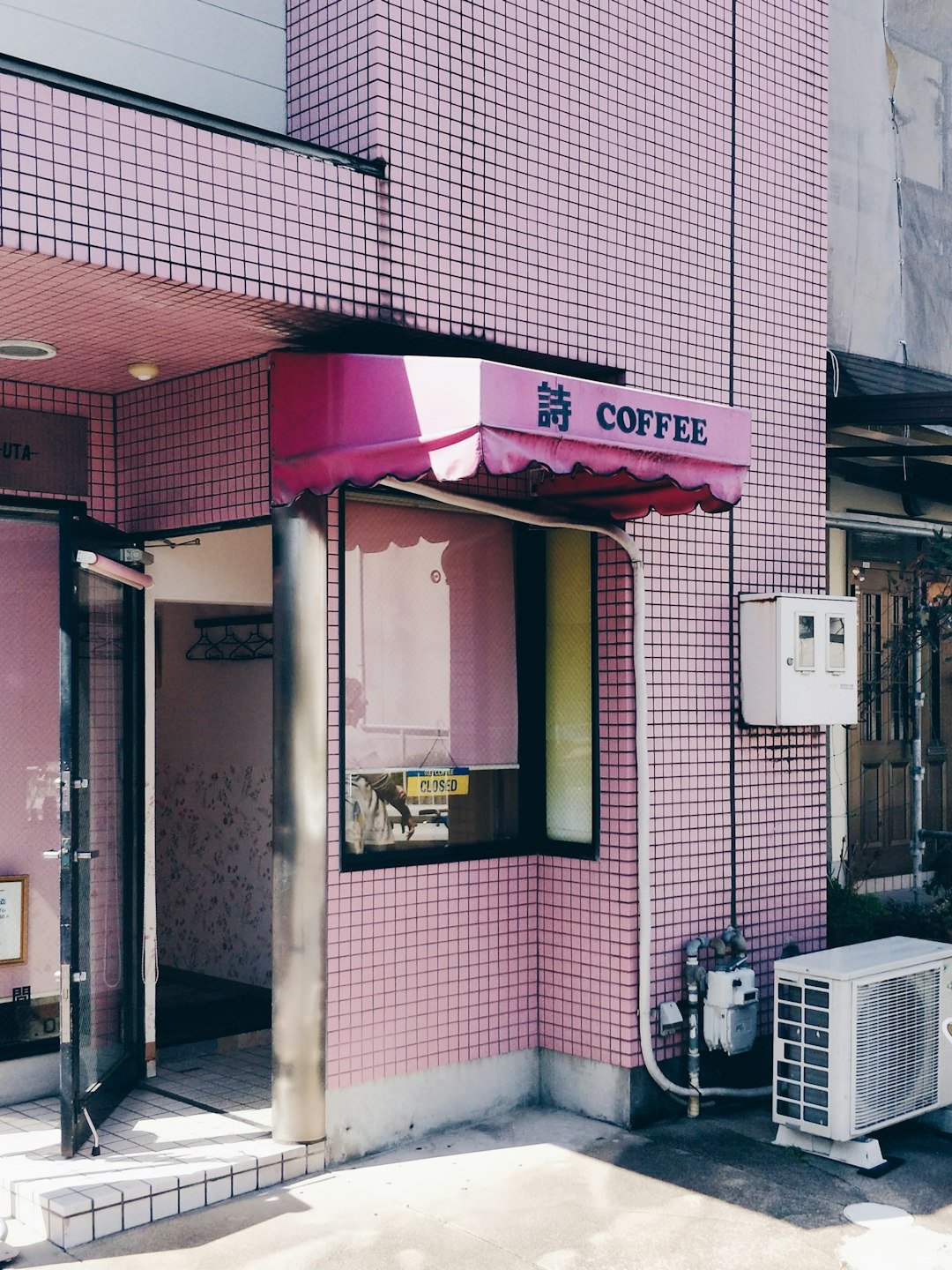
Tokyo didn’t just get good at coffee. It made coffee standards so high, so quietly obsessive, and so refreshingly unshowy that a lot of the rest of the world suddenly looks like it’s still arguing over whether latte art counts as depth.
Plenty of cities treat coffee as branding, background fuel, or an excuse to buy another ceramic cup you absolutely did not need. Tokyo treats it differently. There, coffee is craft, ritual, social glue, and sometimes just a very solid can from a vending machine. That range is exactly why how coffee culture in Tokyo puts the rest of the world to shame isn’t really about hype. It’s about respect. Respect for the bean, the process, the room, the customer, and the idea that even an ordinary cup should be done properly.
From an Italian point of view, that feels familiar. Italy gave the world one very useful coffee lesson: coffee does not need to be theatrical to matter. An espresso taken standing at the bar — quickly, socially, correctly — can mean just as much as any elaborate brew ritual. No cappuccino after late morning, grazie. No ten-minute speech before the first sip. Just standards. If you want a deeper look at that rhythm, Italian bar culture explains why counter coffee feels so different. Tokyo seems to understand that same principle, then applies it with almost surgical precision across every format imaginable: kissaten, hand-drip temples, espresso counters, chains, vending machines, hotel cafés, tiny neighborhood spots where one person runs the whole room without missing a beat.
And yes, that’s the slightly humiliating part for everyone else.
How Coffee Culture in Tokyo Puts the Rest of the World to Shame
Most coffee cities split into tribes.
You know the cast. There’s the third-wave crowd discussing extraction percentages like they’re on a finance panel. There are old-school espresso loyalists who act like anything over 30 milliliters is a moral lapse. Then there are commuters who simply want caffeine now and do not have the emotional bandwidth for your single-origin TED Talk.
Tokyo lets all of these worlds exist side by side without turning coffee into a culture war.
That is not normal.
In a lot of cities, your order gets treated like a personality test. Order a pour-over and you’re “serious.” Grab something canned and apparently you’ve betrayed your values. Relax. It’s beans and hot water, not a referendum on your character. Tokyo figured that out a while ago. You can appreciate a meticulous hand-drip in the afternoon, then grab a canned Boss or Georgia coffee later from a vending machine without acting like one choice cancels out the other.
That kind of flexibility is a sign of maturity. Coffee there isn’t a purity contest. It’s an ecosystem.
Japan is one of the largest coffee-consuming countries in the world. According to the U.S. Department of Agriculture’s Foreign Agricultural Service, Japan remains among the top global coffee importers, with a deeply established retail and ready-to-drink market alongside a sophisticated specialty scene. That alone is interesting. What’s even more interesting is how well those layers coexist. In Tokyo, convenience coffee is not automatically trash, and specialty coffee is not automatically self-important. The city has room for both.
That feels oddly close to Italy’s own confidence around coffee rhythms. In Italy, nobody is spiraling over whether a moka pot at home makes you less serious than an espresso at the bar. They serve different moments. The cappuccino belongs to the morning, the espresso punctuates the day, and if you order a milky coffee after lunch, you may get a look that politely says, “You’re free to make your own mistakes.” If that custom sounds familiar, this guide to why Italians never order cappuccino after 11am shows how coffee rules can reflect social logic rather than snobbery. The point is that different coffee formats have social logic. Tokyo has that same confidence, just expressed in a different cultural language.
And here’s the bit a lot of newer coffee capitals miss: once a city stops using coffee as identity signaling, the actual quality often gets better.
Less posing. More drinking.
Funny how that works.
The Kissaten Mindset Is Why Tokyo Feels More Serious Than Trendy
If you want to understand why Tokyo’s coffee scene feels deeper than the average “cool café” city, start with the kissaten.
A kissaten is an old-school Japanese coffee house, but even that undersells it a little. These places often feel like tiny self-contained worlds: low lighting, serious cups, measured movements, a little jazz, maybe siphon coffee prepared with the concentration of a lab experiment and the mood of a film still. They’re not built for churn. They’re built for atmosphere, regulars, and doing one thing exceptionally well for decades.
Long before “third wave” became something people could print on tote bags, kissaten culture was already taking coffee seriously in Tokyo.
That matters.
A lot of cities built their coffee identity through trends: latte art, brunch, industrial interiors, Nordic minimalism, menus that sound like they were written by someone who just discovered the word “stonefruit.” Tokyo has trends too, obviously. It’s Tokyo. But underneath the stylish layer, there’s an older backbone of coffee appreciation rooted in patience, solitude, and ritual.
Many kissaten specialize in siphon brewing, a method that looks theatrical but is actually intensely precise. The vacuum pot was popularized in Japan in part because it suited a local appreciation for craft and controlled process. The Specialty Coffee Association notes that variables like water temperature, grind size, brew ratio, and contact time all dramatically affect extraction and flavor. In a kissaten, those variables aren’t there to impress you. They’re simply part of doing the job right.
That distinction is huge.
Elsewhere, coffee can feel designed to be seen. In a great kissaten, coffee feels designed to be experienced. Quietly. Fully. Without the unspoken pressure to post proof you were there.
There’s also something almost radical in the way these spaces respect attention. They assume you can sit still. They assume coffee can hold your focus without needing an entertainment strategy. That’s rare. Honestly, it feels luxurious.
Italy has its own version of this seriousness, just at a faster clip. The classic Italian bar isn’t about camping out for three hours over one espresso. It’s about repetition, rhythm, and social continuity. You step in, order, drink, exchange a few words, and move on with your day. Brief, but never careless. Tokyo’s kissaten culture takes that same respect for coffee and stretches time around it. Different tempo, same principle: the cup matters.
That’s why Tokyo feels more serious than trendy. It has memory. It has institutions. It has places that were doing exacting coffee long before exacting coffee became content.
Precision in Tokyo Isn’t a Gimmick — It’s the Whole Point
There are cities where cafés love talking about precision. Then there’s Tokyo, where precision is just the baseline.
The best coffee bars in Tokyo obsess over the variables plenty of other places mention but don’t always master consistently: grinder calibration, bean resting time after roasting, water composition, kettle control, brew timing, cup temperature, pour structure, service choreography. Even the physical layout of the counter often reflects that logic. Everything is arranged to reduce friction. Nothing is accidental. No movement is wasted.
And no, this isn’t just aesthetic minimalism in a lab coat.
It’s operational discipline.
The Specialty Coffee Association has long emphasized that consistency in brewing depends on controlling multiple variables, from water quality to extraction yields. Water alone can make or break a cup; the SCA notes that mineral content and total dissolved solids materially affect flavor perception. In Tokyo, many shops behave as if they actually read the manual and cared. Wild concept, apparently.
This precision also connects to a broader Japanese hospitality principle: omotenashi. The term gets translated loosely as hospitality, but that can sound a little too generic. Omotenashi is closer to anticipatory care without making a big show of it. You feel considered. The room is clean. The workflow is smooth. The cup arrives right. Nobody needs to announce that they are crafting an experience for you. They just do it.
That subtlety changes everything.
In a lot of global coffee cities, “craft” gets aestheticized. It becomes visible branding: the right playlist, the right apron, the right tasting notes, the right expensive machine posed like sculpture. Tokyo can have all of that too, but its strongest cafés tend to make craft feel less like theater and more like competence.
That’s a harder flex, because it requires discipline every single day.
Italian coffee culture understands this instinctively. A proper espresso in Italy is not supposed to be a thrilling surprise. It’s supposed to be right. Every time. The crema should be there, the extraction balanced, the temperature correct, the service quick. This is not anti-creativity; it’s pro-standard. Tokyo shares that mindset even when the drink itself is different. A hand-drip bar and an Italian espresso bar might look nothing alike, but both are at their best when they value repeatable excellence over random inspiration.
That’s the thing people miss about real coffee culture.
It isn’t built on occasional greatness. It’s built on reliable care.

Tokyo Makes Room for Both Speed and Slowness — and That’s Rare
Most cities pick a coffee tempo and cling to it like a personality trait.
Some go all speed: grab-and-go cups, mobile ordering, drinks engineered for walking, coffee as urban survival gear. Others go all in on slow ceremony: hand-poured everything, menus that require reading glasses, and enough waiting time to reconsider your life choices. Tokyo somehow manages to be elite at both.
You can have a hand-drip coffee prepared with total focus, where the bloom, the pour, and the final cup feel measured against the laws of physics. Then you can step outside, pass a vending machine, and buy a perfectly decent canned coffee in seconds. Neither experience feels culturally illegitimate.
That range is not accidental. It’s one reason how coffee culture in Tokyo puts the rest of the world to shame is such a fair question. The city doesn’t force a fake choice between convenience and quality, or between ritual and function. It understands that coffee serves different purposes at different times of day.
This should not be a radical insight, and yet here we are.
Japan’s ready-to-drink coffee market is massive. Euromonitor and industry reporting have repeatedly highlighted canned and bottled coffee as a major category in Japan, where convenience stores and vending machines are deeply woven into everyday life. And unlike in plenty of places where convenience coffee is treated as a sad necessity, in Japan it has long been treated as a category worth refining. Hot cans in winter. Cold cans in summer. Reliable flavor. Broad availability. No snob panic.
Again, very Italian in spirit, even if the format is different.
Italy also understands that coffee means different things in different contexts. Morning cappuccino with a cornetto? Correct. Midday espresso standing at the bar? Also correct. Moka at home? Sacred. Coffee is not one fixed ritual. It’s a set of rituals, each with its own time, place, and social code. Tokyo has a similarly nuanced coffee grammar. A slow brew can be an act of concentration. A vending machine coffee can be a tiny piece of urban comfort. A quick espresso at a specialty counter can be a reset button between meetings.
What Tokyo gets so right is that convenience doesn’t have to mean compromise. And slowness doesn’t have to mean pretension.
That combination is rare. Most places are still trying to figure out one side of the equation.
What the Rest of the World Gets Wrong About Good Coffee
A lot of coffee scenes confuse novelty with excellence.
You’ve seen it. Limited drops. Wild processing notes. Menus that read like perfume descriptions written by someone who briefly studied anthropology. Hyper-designed interiors. Seasonal drinks that sound like they survived six branding meetings before reaching the cup. Meanwhile, the actual coffee can be inconsistent, or the service weirdly hostile, or the whole setup optimized more for image than for making your Tuesday morning better.
Tokyo has trends too, but its best coffee culture doesn’t rely on novelty to prove sophistication.
Its edge is discipline.
The memorable shops tend to be exacting, calm, and repeatable. They don’t need to invent a drink topped with yuzu foam and an emotional backstory to justify their existence. They win on standards. The grinder is dialed in. The room works. The staff know what they’re doing. The cup tastes like someone cared before you walked in, not just while you were watching.
That may sound simple. It isn’t.
According to the National Coffee Association, coffee remains one of the most consumed beverages in the United States, with daily coffee consumption reaching a 20-year high in its 2024 report. Translation: people are drinking a lot of coffee. Which makes consistency even more important. If coffee is part of everyday life, then “good coffee culture” should be judged not just by peak experiences, but by how reliably a city handles ordinary moments.
Tokyo absolutely nails the ordinary Tuesday test.
That’s the benchmark. Not whether a city has a handful of famous cafés. Not whether tourists can make a list. Ask instead: can you get a good cup without friction? Are the standards visible in routine service? Does the city respect your time without disrespecting the product? Does the café care more about your experience than about performing coolness?
Tokyo keeps answering yes.
And honestly, a lot of the world keeps answering with a mood board.
There’s another reason this matters. Coffee culture gets worse when cafés become too invested in self-image. Service turns into posture. Menus become harder to read. Asking a normal question starts to feel socially risky. You should not need emotional armor to order coffee. Tokyo, at its best, avoids that trap. There’s less friction, less ego, less need to prove that the staff are smarter than the customer.
That humility is powerful.
It mirrors a truth Italians have known forever: coffee can be serious without becoming self-serious. The barista may have standards. Strong ones. But the ritual still belongs to daily life. It remains accessible. The bar is there for regulars, workers, neighbors, quick stops, and familiar routines. Coffee is part of civilization, not an audition.
Tokyo gets that. Maybe better than anyone.
So yes, hot take confirmed: Tokyo puts the rest of the world to shame. Not because it’s louder about coffee, but because it’s quieter. More disciplined. More complete. It respects coffee at every level, from the five-minute standing cup to the twenty-minute hand brew, from old kissaten still glowing in amber light to hyper-precise modern counters where every gram and gesture has a purpose.
That’s the lesson. Real coffee culture isn’t just about having great cafés. It’s about having standards that survive contact with everyday life.
Tokyo has that.
The rest of us are still talking.
Frequently Asked Questions
Why is Tokyo considered one of the best coffee cities in the world?
Tokyo stands out because it combines deep tradition, technical precision, and everyday accessibility. You can find serious kissaten, elite specialty bars, and reliable convenience coffee all coexisting without snobbery.
What is a kissaten in Tokyo coffee culture?
A kissaten is a traditional Japanese coffee house known for its atmosphere, ritual, and careful brewing. These spaces often focus on consistency, quiet attention, and long-established service rather than trends.
Does Tokyo really balance specialty coffee and convenience coffee well?
Yes. One of Tokyo’s biggest strengths is that hand-drip coffee, espresso counters, vending machine cans, and convenience store options all have a legitimate place in daily life. The culture values the right coffee for the right moment.
What makes Tokyo coffee culture different from other cities?
Tokyo treats coffee less like identity signaling and more like disciplined hospitality. The emphasis is on standards, repeatability, and respect for the customer rather than performance or hype.
Sources
- Specialty Coffee Association, https://sca.coffee/research/coffee-standards
- Specialty Coffee Association, https://sca.coffee/research/coffee-standards
- U.S. Department of Agriculture Foreign Agricultural Service, https://www.fas.usda.gov/data/japan-coffee-annual
- National Coffee Association, https://www.ncausa.org/Industry-Resources/Market-Research/NCDT
- BBC Travel, https://www.bbc.com/travel/article/20190224-japans-unique-kissaten-coffee-culture
- Perfect Daily Grind, https://perfectdailygrind.com/2020/01/a-guide-to-japanese-kissaten-coffee-culture/
- Japan National Tourism Organization, https://www.japan.travel/en/guide/omotenashi-japanese-hospitality/
- Smithsonian Magazine, https://www.smithsonianmag.com/history/how-japan-fell-love-coffee-180961885/
