

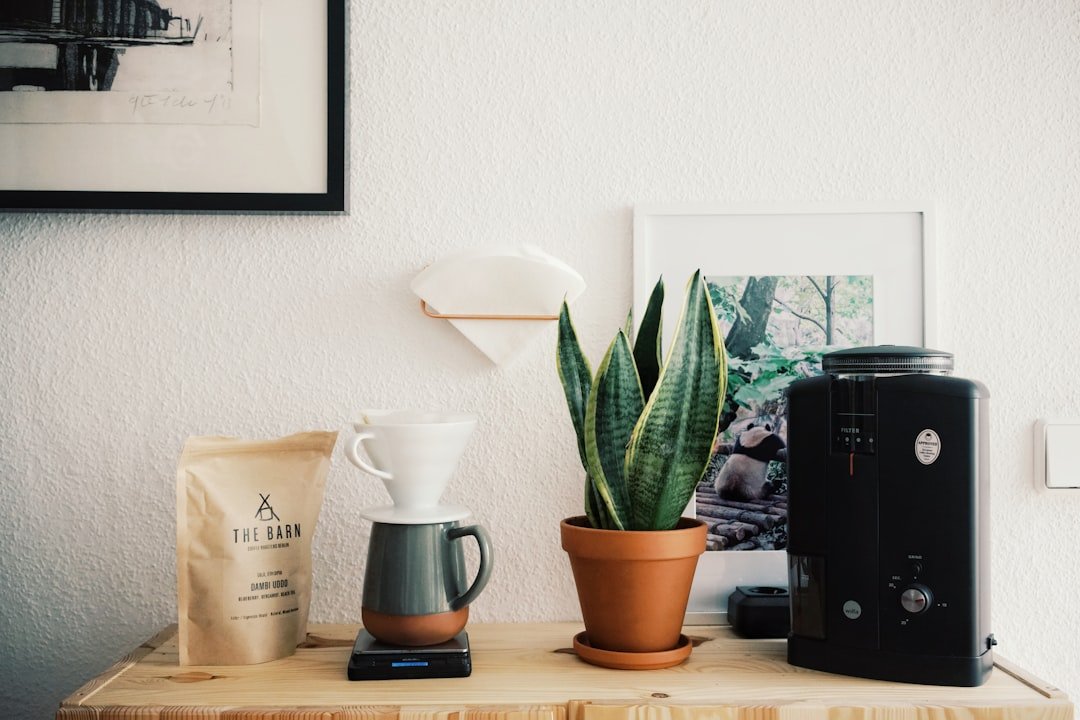
You buy the same beans. You use filtered water. You even do that little serious barista face while pouring. And somehow your home coffee still tastes flatter, sharper, or just vaguely disappointing. Meanwhile, your favorite café hands over a cup that tastes like chocolate, stone fruit, or whatever dreamy note was printed on the bag. The reason why your coffee tastes different at home vs your favorite café is usually a lot less mystical than people think.
Cafés do not have secret beans blessed by espresso angels. They are just running tiny flavor labs disguised as places with good lighting and too few outlets.
Your café is not using better beans. It is using better systems
The romantic answer is that the café has better beans. The less romantic and much truer answer is that the café has better systems.
According to Pulled Coffee, Bean Box, and Achilles Coffee Roasters, the biggest difference between home coffee and café coffee usually comes down to repeatability: dose, grind, timing, workflow, and consistency from cup to cup, not some magical sixth sense the barista was born with.
That is actually good news. If the gap were all about unattainable beans, you would be stuck. If it is about process, it is workable.
Cafés are built to make the same drink over and over with as little randomness as possible. They dial in espresso. They weigh doses. They keep grind settings tight. They track shot times and extraction. They build workflows so the tenth drink of the morning tastes pretty close to the first. Your kitchen, by contrast, is built for survival before 9 a.m. You might be making coffee while answering a text, feeding the dog, and wondering why that meeting exists at all.
Bean Box also points out that cafés move through coffee faster, which helps with freshness and consistency. A busy shop tears through bags quickly, so the beans get used in a tighter window. At home, a bag can linger for weeks, and that small timeline shift can create a very real flavor shift.
People love blaming beans because beans are sexy. Terroir, roast profile, origin story. But the less glamorous answer is usually that the café is simply controlling more variables, more carefully, more often. Same coffee. Different process. Very different cup.
That is the whole thesis: why your coffee tastes different at home vs your favorite café usually comes down to consistency, water, grinder quality, and equipment stability. Not your lack of talent. Not coffee fate.
The grinder is probably the real main character
If one piece of equipment is quietly sabotaging your coffee at home, it is probably the grinder.
Not the brewer. Not the kettle. Not the ceramic dripper you bought after one very convincing video. The grinder.
Pulled Coffee, Bean Box, and Achilles all point to grinder quality as one of the biggest reasons café coffee tastes more balanced than home coffee. A grinder’s job is not just to make coffee smaller. It is to make it evenly smaller.
If your grinder spits out a chaotic mix of tiny particles and big chunks, water will not extract them evenly.
- Fines extract fast and can push your cup toward bitterness, dryness, and an ashy edge.
- Boulders extract too slowly and can leave the cup sour, thin, or hollow.
That is how you end up with coffee that tastes both weak and aggressive.
Commercial cafés usually use grinders built for precision and consistency. They also keep them calibrated. Home brewers are often working with entry-level grinders, blade grinders, older burr grinders that have drifted, or pre-ground coffee that started losing aromatics long before brewing. Even with the exact same beans, grinder performance alone can change flavor dramatically.
This is why people can obsess over brew method and still miss the real issue. They switch from French press to pour-over to AeroPress to moka pot and wonder why nothing tastes café-good. Meanwhile, the grinder is in the corner producing chaos like it is freelancing. If you brew manually, our guide to pour-over technique barista champions actually use can help once your grind is more consistent.
A practical analogy: buying excellent coffee and grinding it badly is a bit like buying exceptional pasta and cooking it with a broken timer. Great ingredients. Potentially tragic result.
Cafés also do one subtle thing better here: they do not reinvent the grind setting every morning on a whim. Once they dial in, they make small, deliberate changes. At home, it is easy to go a little finer, then brew a different dose, then pour differently, then decide the beans are the problem. The grinder gets blamed last, if at all.
If you take one technical point from this article, let it be this: a better grinder does not just improve coffee. It makes coffee make sense.
Water is the most boring reason your coffee tastes off
Water is wildly unsexy. Nobody is posting moody close-ups of mineral content. And yet coffee is mostly water, which means the chemistry of that water can quietly decide whether your cup tastes sweet, flat, harsh, chalky, or beautifully clear.
Daily Coffee News recently reported on café-focused water mineralization systems being used to standardize flavor and protect equipment. That tells you something important: cafés are paying attention to water on purpose, not as an afterthought.
That is a big clue in the mystery of why your coffee tastes different at home vs your favorite café.
Water is not just neutral wet stuff. Its mineral balance affects extraction. Calcium and magnesium can help pull desirable flavor compounds from coffee. Too much hardness can create dullness or scaling issues. Too little mineral content can leave coffee tasting oddly empty or under-extracted. Filtration matters too, because chlorine, off-flavors, or excess dissolved solids can bulldoze the subtler notes in your cup.
So yes, your coffee can taste different because your water changed.
By season.
By city.
By apartment building.
Even by whether your filter is fresh or overdue for retirement.

You can buy the exact same beans your favorite café uses and still get a noticeably different result because the water chemistry at home is doing its own thing. The café may have built a system specifically to make its water more consistent. You may be filling the kettle from the tap and hoping for the best. Respectfully, that is not the same experiment.
This is one of those coffee truths people tend to learn late. We are trained to think about coffee as beans first, equipment second, and water somewhere after vibes. But if cafés are investing in mineralization and filtration systems to standardize taste, it is because water has a direct, measurable effect on the cup.
There is also the machine side of it. Water consistency helps protect equipment too. Scale buildup from hard water can affect performance over time, especially in espresso machines. So the café is not just protecting flavor. It is protecting stability.
You do not need to become a home water chemist with tiny packets and a spreadsheet. But if your coffee tastes off and you have already looked at beans and grind, water is not some fringe theory. It may be the most boring answer in the room and one of the strongest.
At home, you are probably changing five variables without noticing
One of the smartest points from Achilles Coffee Roasters is that home brewers often change multiple variables at once, then have no idea which one actually changed the taste.
Classic home coffee behavior.
You grind a little finer.
Use a little more coffee.
Pour a little faster.
Let the water cool a bit longer.
Use a different mug.
Get distracted halfway through blooming.
Then taste the cup and think, interesting, I have learned nothing.
Cafés are not necessarily more talented than you. They are more disciplined. Their workflow is built to reduce randomness.
A barista in a well-run café is not freestyling every drink based on intuition and moon phase. They are working inside a repeatable system. Dose is weighed. Brew ratios are set. Shot times are tracked. Water temperature is stable. Workflow is standardized because that is how you get consistency, and consistency is how you get quality you can repeat. If you want a stronger handle on ratios, see the ratio debate in coffee for a practical framework.
At home, hidden inconsistency shows up everywhere:
- Eyeballing dose instead of weighing it. A tablespoon is not a precise brewing tool.
- Changing brew volume without thinking about ratio. More water changes extraction and strength.
- Using beans at very different ages. Coffee on day 5 and coffee on day 25 are not the same ingredient.
- Letting brew temperature swing. Water fresh off boil behaves differently than water that sat in the kettle.
- Changing pour style every time. Aggressive spiral one day, gentle center pour the next.
- Switching mugs or servers. Heat retention can affect perceived flavor and drinking temperature.
That last one catches people off guard. Temperature changes flavor perception more than most of us realize. A coffee that tastes muted when it is too hot may open up as it cools. A thin ceramic cup versus a preheated insulated mug can subtly change the experience.
This is also why home coffee can feel frustratingly inconsistent even when it is occasionally great. You make one amazing cup and then never quite recreate it. That is not failure. That is unreproducibility.
A café’s edge is not that every barista is a wizard. It is that the café is designed to make fewer accidental decisions. At home, you might be making five accidental decisions before caffeine has even entered the chat.
If you have ever thought, I know I can make good coffee, I just cannot make the same good coffee twice, congratulations. You have found the real issue.
Your favorite café has an unfair equipment advantage
There is a reason café counters look like the command deck of a very caffeinated spaceship. Commercial equipment is built for repetition, stability, and control in a way most home gear just is not.
Bon Appétit notes that home espresso machines have gotten much better, especially around features like temperature control, extraction management, and milk steaming. That is real progress, and good news for anyone chasing café-adjacent results at home. But closer does not mean the same.
The real gap is stability.
Commercial café equipment is designed to produce cup after cup with minimal drift. Temperature stays steadier. Pressure is more consistent. Steam power is stronger and more reliable. Grinders are more durable and more precise. These machines are built to perform repeatedly under pressure.
A lot of home machines, especially entry-level ones, fluctuate more than people realize. Brew temperature may wander. Pressure may not be especially consistent. Steam performance can be weak or variable. Recovery time between drinks can be slower. So even if your technique is solid, the machine may not be giving you the same conditions every time.
That is a sneaky source of the why does this taste different today problem.
This does not mean you need to spend café money to make excellent coffee at home. The point is simpler. The taste gap often comes from how stable your setup is, not how fancy it looks on the counter.
A very controlled modest setup can outperform a more expensive but inconsistent one. Some equipment is also less forgiving in a useful way. Commercial machines make flaws more visible, but they also make them easier to correct because the variables are stable. If a shot runs fast, the barista can adjust grind knowing the temperature and pressure are probably holding steady. At home, if the machine, grinder, and workflow are all drifting a little, diagnosis gets messy fast. If espresso is your focus, the perfect espresso extraction time explained is a useful next read.
So it is not just better machine equals better taste. It is more stable machine equals more predictable taste.
That is a much better lens. It also explains why modern home coffee can get impressively close to café quality, especially if you focus on the fundamentals. Not because the café advantage disappeared, but because the equipment gap has narrowed.
How to make home coffee taste better without turning your kitchen into a café
There is a tempting trap in coffee culture where the goal becomes recreating the café exactly. Same beans. Same brew method. Same cup profile. Same everything. But unless you are planning to turn your kitchen into a full-service bar with calibrated water and a grinder that costs more than your sofa, that is not always the smartest target.
The real flex is making your home coffee consistently good in your home.
If you now understand why your coffee tastes different at home vs your favorite café, the next move is not to fix everything at once. Start with the one or two variables most likely to matter.
1. Improve grind consistency
If your grinder is weak, inconsistent, or producing lots of fines and boulders, that is probably affecting every cup. This is often a bigger upgrade than changing brewers.
2. Weigh coffee and water
A small digital scale does more for repeatability than a lot of trendier gear. If you know your dose and your brew ratio, you can actually learn from each cup instead of just guessing.
3. Pay attention to water quality
If your tap water tastes off, your coffee probably will too. Even basic filtration can help, and if you are chasing a specific flavor profile, water may be the missing variable.
4. Change one thing at a time
This is the least glamorous advice and maybe the most powerful. If you adjust grind, do not also change dose, temperature, and pour style. Give yourself a fighting chance to know what happened.
5. Respect freshness without turning it into drama
Fresh beans matter. So does using them in a consistent window. But freshness without process is just expensive confusion.
Your favorite café probably does not have better luck. It has better control.
And that is good news, because control is learnable. Not all at once. Not perfectly. But enough to close the gap in a meaningful way.
If café coffee feels magical, it is often because someone engineered the boring parts beautifully. That is the part worth stealing. Once you see that, your home coffee stops feeling like a mystery and starts feeling like a craft.
Sources
- Pulled Coffee, https://www.pulled.coffee/blog/home-coffee-vs-cafe-coffee
- Bean Box, https://beanbox.com/blog/home-coffee-vs-cafe
- Achilles Coffee Roasters, https://achillescoffeeroasters.com/blogs/specialty-coffee-blog/why-coffee-tastes-different-at-home-than-in-a-cafe
- Daily Coffee News, https://dailycoffeenews.com/2026/06/02/bluewater-rolls-out-coffee-rock-for-cafes/
- Bon Appétit, https://www.bonappetit.com/story/best-espresso-machines
Frequently Asked Questions
Why does coffee taste better at a café than at home?
Café coffee often tastes better because cafés control more variables consistently, including grind size, dose, water quality, temperature, and equipment stability. The beans may be the same, but the process is usually much more repeatable.
Does a better grinder really make that much difference?
Yes. A better grinder creates more uniform particles, which helps water extract coffee evenly. That usually means a sweeter, clearer, and more balanced cup with fewer bitter or sour extremes.
Can water quality change the taste of coffee?
Absolutely. Since coffee is mostly water, mineral balance and filtration have a direct effect on extraction and flavor. Even good beans can taste flat or harsh if the water is off.
How can I make my home coffee taste more like my favorite café?
Start by improving grind consistency, weighing your coffee and water, and changing only one variable at a time. Those steps make your brewing more repeatable and help you identify what is actually improving the cup.
