
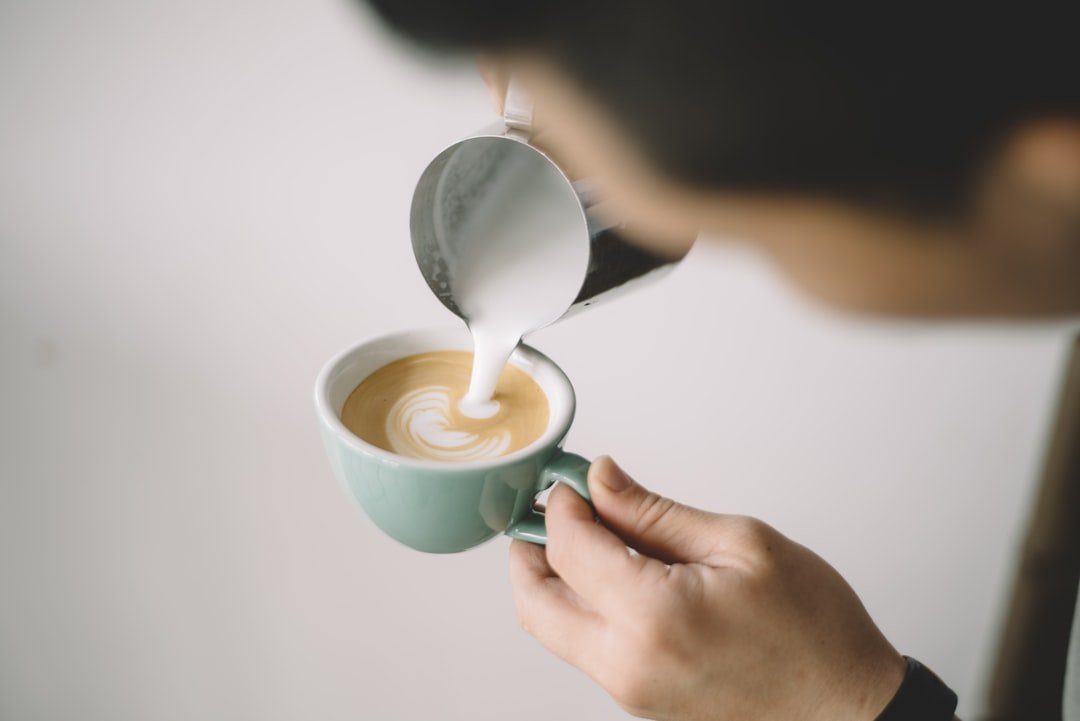
The Spanish latte is having a moment, but “trend” doesn’t quite cover it. It feels more like a correction. After years of coffee culture bouncing between austere black-coffee purism and sugar-bomb drinks that taste like a candle store discovered vanilla syrup, the Spanish latte lands right in the middle: indulgent, structured, and still unmistakably coffee.
And that matters more than it sounds. Drinks don’t spread this quickly across neighborhood cafés, Yemeni cafés, bakery cafés, and specialty-adjacent menus just because they look good over ice—though, to be fair, they do photograph absurdly well. They spread because people order one, take a sip, and instantly get it. Espresso. Milk. Sweetened condensed milk. Richer than an iced latte, cozier than a cold americano, and way less fussy than coffee people sometimes pretend coffee needs to be. If you want a clue about where espresso culture is headed, start here: drinks with personality, global influence, and an actual emotional life.
What is a Spanish latte, exactly?
A Spanish latte is an espresso-and-milk drink made with sweetened condensed milk, which gives it a thicker texture, deeper sweetness, and a caramelized dairy note a standard latte just doesn’t have. It can be hot or iced, but the defining feature is the condensed milk—not the temperature.
Which sounds simple because it is. The basic build is usually espresso, sweetened condensed milk, and milk. Not syrup. Not “just make it sweeter.” A completely different sweetening system.
And that changes everything.
A standard latte gets most of its body from steamed milk and most of its character from the espresso. A Spanish latte still leans on espresso, but condensed milk adds density and built-in sweetness in a way flavored syrups never really can. According to Pure Earth Coffee’s breakdown, a practical starting ratio is about 1 to 2 tablespoons of sweetened condensed milk for a 6 to 8 ounce drink, adjusted to taste. That ratio matters. Too little, and you’ve just made a sweet latte. Too much, and now you’re drinking dessert with a caffeine side quest.
Here’s the part people miss: condensed milk isn’t just milk plus sugar. It’s milk with much of its water removed—Pure Earth Coffee notes roughly 60% of the water content is removed—so the sweetness arrives with concentration and body, not just extra flavor. That’s why a Spanish latte tastes rounder and heavier on the palate. The sweetness feels built in, not squirted on afterward from a plastic pump.
There’s also a subtle caramelized note from the condensing process, which helps explain why the drink can feel almost confectionary even without whipped cream, caramel drizzle, or a foam hat the size of a throw pillow. You get sweetness, yes, but also cooked-dairy depth. It’s not just “more sugar.” It’s a whole different texture language.
That’s also what separates it from an iced latte. An iced latte is espresso and cold milk over ice—creamy, approachable, usually mellow. A Spanish latte can be served iced too, but it has more weight, more sweetness, and more dessert-like body before any toppings even show up. Same family. Very different personality.
If you want a broader frame for how milk-based espresso drinks split apart by texture and balance, this guide to cappuccino, latte, and flat white differences helps explain why small ingredient changes can create completely different drink identities.
Why is Spanish latte everywhere now?
Because it solves a very modern coffee problem: people want a drink that feels indulgent without feeling ridiculous, and a Spanish latte gets there fast.
You don’t need a tasting-notes seminar to understand it. Nobody has to explain processing methods, terroir, or why the barista is murmuring “stone fruit” over a cortado. One sip makes the case. That kind of instant clarity is powerful, especially on crowded menus where people are making a decision in about seven seconds while pretending not to panic.
And yes, the menu evidence is real. This isn’t just TikTok foam and wishful thinking.
Sprudge reported on the drink’s visibility in Cairo café culture through Gulf influence in its feature on the Grand Egyptian Museum café, placing Spanish latte within a broader coffee scene balancing mass appeal with increasing attention to specialty standards and local roasting. That’s a useful signal. It shows the drink moving through serious café ecosystems, not just novelty menus.
In the U.S., the Lexington Herald-Leader recently covered a new Yemeni café and listed Spanish latte among its coffee offerings alongside drinks like Turkish coffee and pistachio latte. That matters because diaspora café culture is often where the most interesting menu shifts happen first—well before the mainstream writes a think piece and acts like it just discovered everyone else was already outside having better coffee.
Then there’s the Dallas Observer, which highlighted Spanish latte as a popular menu item at Alma Cafe & Bakeshop in South Irving, specifically calling out the use of condensed milk. Again: neighborhood café, local demand, no giant corporate machine required.
The Bay Area Telegraph also noted Spanish latte among signature espresso drinks at a Pleasanton café. Is that source lighter than Sprudge? Sure. But that’s kind of the point. Once a drink starts showing up in local lifestyle coverage about bakeries, office-park cafés, and suburban artisan spots, it’s no longer a niche obsession. It’s settling into actual menus.
That spread tells us something. The Spanish latte isn’t traveling as a chain invention that independent cafés are reluctantly copying. It’s moving through communities, local cafés, and globally influenced coffee spaces that already understand hospitality as more than pulling espresso correctly and acting mysterious about it.
There’s also a broader taste shift happening. A drink like a hojicha latte can absolutely inspire devotion—and fair enough, because roasted green tea has this toasty, nutty thing going on that’s wildly comforting—but it still asks the customer to know what hojicha is. Spanish latte asks less. Espresso, milk, sweetness, done. Low friction. High reward.
That kind of clarity wins menus.
Why espresso people should take it seriously—even if it’s sweet
There’s a lazy coffee-snob take that any sweet milk drink is just there to hide bad espresso. Cute theory. Not actually true.
A Spanish latte still needs an espresso with enough backbone to stand up to condensed milk, which is heavy, sweet, and texturally assertive. If the shot is thin, flat, or underdeveloped, the drink doesn’t magically become balanced. It just becomes sweet and vaguely coffee-adjacent. Condensed milk doesn’t erase weak espresso. It exposes it differently.
That’s one of the more interesting things implied by Sprudge’s reporting from Cairo: even as Spanish lattes gain broad appeal, some cafés are pairing that popularity with a growing emphasis on better espresso quality and local roasting. Translation: the drink can be mainstream-friendly and still benefit from serious coffee standards. Those ideas are not enemies, despite what a few extremely online people might suggest.
Sensory-wise, condensed milk is kind of ruthless. It amplifies roast defects and strengths alike. A bitter, ashy espresso can turn clumsy and harsh under the sweetness. A thin espresso can vanish completely, leaving only sugary dairy. But a bold, balanced espresso creates contrast—the thing that keeps the drink from collapsing into beige.
That’s why a more espresso-forward profile makes sense here. If you were building one at home or thinking about what kind of pod actually works in a milk-heavy drink, something like MORORA fits naturally. Not because anyone needs a sales pitch with their afternoon coffee, but because a Spanish latte genuinely benefits from a coffee that refuses to disappear. Its intense profile has enough structure to cut through condensed milk and still taste like espresso, which is, frankly, the whole point.
You could also make a case for MAMA AFRICA, especially if you like toasted, chocolate, and caramel notes playing nicely with the drink’s sweet dairy character. Different mood. Same logic: the coffee underneath has to show up.
Here’s the slightly counterintuitive part: sweeter drinks often require more structural coffee, not less. Sugar can smooth out some acidity edges, sure, but richness increases the need for contrast. That’s why a timid espresso gets swallowed whole, while a strong, clean one makes the drink feel intentional.
For home baristas, this is the same balancing act behind dialing in espresso without wasting half a bag: sweetness and milk can flatter a shot, but they cannot fully rescue one that lacks structure.
Spanish latte vs iced latte vs iced americano: what are you actually craving?
Most people don’t order the wrong coffee because they don’t know the ingredients. They order the wrong coffee because they order by habit.
You think you want your usual. What you might actually want is a completely different mood.
An iced americano—or cold americano, if that’s what your café calls it—is about refreshment and clarity. Espresso plus water, served over ice. Less richness, more direct coffee flavor, and usually a lighter feeling overall. Great when you want something brisk, clean, and not remotely dessert-coded.
An iced latte is the easygoing middle child. Espresso, milk, ice. Creamy, approachable, familiar. It softens espresso more than an americano does and feels more substantial, but it usually stays pretty restrained unless you start adding syrups.
A Spanish latte is comfort-first. It’s richer, sweeter, thicker, and more confectionary. Coffee is still there, but this is the option for when your drink is also your treat. If you’re craving “sweet but still coffee,” this is the category that actually delivers.
And here’s the slightly rude truth: if what you want is emotional support in cup form, an iced americano is not going to save your afternoon. It may refresh you beautifully. It may sharpen your brain. It may make you feel like the kind of person who answers emails with suspicious efficiency. But it is not a creamy sweet espresso hug.
And if you keep ordering an iced latte hoping it will somehow become more luxurious than it is, the Spanish latte is probably the drink you were trying to ask for all along.
Why does it work especially well iced? Partly because condensed milk dissolves beautifully into hot espresso first, then chills into a drink with visual layers and real texture. You get that glossy café-window look—milk swirling into espresso, pale caramel tones, ice catching the light—but unlike some photogenic drinks, this one usually tastes as good as it looks. A rare quality.

If you lined them up side by side, the differences would get obvious fast:
- Iced americano / cold americano: espresso + water + ice; lightest body, clearest coffee expression
- Iced latte: espresso + milk + ice; creamy but relatively straightforward
- Spanish latte: espresso + condensed milk + milk + ice; sweetest, densest, most dessert-like
That also explains why the drink performs so well on menus and on social. It has a visible identity. You can see the richness before you taste it. Coffee, like fashion, benefits from having a point of view.
Is Spanish latte stronger than an iced americano?
Usually no. A Spanish latte can taste bolder in richness, but an iced americano generally presents espresso flavor more directly because it isn’t softened by milk and condensed milk. “Stronger” depends on whether you mean caffeine, roast intensity, or flavor impact—and those are not the same thing.
This is one of those coffee questions that gets messy fast because people use “strong” to mean five different things.
If you mean caffeine, it depends on the number of espresso shots in each drink. A Spanish latte made with two shots and an iced americano made with two shots may be pretty similar on caffeine. No drama there.
If you mean flavor concentration, the iced americano usually reads stronger because there’s no milk muting the espresso. Even diluted with water, it still presents coffee in a more direct, less cushioned way.
If you mean overall intensity of experience, a Spanish latte can feel “bigger” because it’s richer and sweeter. But that’s body and sweetness doing some of the work, not just espresso.
So if your goal is maximum coffee clarity, go iced americano. If your goal is a richer coffee drink that still has espresso character, the Spanish latte makes more sense.
Is an iced americano the same as a cold americano?
Pretty much, yes. Both usually mean espresso diluted with cold water and served over ice, though cafés may vary slightly in how they build it.
Some places pull espresso over cold water first, then add ice. Others pull shots directly over ice and top with water. Tiny technique differences, same basic drink. If you’re searching cold americano and wondering whether it’s a secret menu item with a passport, relax. You’re generally in iced americano territory.
The more useful distinction is not iced americano versus cold americano. It’s americano versus latte versus Spanish latte. Water gives you clarity. Milk gives you softness. Condensed milk gives you softness plus sweetness plus density. Three different cravings, three different outcomes.
How does a Spanish latte compare with a hojicha latte?
A Spanish latte is espresso-based and sweetened with condensed milk, while a hojicha latte is tea-based, made with roasted green tea and milk. The Spanish latte tastes more coffee-forward and dessert-like; the hojicha latte is toastier, nuttier, and usually gentler in caffeine.
This comparison is sneakily interesting because both drinks appeal to people who like comfort in a cup, but they get there in different ways.
A hojicha latte brings roasted tea notes—think toast, nuts, soft smoke, maybe a little cocoa depending on the preparation. It’s cozy in a quieter way. More cardigan energy.
A Spanish latte is louder. Espresso has bitterness, roast, crema, edge. Condensed milk wraps that in sweetness and body without erasing the coffee identity. It’s a more dramatic drink, and usually a sweeter one.
Also: flavor literacy matters here. Plenty of people know exactly what coffee and sweet milk will taste like together. Fewer people know what roasted green tea tastes like before ordering. That’s one reason Spanish latte has such broad menu appeal. It’s easier to predict, which makes it easier to order, which makes it easier to reorder. Café economics, but obvious.
Where does a Spanish latte sit compared with an espresso macchiato?
An espresso macchiato is much smaller, much less milky, and far more espresso-led. A Spanish latte is a full milk drink with condensed milk sweetness and a softer, richer texture.
These two aren’t really rivals so much as opposites on the espresso comfort spectrum.
An espresso macchiato—in the traditional sense—is espresso “marked” with a small amount of milk or foam. Tiny drink. Punchy flavor. Minimal cushioning. It’s for when you want espresso with just enough softness to round the corners.
A Spanish latte is for when rounding the corners is not enough and you’d like the whole room to feel warmer.
Interesting little twist, though: both drinks depend heavily on espresso quality. A macchiato makes that obvious because there’s nowhere to hide. A Spanish latte makes it less obvious at first, but the same principle holds. If the espresso is bad, the drink can’t fully recover. Different scale, same truth.
Is Spanish latte just a trend—or a permanent menu fixture?
The smart bet is that it sticks around.
Not because every café in America is about to become a condensed-milk temple, but because the drink checks three pretty durable boxes.
One: globally influenced without feeling niche.
The drink’s spread through Gulf-influenced café culture, Yemeni café menus, and independent local cafés gives it cultural traction without making it feel inaccessible. It has roots and context, but it doesn’t require a glossary.
Two: indulgent without requiring full dessert commitment.
You get sweetness and richness, but still inside the familiar structure of an espresso drink. It scratches the “treat” itch without tipping all the way into milkshake territory. That middle ground is commercially powerful because it works at 8 a.m., 2 p.m., and “I had a meeting and deserve something” o’clock.
Three: easy to explain and easy to reorder.
This part is bigger than coffee people sometimes admit. Menu permanence often belongs to drinks customers can remember, describe, and crave again. “Latte with condensed milk” is a very efficient idea.
And the real-world examples support that durability. The Dallas café story suggests the drink is showing up as a popular neighborhood offering. The Lexington Herald-Leader places it on a U.S. Yemeni café menu as part of a broader coffeehouse identity. The Pleasanton feature shows it appearing among signature espresso drinks in a bakery-café setting. That’s not random recipe chatter. That’s menu placement across different contexts.
The more interesting prediction? Spanish latte may become a kind of gateway luxury drink for younger professionals. Less boozy and performative than an espresso martini. More comforting than a straight shot. More personality than a standard latte. It says, “I like nice things,” but in a way that still gets you through the workday.
And maybe that’s why it feels inevitable. People want coffee that tastes intentional, not extreme. Not stripped down to prove a point. Not overloaded until espresso becomes decorative. Just enough indulgence to feel special, enough coffee structure to feel real.
So the next time you’re hovering between your default iced latte and something with an actual point of view, order the Spanish latte. Then pay attention to the espresso underneath the sweetness. That’s where you can tell whether a café is serving a trend—or just serving coffee well.
Frequently Asked Questions
Is Spanish latte stronger than an iced americano?
Usually not in flavor clarity. An iced americano presents espresso more directly, while a Spanish latte feels richer and sweeter because milk and condensed milk soften the coffee.
Is a cold americano the same as an iced americano?
In most cafés, yes. Both usually mean espresso mixed with cold water and served over ice, though the order of adding water and ice can vary slightly.
What’s the difference between a Spanish latte and an iced latte?
An iced latte uses espresso, milk, and ice, while a Spanish latte adds sweetened condensed milk. That makes the Spanish latte thicker, sweeter, and more dessert-like.
How does a Spanish latte compare with a hojicha latte?
A Spanish latte is coffee-based and sweetened with condensed milk, while a hojicha latte is made with roasted green tea and milk. The first is richer and more espresso-forward; the second is toastier and gentler.
Sources
- Coffee At The Grand Egyptian Museum Cafe | Sprudge Coffee — https://sprudge.com/coffee-at-the-grand-egyptian-museum-cafe-699523.html
- New Lexington coffee shop opening with late hours, decadent treats — https://www.kentucky.com/lexgoeat/restaurants/article316044033.html
- Alma Cafe and Bakeshop: South Irving’s first local cafe — https://www.dallasobserver.com/food-drink/alma-cafe-and-bakeshop-south-irving-40690028/
- Spanish Latte: The Condensed Milk Coffee Drink Taking Over Menus in 20 — https://pureearthcoffee.com/blogs/coffee-recipes/spanish-latte-condensed-milk-recipe-2026
- Hidden in an Office Park, This Women-Owned Cafe Serves Fresh Baked Sourdough — https://bayareatelegraph.com/2026/05/08/hidden-in-an-office-park-this-women-owned-cafe-serves-fresh-baked-sourdough/
