
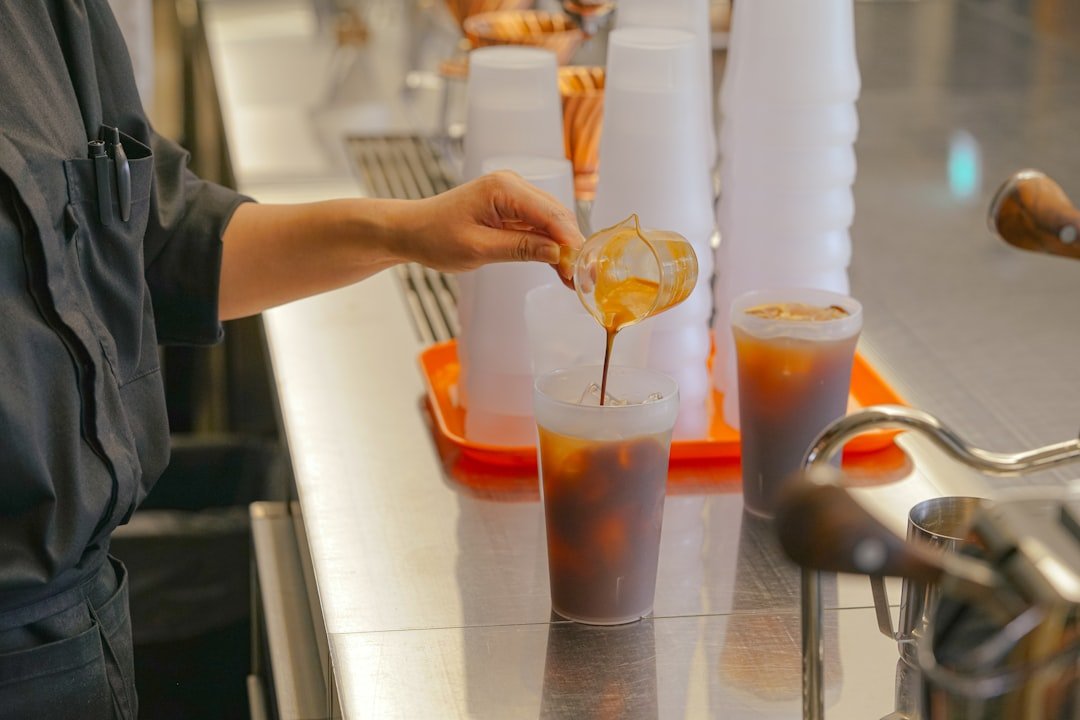
Ice is ruthless.
If a coffee has weak spots, cold will find them fast. That is why the iced americano vs iced coffee debate is more interesting than it looks on a menu. One drink rounds things off. The other puts the roast, the beans, and the shot right under a bright kitchen light.
That matters because cold coffee stopped being seasonal a while ago. In a July 10, 2026 interview with Comunicaffè, Franke’s Mirza Bilalic said cold coffee has become a year-round category. The Grocer put a number on the appetite: the UK RTD coffee market reached £367 million, up 10.5% year over year, according to Pascucci’s reporting. People are drinking cold coffee in January now, with the same confidence they once reserved for oat milk discourse. So yes, menu wording matters. More interesting is what actually happens in the glass when temperature drops and sweetness pulls back.
What’s the difference between iced americano and iced coffee?
Iced coffee is brewed coffee served cold or over ice. An iced Americano is espresso with cold water and ice. Iced coffee usually tastes rounder and softer, while an iced Americano lands brighter and sharper, with very little interest in covering for bad coffee.
The build does most of the work. Starbucks’ June 10, 2026 Coffee Science explainer lays it out cleanly: iced coffee starts as brewed coffee, usually drip or something close to it, while an iced Americano starts with espresso, then water, then ice. Some cafés also flash brew iced coffee, brewing hot directly onto ice so more aroma survives the trip.
That different route changes texture fast. Brewed coffee spreads across the palate. It feels wider, gentler, less pointy, especially once the ice starts melting. Espresso diluted into an Americano keeps its lines. Acidity stays clearer. The finish hangs around longer. If the shot was dialed in, great. If not, the cup tells on everybody.
Pascucci’s August 10, 2026 guide makes an important point here: cold temperatures mute sweetness. Flaws get louder. A thin espresso tastes thinner cold. A harsh roast gets meaner. An origin with clean citrus or floral notes from well-handled arabica coffee beans can still shine, but only if the extraction had some discipline. For a related breakdown, see this flavor-first guide to iced coffee vs iced Americano.
Iced coffee is forgiving. The iced Americano is a little more Sicilian about it.
Why cafés quietly pick sides
When a café leans hard into iced Americanos, it is usually saying something about its espresso. Black espresso over ice leaves the bar nowhere to hide. If the roast is blunt or the shots run muddy, you will know by the second sip. Pascucci’s recent piece on why cafés choose sides ties that choice directly to espresso quality and workflow, and that tracks. Shops that trust their espresso usually want you to taste it in a stripped-back format.
Iced coffee wins for different reasons. Batch brew or flash brew moves well during a rush, gives staff a little breathing room, and lands as an easier black coffee for customers who want cold caffeine without the sharper espresso edge. That matters because cold coffee now moves volume all year. The Washington Post’s July 31, 2026 bottled iced coffee tasting makes the point pretty clearly: iced coffee is fully mainstream now, not some heat-wave side quest.
Then there is South Korea, where the iced Americano became an entire office-life genre. According to K Deep Cut on August 27, 2026, Starbucks Korea’s sales data show iced drinks outselling hot drinks even in winter. Korea has 100,729 cafés. Average consumption sits at 405 cups per person each year. Cafés need tables turning in about 91 minutes to break even. The iced Americano fits that economy perfectly: quick to order, quick to drink, easy to repeat. Even the slang says plenty. Eoljukah, which went viral around 2018, means “even if I freeze to death, iced Americano.” Efficient. Slightly unwell. Very office-core.
That same logic explains why coffees with enough backbone to stay readable over ice do so well in Americano-style drinks. If you want that at home, Americano Instant sample is an easy one to keep around. It still tastes like itself after water and ice, even on a Tuesday that started badly.
The better question is what kind of coffee story you want
Ice forces coffee to get specific.
In an iced Americano, clean acidity, floral lift, or citrus from high-quality arabica coffee can stay visible in a way that feels almost sketch-like, all outline and contrast. In iced coffee, especially standard batch brew served cold, those edges soften. Sometimes that is exactly the point. Sometimes it turns a distinctive coffee into something merely pleasant. Fine. Different drink.
This is where coffee farming shows up in your cup whether you asked for it or not. Processing choices, picking standards, and post-harvest handling are easier to taste in black iced drinks because there is less in the glass to blur them. Pascucci’s flavor guide says it plainly: brew method shapes the drink, but coffee of origin decides whether it tastes vivid or just brown and cold. A washed Ethiopia can keep its brightness over ice. A balanced Colombia may show caramel and red fruit. Burundi can bring crisp acidity. Guatemala can land with cocoa and structure. Those are farm and mill decisions, long before anybody starts talking about notes on a bag. If you want to go deeper on how bean type affects the cup, read Arabica vs Robusta: the real difference explained.

Flash-brewed iced coffee can carry origin beautifully too. It often holds onto aromatics better than coffee brewed hot and forgotten in the fridge like week-old pesto. But if you want to know whether a café bought interesting coffee and handled it well, the iced Americano is still the cleaner test.
That is also why fuller, toasted profiles can work so well chilled. A coffee like MAMA AFRICA, with chocolate, caramel, plus toasted notes, keeps speaking clearly after dilution. Some coffees go quiet over ice. Some still have posture.
Caffè americano, arabica coffee beans, and the order worth making
What is caffè Americano? It is espresso diluted with water. Hot water if you order it warm, cold water and ice if you want the chilled version. Simple build, nowhere to hide, very bar-counter logic even if the drink itself has a more international backstory.
Are arabica coffee beans best for iced Americano? High-quality arabica coffee beans often bring brighter acidity and more aromatic detail, which can work beautifully in an iced Americano if the shot is extracted well. Precision matters. Great beans pulled badly still taste badly pulled. Heritage will not save that. Neither will a photogenic cup.
How does coffee farming affect iced coffee flavor? More than most people think. Farm practices and processing shape sweetness, acidity, and clarity before roasting even starts. Once the coffee is black, cold, and lightly diluted, those choices show up fast. You taste the result of picking, sorting, fermenting, and drying.
What is arabica coffee? It is the species behind much of the world’s specialty coffee, often prized for higher acidity, layered aromatics, and more nuanced flavor than robusta. That does not make every arabica automatically brilliant. It just gives the coffee more room to be brilliant. Or mediocre. Receipts, again.
If you want a relaxed drink for laptop hour, order iced coffee. If you want a cleaner, quicker cup that tells you whether the café has its act together, order the iced Americano. Skip the “which one is stronger?” question next time. Ask which one lets the coffee talk without auto-tune.
Frequently Asked Questions
What is caffè Americano?
Caffè Americano is espresso diluted with water. In its iced form, it uses cold water and ice, creating a cleaner, sharper drink than standard brewed iced coffee.
Are arabica coffee beans better for iced Americano?
They often are, because arabica coffee beans can show brighter acidity and more aromatic detail. But they still need a well-extracted espresso shot, or those qualities get lost fast.
How does coffee farming affect iced coffee flavor?
Coffee farming affects sweetness, clarity, and acidity through picking, processing, and drying decisions. In black iced drinks, those choices are easier to taste because there is less texture and sweetness to hide flaws.
What is arabica coffee?
Arabica coffee is a species known for layered aromatics, higher acidity, and more nuanced flavor than robusta. It is common in specialty coffee, though quality still depends on farming, processing, roasting, and brewing.
Sources
- Iced Coffee vs Iced Americano—Flavor First Guide — https://pascuccicoffee.com/blogs/blog/iced-coffee-vs-iced-americano-flavor-first-guide
- Iced Coffee vs Iced Americano—Why Menus Pick Sides — https://pascuccicoffee.com/blogs/blog/iced-coffee-vs-iced-americano-why-cafes-choose
- Why do Koreans drink iced Americano even in the dead of winter? — https://kdeepcut.com/posts/why-do-koreans-drink-iced-americano-even-in-the-dead-of-winter/
- What’s the best iced coffee? We tried 10 top-selling bottles to find a winner. — https://www.washingtonpost.com/food/2026/07/31/whats-best-iced-coffee-we-tried-10-top-selling-bottles-find-winner/
- Coffee Science: Iced Americano, cold brew or iced coffee — what’s the difference? — https://about.starbucks.com/stories/2026/coffee-science-iced-americano-cold-brew-or-iced-coffee-whats-the-difference/
