
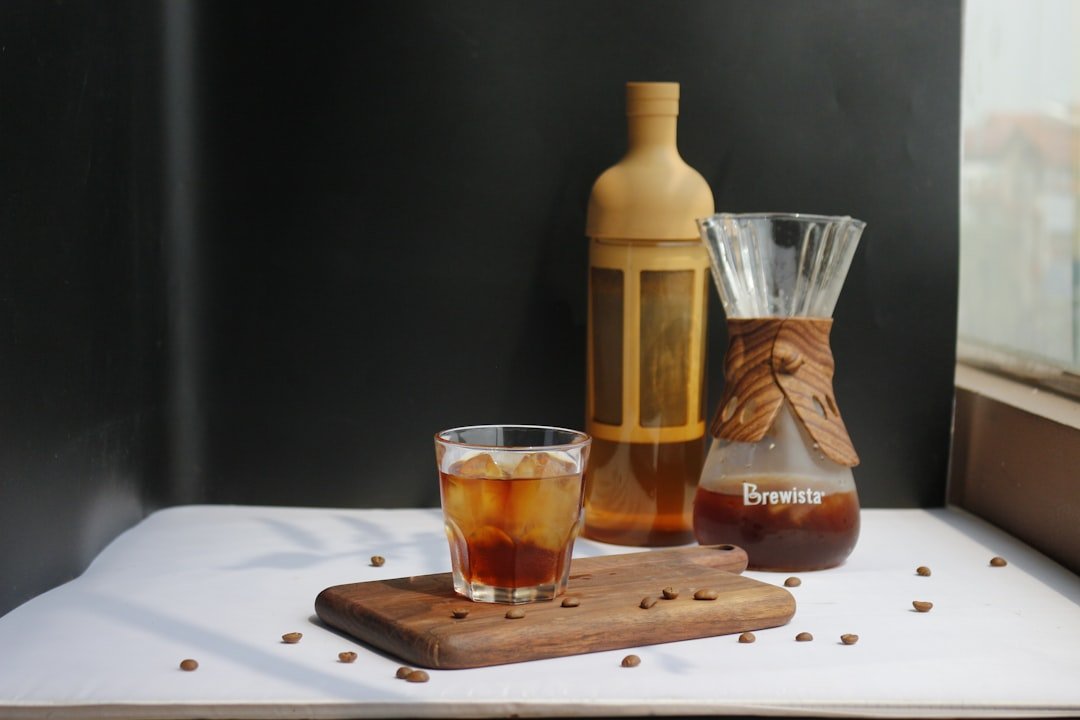
Let’s be honest: cold brew vs americano is not a tiny coffee debate. It is a comparison between two completely different ways to make cold black coffee, and the better choice depends on brew method, time, effort, and flavor. If you care about clarity, speed, and actually tasting the coffee instead of mostly tasting the chill, the Americano deserves more credit than it usually gets.
Cold brew has obvious appeal. It is mellow, easygoing, and once it is made, it asks almost nothing from you. Americano, especially iced, starts with espresso, so it keeps more structure, more aroma, and more personality. This is not really about which drink looks cooler in a glass. It is about what ends up in the cup and whether it fits your actual life.
That is why this comparison works best as a head-to-head. We are not settling café mythology here. We are comparing how each drink is brewed, how long it takes, what it tastes like, and which one makes more sense at home.
What’s the real difference in cold brew vs americano?
Cold brew is made by steeping coffee grounds in cold water for roughly 12 to 20 hours, while an Americano is espresso diluted with water and, when served cold, poured over ice. Cold brew uses long, gentle extraction for a smoother, more chocolatey profile, while Americano keeps more brightness and espresso definition because it starts with pressure-brewed espresso.
That difference matters more than people think. These drinks may look similar in the glass, but they are built from completely different brewing logic. One uses time to soften the coffee. The other uses pressure and dilution to preserve the coffee’s shape.
Starbucks explains that cold brew and iced Americano differ in extraction, timing, texture, and flavor, not just temperature. If you have ever wondered why both drinks can be cold, black, and caffeinated while tasting nothing alike, that is the answer.
To settle it fairly, the comparison has to focus on the dimensions that actually matter:
- Brew method
- Time and effort
- Flavor
- Home practicality
Brew method: one is a slow steep, the other is an espresso build
This is the first major split. Cold brew asks for patience. Americano asks for espresso. Those are very different starting points, and they shape everything that follows in the cup.
Cold brew: the long-game method
Cold brew relies on immersion extraction with cold water over a long period, typically 12 to 20 hours, according to Starbucks. Bon Appétit’s testing of cold brew makers makes the process even more concrete: testers brewed many systems for 24 hours in the refrigerator and 18 hours at room temperature.
So yes, cold brew is easy in one sense. Once you start it, there is not much to do. No shot timing, no tamping, no dialing in. But that ease depends on one thing people often skip over: planning.
-
Cold brew strengths in method:
- Long steeping does most of the work
- Once set up, it is low-intervention
- Good for making multiple servings at once
- Designed to produce a rich, smooth cup with minimal bitterness, according to Bon Appétit
-
Cold brew weaknesses in method:
- You wait a long time
- The cup depends on whether you planned ahead
- Batch brewing is convenient, but not spontaneous
- If you want coffee now, cold brew can only help if you already made it yesterday
That is the hidden truth of cold brew. It feels effortless because the effort is spread across a calendar instead of a clock.
Americano: espresso first, water second
An Americano is simpler to define: espresso diluted with water, and if it is iced, served over ice. Starbucks lays that out clearly. The drink itself is fast. The espresso behind it can be more technique-dependent.
Bon Appétit notes that making espresso at home often involves a burr grinder for a fine, even grind, tamping the coffee bed properly, and breaking up clumps for even extraction. That is not theater. Espresso is concentrated, so small variables matter more.
-
Americano strengths in method:
- Built fast once espresso is ready
- More immediate and on-demand
- Preserves espresso character rather than steeping it away
- Easy to adjust with more or less water
-
Americano weaknesses in method:
- Depends on access to espresso
- Home setup can involve more technique
- Grind quality matters a lot
- Bad espresso makes a bad Americano very efficiently
The practical takeaway is simple. Cold brew only seems easier if you ignore the waiting. Americano only seems fussy if you ignore how quickly the actual drink appears once the espresso is there. If you are building a better espresso routine, dialing in espresso without wasting half a bag becomes part of making a better Americano too.
Which is better for busy mornings?
Americano wins busy mornings because it is made from espresso and water on demand, while cold brew only wins if you already did the work 12 to 20 hours earlier. If you want coffee right now, Americano fits weekday reality better. If you prefer batch prep and a ready-to-pour fridge routine, cold brew still has a real advantage.
This is where coffee theory meets real life. Once the day starts moving, the question is less about abstract taste and more about what can happen before you need to leave the house.
Why Americano usually wins the morning rush
Starbucks’ breakdown makes this plain: once espresso is pulled, an Americano is assembled quickly with water and ice. There is no steeping delay because the extraction already happened under pressure in the espresso shot.
Bon Appétit also points out that home espresso is more accessible now, even if decent gear and grind control still help. That matters because the old idea that espresso is only for cafés is fading. More people are building real home routines around it.
-
Americano is better for you if:
- You decide what you want at the last possible second
- You want one drink, not a whole batch
- You care about freshness in the moment
- You already have espresso equipment or access to good espresso
There is also a psychological advantage here: an Americano does not require your yesterday-self to be organized. That alone is a meaningful win.
Where cold brew still makes sense
Cold brew is not out of the running. Bon Appétit’s cold brew testing highlights the obvious but important benefit: once prepared, it is ready to pour. That is genuinely useful when the long brew time is already behind you.
-
Cold brew is better for you if:
- You like making several servings in advance
- You want minimal morning effort
- You prefer a ready-to-pour routine
- You do not mind waiting overnight for the payoff
So the verdict here is clean:
- Americano wins spontaneity
- Cold brew wins planned convenience
If you are also comparing other chilled black coffee styles, cold brew vs iced coffee is another useful distinction to understand before you choose a daily routine.
Flavor: smoothness is nice, but clarity is more interesting
Cold brew tends to deliver a smoother, often more chocolatey profile, while an Americano keeps more espresso-like brightness and structure. If you want mellow and easygoing, cold brew has the edge. If you want a cup with more definition and aromatic life, Americano is the more interesting drink.
This is where people often confuse “smooth” with “better.” Smoothness is appealing, but it is not the only thing coffee can do well.
Cold brew flavor: soft edges, broad appeal
Starbucks describes cold brew as developing a smoother, chocolatey profile, and Bon Appétit says the goal is a rich, smooth coffee with minimal bitterness. That tracks with why cold brew is so popular: it rounds off sharper notes and drinks easily over ice.
-
What cold brew does well in flavor:
- Smooth texture
- Lower perceived sharpness
- Chocolatey, rounded profile
- Easy drinking, especially over ice
-
What some drinkers may find limiting:
- Less aromatic definition than espresso-based drinks
- Fewer bright, high-note flavors
- Can feel flatter if you like coffee with more edges
- Smooth can sometimes mean less character, not more refinement
Americano flavor: more structure, more definition
Because an Americano begins as espresso, it keeps more of espresso’s aromatic shape. Even diluted, it still has a sharper structure than cold brew because the extraction method is fundamentally different. Starbucks supports this by contrasting espresso dilution with long cold extraction: the flavor difference is built into the brew logic itself.
An Americano can show more brightness, more layered aroma, and more definition in the finish. It tastes more like coffee making a point.
-
What Americano does well in flavor:
- Preserves espresso character
- More aromatic clarity
- Brighter structure
- Feels more alive and defined
-
What some drinkers may not love:
- Less forgiving than cold brew
- Bad espresso shows itself quickly
- Can seem more intense if you prefer softer profiles
- Not as instantly crowd-pleasing for people who mainly want smoothness

Here the mini-verdict is straightforward:
- If you want mellow, cold brew wins
- If you want definition, Americano wins
And that second category is underrated. A drink that tastes vividly of coffee has a kind of confidence cold brew does not always try to keep.
Home setup, café habits, and what makes sense long term
This comparison is not just a niche coffee-forum argument anymore. Daily Coffee News reports that specialty coffee had 47% past-day consumption in the U.S., ahead of traditional coffee at 42%, while 58% of Americans said they had a specialty coffee in the past week, up 10 percentage points since 2021. The same publication also reported that coffee overall reached 66% past-day consumption among U.S. adults, with specialty growth driven in part by espresso-based beverages.
That is not a blip. It suggests that both cold coffee and espresso-based drinks are becoming more central to everyday routines. The article’s cited source material also points to growth in home-prep methods including cold brewing and espresso machines, which helps explain why this comparison matters more now than it used to.
Your answer is usually less about ideology than about how your kitchen works.
Why cold brew fits the home trend
Cold brew makes sense in a home where batch prep is normal, fridge space exists, morning time is limited, and several servings from one brew feel efficient. It is practical and calm, especially if you like setting things up once and being done for a few days.
- Batch prep feels natural
- Fridge storage is not a problem
- Morning effort needs to be minimal
- Several servings from one brew feel like a win
Why Americano fits the home trend too
Americano makes sense in a home where espresso gear is already part of the setup, fresh coffee on demand matters, and customization is part of the appeal. Coffee becomes less like stored fuel and more like a daily ritual.
- Espresso gear is already in use
- Fresh coffee matters more than batch convenience
- You want to adjust strength with water and ice
- You enjoy a more active coffee routine
A moka pot can also matter here. It does not make true espresso, but it does brew a strong, concentrated coffee that can be diluted with water or poured over ice for something close in spirit to an Americano. If you want to improve that stovetop route, moka pot mastery is worth reading.
Verdict: which one actually wins?
Americano wins overall for most people because it delivers coffee fast, rewards better beans and technique with more flavor definition, and tastes more like coffee in full focus. Cold brew still wins for people who want make-ahead convenience, multiple servings, and a softer, smoother profile.
So yes, there is a winner here.
Why Americano wins overall
If your priorities are on-demand coffee, espresso character, more aromatic clarity, and a drink that feels fresher and more expressive, Americano is the better choice. It is quicker in real time, and it gives you more of the coffee’s personality instead of smoothing everything into one rounded lane.
That does not mean it is always simpler. Espresso has a front-end learning curve. But once you are there, the payoff is immediate. No waiting half a day. No hoping your past self remembered to prep.
Why cold brew still deserves its fans
Cold brew loses overall, but not because it is bad. It loses because it asks for advance planning and gives up some flavor definition in exchange for smoothness.
Choose cold brew if you want:
- Batch prep
- Low-friction mornings
- A reliably mellow cup
- Something easy to pour and go
The smarter question is not which drink is more premium. It is whether you want your coffee to meet you now, or whether you are willing to build tomorrow’s cup the night before.
For most readers, Americano is the better answer. For disciplined batch brewers and smoothness loyalists, cold brew still has a very solid case.
Frequently Asked Questions
Is cold brew better than Americano?
Not overall. Cold brew is better if you want a make-ahead, smoother drink, while Americano is better for most people because it is faster on demand and keeps more brightness and espresso character.
Can you make iced coffee with instant coffee?
Yes. Dissolve instant coffee in a small amount of water first, then add cold water or milk and pour it over ice for a quick cold drink without brewing equipment.
What’s the difference between an espresso macchiato and an Americano?
An espresso macchiato is espresso marked with a small amount of milk or foam, so it stays concentrated. An Americano is espresso diluted with water, making it longer, lighter, and easier to sip.
Can a moka pot make something close to an Americano?
Yes. A moka pot does not make true espresso, but it produces a strong, concentrated coffee that can be diluted with water or poured over ice for a similar kind of drink at home.
Sources
- Coffee Science: Iced Americano, cold brew or iced coffee — what’s the difference? — https://about.starbucks.com/stories/2026/coffee-science-iced-americano-cold-brew-or-iced-coffee-whats-the-difference/
- Specialty Coffee Holds Lead Over Traditional Coffee in the U.S. — https://dailycoffeenews.com/2026/06/02/specialty-coffee-holds-lead-over-traditional-coffee-in-the-u-s/
- Two-Thirds of Americans Said They Drank Coffee Yesterday, NCA Report Finds — https://dailycoffeenews.com/2026/04/14/two-thirds-of-americans-drank-coffee-yesterday-nca-report-finds/
- Best Espresso Machines for Beginners, Coffee Nerds, and Everyone in Between — https://www.bonappetit.com/story/best-espresso-machines
- Best Cold Brew Coffee Maker for a Smooth Morning Cup — https://www.bonappetit.com/story/best-cold-brew-coffee-maker
